Harris County Flood Control District (HCFCD) will soon start building the new Mercer Stormwater Detention Basin, a large flood-risk reduction project along Cypress Creek adjacent to Mercer Botanical Gardens. HCFCD issued a notice to proceed to the contractor in December 2023 and the contractor is now mobilizing.
The basin is north of FM-1960, east of the Hardy Toll Road, south of Cypress Creek and west of the Memorial Hills.
Combined 512 Acre Feet in Two Basins
The Mercer Stormwater Detention Basin project will include the excavation of 512 acre-feet of soil and other materials from the site. Once complete, the $14.8 million dry-bottom stormwater detention basin will provide approximately 166.8 million gallons of stormwater storage during heavy rainfall events.
The U.S. Department of Housing and Urban Development’s Community Development Block Grant Disaster Recovery program provided a $15.4 million grant for the project. Another $9.7 million comes from the 2018 Bond Program.
Arrowstone Contracting, LLC received a $14,846,391 contract for construction. Land acquisition, engineering and administration will consume the rest of the budget.
The stormwater detention basin will include two separate compartments, north and south, with an equalizer pipe connecting them. An 54″ outfall pipe will also be constructed along the north compartment so stormwater can slowly flow back into Cypress Creek after storms pass.
Construction Caution
Contractors will access the work area via FM-1960 or Lazy Ravine Lane in the Memorial Hills Subdivision. The contractor may use heavy construction equipment such as dump trucks, excavators and bulldozers. Motorists should be aware of truck traffic when passing near construction access points and along truck routes.
The HUD Grant stipulates that construction needs to finish by Fall 2024. And construction is scheduled to take 348 days.
Reducing Backwater in Tributaries
This is among multiple stormwater detention basin projects the Flood Control District is developing in the Cypress Creek watershed.
A regional drainage study for the watershed found that flooding along tributaries of Cypress Creek is predominately caused by rising stormwater in Cypress Creek backing up into tributaries. Flooding is not caused by a lack of sufficient stormwater conveyance or drainage capacity on the tributaries themselves. Therefore, stormwater detention basins could be a beneficial project to reduce that backwater issue.
Project Benefits
The Mercer Basins will remove the 100-year area of inundation from 30 structures and the 500-year area of inundation from an additional 17 structures.
The project also includes a 30’ wide berm to accommodate maintenance and future recreational amenities.
The project avoids wetlands and will lower the water surface elevation by .35 feet during a 100-year storm event, according to HCFCD.
Upstream detention was one of three major prongs of the strategy to reduce flooding in the Lake Houston Area. This and every other little bit will help downstream.
The regional drainage study found here recommends nearly 25,000 acre-feet of additional stormwater detention in the Cypress Creek watershed. That would be enough to hold back the peak flow during Harvey for almost 5 hours. In lesser storms, the benefit would last even longer.
Posted by Bob Rehak on 1/2/24based on information from HCFCD
2317 Days since Hurricane Harvey
https://i0.wp.com/reduceflooding.com/wp-content/uploads/2024/01/Mercer_Map-e1704245017906.png?fit=1100%2C1100&ssl=111001100adminadmin2024-01-02 19:34:562024-01-02 19:47:54Construction Beginning Soon on Mercer Stormwater Detention Basin
On 12/13/23, Texas General Land Office (GLO) Commissioner Dawn Buckingham, M.D. announced the approval of Coastal Erosion Planning & Response Act (CEPRA) funding for a Bolivar Peninsula Beach and Dune Restoration project.
The beach-restoration project seeks to:
Restore additional essential beach and dune systems
Provide crucial protection for Highway 87, Bolivar Peninsula’s only hurricane evacuation route
According to the GLO, the CEPRA funds – initially aimed at an engineering study – will provide both economic and coastal resilience benefits.
Part of SH 87 Already Washed Away
Highway 87 once had a stretch between Sea Rim State Park and High Island that washed out repeatedly over the decades. TXDoT closed it permanently in 1990. Today, eastbound SH 87 stops at High Island. Evacuees must then turn north on SH 124 toward I-10.
The stretch being protected provides the only remaining land-based evacuation route for the 2,800 residents of the Bolivar Peninsula. Seventeen people died there on September 13, 2008, during Hurricane Ike.
The scope of this project: to develop focused beach nourishment engineering design specifications for a U.S. Army Corps permit. Beach nourishment will alleviate tidal impacts threatening SH 87’s eastern terminus on Bolivar Peninsula near High Island.
Satellite Image Sequence Shows Severity of Shoreline Erosion
This series of Google Earth images shows how shoreline erosion now has waves lapping at the shoulder of the highway in this area.
State Highway 87 near High Island in 1974. Note dunes between highway and broad beach.Same area immediately after Ike. Note erosion of beach and deposition inland from SH87.Same area in 2023. Note continued erosion of beach toward highway.Enlargement of nearby stretch shows high tide lapping at riprap which maintenance crews are replenishing (2023).
The beach nourishment engineering design specifications under this project are focused on an approximately four miles of the Bolivar Gulf-facing shoreline beginning at the Galveston-Chambers County line and extending west toward Gilchrist. This is where tides come closest to Hwy. 87 on a recurring basis.
Improving Resilience
“Ultimate benefits from this beach nourishment design work would include protection of the peninsula’s only hurricane evacuation route,” said a GLO spokesperson.
The CEPRA Program helps communities across the Texas coast implement erosion response projects and related studies to understand and reduce coastal erosion as it threatens public beaches, natural resources, coastal development, public infrastructure, and public and private property.
The Bolivar Peninsula Special Utility District, Bolivar Peninsula Chamber of Commerce, Galveston County Road Administrator Lee Crowder, Galveston County Judge Mark Henry, and Galveston County Precinct 2 Commissioner Joe Giusti played pivotal roles in securing this funding.
Nature-Based Solutions Help Protect People and Wildlife
Commissioner Buckingham said, “As a Texan who grew up near the coast and lived on Galveston Island for more than a decade, preserving our state’s precious shorelines and their communities is a top priority.”
FEMA has found that such nature-based solutions increase quality of life for both humans and wildlife. And make no mistake. This is an important wintering and nesting area for many species of wildfowl that depend on the wetlands in this area.
Snow geese flocking near High Island in December 2008, shortly after Ike.
Looking back at 2023, we got lucky. A lack of extreme rainfall masked a slowdown of flood-mitigation spending and massive clearcutting of wetlands and floodplains. Had we been hit by a hurricane instead of a drought, who knows what would have happened.
Have we lost our sense of urgency about flood mitigation? Did the drought lull us into complacency? If so, will that contribute to future flooding? Let’s look more closely at what did and didn’t happen in 2023.
No Widespread Flooding or Flood Damage
To my knowledge, no floods caused widespread damage in the Houston area this year. That’s a tribute to three things: past flood-mitigation efforts, drought, and the absence of tropical activity.
At the end of the third quarter, HCFCD and its partners had spent almost $3.8 billion on flood mitigation since 2000 and $1.8 billion since Harvey. That has helped reduce the risk of flooding – especially in lower-income watersheds that frequently flooded. That’s where most of flood-mitigation money has been concentrated.
But flood-mitigation spending alone didn’t account for the absence of wide scale flooding in the Houston area in 2023. Mother Nature “helped,” if you can call a drought helpful.
Much of the Houston region suffered through moderate to severe drought for most of 2023. According to the U.S. Drought Monitor, much of Harris County is still rated “abnormally dry.” And most surrounding counties are still in moderate drought.
How much rain did we get? Through December 29, we received 41.75 inches – 10 inches below our normal 51.73 inches. So, despite recent rains, we received 20% less than normal for the year.
Drier-than-normal weather for most of the year created ideal conditions for construction of flood-mitigation projects. However, flood-mitigation spending fell to about half its peak during 2020.
Source: HCFCD Data from FOIA Requestthrough 3Q2023 with fourth quarter estimated.
Harris County Flood Control District provided no official explanation for the slowdown. However, various people familiar with HCFCD operations have cited:
In the meantime, 15-20% inflation in construction costs could force HCFCD to eliminate $1 billion worth of projects from the original bond list. And projects at the end of the equity priority list in affluent areas are the most likely to get the axe. HCFCD is re-evaluating them all.
Every day no work is being done is a day wasted. And a day that people have to live with higher flood risk.
Relentless Development in Floodplains and Wetlands
Meanwhile, the clearing of land in the upper San Jacinto River Basin has not slowed. Developers cleared thousands of acres in 2023.
We saw how dangerous that could be after Perry Homes cleared 268 acres in Woodridge Village without building sufficient stormwater detention capabilities. Areas downstream in Kingwood’s Elm Grove Village that didn’t flood after 50 inches of rain from Harvey in 2017 flooded after a 5-inch rain on May 7, 2019.
The giant Colony Ridge development in Liberty County virtually doubled in size during the last two years. By the end of 2023, it was at least 50% bigger than Manhattan. The developers:
I took the following six shots over Colony Ridge in 2023. They show small portions of the developer’s clearing activity, but represent hundreds of other shots too numerous to include here.
Some call this progress. But Colony Ridge is now the subject of a Federal lawsuit by the U.S. Department of Justice and the Consumer Financial Protection Bureau.
Other Developments Leave Land Exposed to Erosion
Colony Ridge isn’t the only development in the Lake Houston Area that leaves land exposed to erosion. Here are several others.
Los Pinos photographed in March 2023.First part of a planned 4,000 acre development.Royal Pines in Porter on White Oak Creek flooded neighbors four times in two months.Northpark South at McClellan Sorters Road (bottom L to R) at Northpark Drive (Center) was under 8 feet of water during Harvey. It contained wetlandsand will drain through sand mines to the San Jacinto West Fork in the background.
Mavera at FM1314 and SH242 will eliminate wetlands but claims it will have no adverse impact. Photographed Jan. 2022.Evergreen near SH242 and FM1314.
I could cite dozens of additional examples like these. When rains wash through these sites, they pick up sediment and carry it downstream.
Sediment Deposition
Eroded sediment from these clearing operations washes downstream. It drops out of suspension where the water slows as it reaches Lake Houston.
Where Spring Creek (left) joins San Jacinto West Fork (right) at the Harris Montgomery County line. Photographed from over I-69 looking west.
The result: sand bars that reduce the conveyance of the river, forcing water out of the banks and into people’s homes.
Sand bar on West Fork of the San Jacinto at Lake Houston after Harvey reduced river’s conveyance. Army Corps dredged the blockage after thousands of homes and businesses flooded upstreamduring Harvey.
Good News, Bad News
The good news: many blockages like the one above have been removed through dredging by the Army Corps and City.
The bad news: Many boaters have written in the last few months, complaining about how shallow the rivers are once again becoming due to unchecked sedimentation.
While I am ecstatic about another year without a flood, I hope we do not become complacent about preventing activities that contribute to flooding.
We need to establish and enforce best management practices that reduce sedimentation that clogs our rivers.
Flood Gate Project Goes Into 2024 with Momentum
So as not to finish the year on a down note, I would like to mention the project to add more flood gates to the Lake Houston dam.
In 2023, Houston Mayor Pro Tem Dave Martin and Chief Recover Officer Stephen Costello accomplished an extraordinary “lift.” They convinced FEMA to include social benefits in their Benefit/Cost Ratio calculation. This helped them achieve a benefit/cost ratio greater than one, meaning benefits exceeded costs for the gates.
Then, they rallied local, state, and federal officials to fund the project so it could move forward. While $20 million of the $170+ million for the project comes from the 2018 flood bond, it will be hard for certain Harris County Commissioners to block it now that everyone else has done their parts.
https://i0.wp.com/reduceflooding.com/wp-content/uploads/2023/12/20231111-DJI_0872-copy.jpg?fit=1100%2C733&ssl=17331100adminadmin2023-12-31 12:25:132025-08-19 22:07:53Year in Review: Looking Back at 2023
Reduce future flood losses compared to maintaining the status quo
Improve transparency around the potential impacts of climate change and proposed development
SFHA and FPA Definition Recommendations
FEMA currently defines a Special Flood Hazard Area (SFHA) as land “subject to a 1 percent or greater chance of flooding in any given year.” The SFHA may contain several different zones that show different degrees of risk. Historically, FEMA has equated the SFHA with “floodplain” or “flood-prone area” (FPA).
TMAC recommends redefining these terms to give them different meanings. TMAC also recommends using a higher standard of accuracy (95% confidence level as opposed to 50%), but more on that later.
If FEMA adopts the recommendations, the term “Special Flood Hazard Area” would apply to areas that currently require flood insurance for mortgages made by federally regulated lending institutions.
The term Flood-Prone Area, on the other hand, they argue, should be reserved to reflect future risks from climate change and development. See below.
Why separate the two? Lenders would face resistance to enforcement of the insurance-purchase mandate if it meant requiring flood insurance on homes or businesses not yet in the 1-percent-annual-chance floodplain.
But having a separate, second definition that reflects future risk could help floodplain managers lower the probability of future flooding for homes under construction by applying to building codes, elevation requirements, and more. It could also give home buyers additional information on which to base their decisions.
Recommendation for Higher Confidence Limits
Because of a perceived rise in flood occurrences on properties lying outside the SFHA, the lending community has become more suspicious of the standard’s accuracy. People see the SFHA’s flood insurance requirement as a binary choice. “I need it or I don’t.”
But the current definition is based on the AVERAGE chance of flooding. That means 50% of properties would have a higher risk than indicated and the rest would have a lower chance.
After a flood, surprised borrowers sometimes blame their mortgage companies. “How come you didn’t tell me I was at risk?” Many buyers conclude they are safe based on a misunderstanding of technical details related to the 1% annual-chance standard.
The new standard proposes a 95% confidence interval as opposed to an average risk. That would include homes expected to flood in all but 5% of floods. A confidence interval in statistics is another way to describe probabilities.
TMAC argues that an easily understood and interpreted standard would balance safe land use with economic benefit. It would also protect lenders, educate buyers, and encourage borrowers to act responsibly.
Redefining Flood-Prone Areas
The illustration below depicts TMAC’s concept for developing the FPA elevation and associated boundary. It includes an extra safety margin for climate change and future development.
This “freeboard factor” would be a proxy for estimated future conditions.
However, TMAC recognizes there may not be:
• Adequate land-use information to determine the impact of future development or • Planned development expected to change flood conditions or • Sufficient information to determine the impacts of climate change.
0.2% Annual Chance Flood Recommendations
For consistency and ease of communication/education, TMAC recommends applying the 95% confidence limit to .02% annual chance floods also. These were previously known as 500-year floods.
Fill Recommendations
Bringing fill dirt into a floodplain to elevate homes reduces the amount of storage capacity for floodwaters. Fill can also often increase hazards to nearby property owners and have negative environmental impacts.
Currently, a maze of regulations governs the use of fill. TMAC recommends consolidating and clarifying all fill requirements in flood-prone areas.
Among the recommendations: Prohibiting fill as a floodproofing technique.
Notice of Fill Impacts
TMAC recommends that FEMA should require participating communities, as part of permitting duties, to quantify and put on file the impacts of proposed fill and other development on flood height and the environment prior to issuing fill permits.
When increases in flood elevation or potential negative environmental consequences are found and cannot be mitigated, at a minimum, property owners and appropriate environmental agencies should be notified prior to issuing permits.
Many such requirements already exist for floodways. This recommendation would expand the requirement to floodplains.
The TMAC report observes that large amounts of fill placed in the flood fringe can potentially create significant impacts upstream, downstream or both. But there are no impact notification requirements in many communities and states.
“This is in effect a risk transfer to uninformed landowners and environmental stewardship organizations,” says the report.
“While a requirement to notify falls short of a requirement of consent, it is an improvement over today’s framing where risks are allowed to be transferred to others without their awareness.”
TMAC
Status of Adoption Unclear at this Point
Due to the holidays, I’ve had trouble determining where FEMA stands in adopting these recommendations. TMAC clearly labels these “interim recommendations.”
The problem with proposed changes to regulations is that they create winners and losers. People with risky land to sell may not want fuller disclosure. On the other hand, those in danger of flooding may want more information.
Despite occasional hurricanes and biblical rainfalls, there’s no place I’d rather live than the Lake Houston Area. Where else can you find all the amenities of Houston next to so much nature? Below are some of my favorite photos taken here over the years.
Fawn born on lawn outside my officeGreat egret returning to nestThe 5,000 acre Lake Houston Wilderness ParkHawk feeding outside my office.Painted bunting outside my office Roseate Spoonbill, East End Park, KingwoodAlligator at River Grove Park in KingwoodDuck at Cedar Landing in HuffmanGreat egret in breeding plumageRoseate spoonbillsDucks at Cedar Landing in HuffmanSnow geese taking wing over lake during fall migrationWest Fork San Jacinto at River Grove Park, looking east toward Lake Houston
And then there are the spectacular sunrises and sunsets. Dr. Charles Campbell, who specializes in functional medicine, took the two photos below. And good medicine they are!
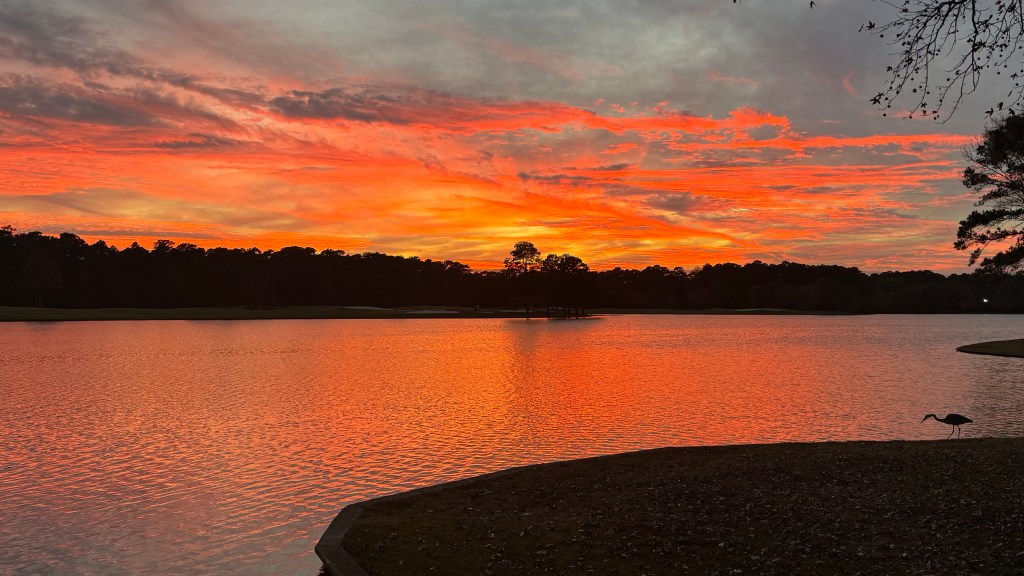
Sunrise over the East Fork San Jacinto RiverSunset over Kingwood Lakes
I hope you find these images as restful and as spiritually rejuvenating as I do.
This area is worth preserving and protecting. Where else can you live next to beauty like this – inside the city limits of one of America’s largest cities?
Peace to all. And happy holidays.
Posted by Bob Rehak on December 22, 2023
2306 Days since Hurricane Harvey
https://i0.wp.com/reduceflooding.com/wp-content/uploads/2023/12/20050601-DSC_0004.JPG.jpg?fit=1100%2C731&ssl=17311100adminadmin2023-12-22 16:26:132023-12-23 08:49:06Happy Holidays from the Lake Houston Area
12/20/23 – Legal woes are mounting for Colony Ridge. Today, the U.S. Department of Justice (DOJ) and the Consumer Financial Protection Bureau (CFPB) filed suit against the controversial Liberty County developer and the companies they own or control.
The government filed a complaint against land development companies Colony Ridge Development, LLC and Colony Ridge BV, LLC, affiliate mortgage company Colony Ridge Land, LLC (collectively, the Colony Ridge defendants), and loan origination company Loan Originator Services, LLC.
The Bureau and DOJ allege that defendants violated the Equal Credit Opportunity Act (ECOA) by targeting consumers of Hispanic origin with a predatory loan product.
The Colony Ridge defendants violated the Consumer Financial Protection Act of 2010 (CFPA) by making deceptive representations to consumers.
Colony Ridge Development and Colony Ridge BV violated the Interstate Land Sales Full Disclosure Act (ILSA) by making untrue statements, omitting material facts, failing to provide required accurate translations, and failing to report and disclose required information.
Defendants violated the CFPA by virtue of their violations of ECOA and ILSA, respectively.
Defendants’ conduct violated the Fair Housing Act.
Goal of Lawsuit
The joint complaint seeks, among other things, injunctions against defendants to prevent future violations of Federal consumer financial laws, redress to consumers, damages, and the imposition of civil money penalties.
DOJ and CFPB contend that the defendants operated an illegal land sales scheme and targeted tens of thousands of Hispanic borrowers with false statements and predatory loans.
Revolving Door Foreclosures that Targeted Hispanics
The joint DOJ/CFPB press release said that Colony Ridge “sells unsuspecting families flood-prone land without water, sewer, or electrical infrastructure, and that the company sets borrowers up to fail with loans they cannot afford. Roughly 1-in-4 Colony Ridge loans ends in foreclosure, after which the company repurchases the properties and sells them to new borrowers.” It amounted, say the plaintiffs to a “set-up-to-fail scheme that has led thousands of families to lose their dreams of homeownership.”
CFPB Director Rohit Chopra said, “Our investigation uncovered that Colony Ridge is baiting borrowers with lies, saddling families with predatory loans for homesites that the company knows have repeatedly flooded with raw sewage and lacked basic utility infrastructure.”
Merrick B. Garland, U.S. Attorney General said, ““Today’s complaint alleges that Colony Ridge targeted Hispanic consumers with predatory loans, misled borrowers about the water, sewer, and electrical infrastructure on its lots, and exploited language barriers by conducting most of its marketing in Spanish while offering important transaction documents only in English.”
Foreclosure and property deed records from September 2019 through September 2022 show that Colony Ridge initiated foreclosures on at least 30% of seller-financed lots within just three years of the purchase date, with most loan failures occurring even sooner.
“Records also confirm that Colony Ridge accounted for more than 92% of all foreclosures recorded in Liberty County between 2017 and 2022.”
CFPB/DOJ Joint Press Release
The Entire Laundry List
The complaint cites a number of specific practices. It alleges that Colony Ridge:
Misleads borrowers about infrastructure on the lots it sells: Colony Ridge has falsely represented that lots in the Terrenos Houston subdivisions were sold with water, sewer, and electrical infrastructure already in place. ” It is only after applicants pay a non-refundable deposit that Colony Ridge discloses the properties may not provide those services and makes that disclosure only in English.”
Sells lots that flood with rain and raw sewage. The complaint alleges that Colony Ridge employees fail to inform borrowers of flood risk when lots have repeatedly flooded in the past, or falsely tells them the lots have not flooded. In fact, in parts of the subdivision, rain causes significant flooding, causing raw sewage to run through or around borrowers’ property, and damaging their personal belongings
Churns through borrowers in a cycle of foreclosure: When families fall behind on payments and enter foreclosure, it allows Colony Ridge to “flip” the properties by repurchasing and reselling them, often at higher prices. Foreclosure and property deed records show that Colony Ridge flipped at least 40% of all the properties it sold between September 2019 and September 2022, selling approximately 8,237 properties twice, 3,267 properties three times, and 2,067 properties four or more times in three years.
Targets Hispanic consumers with predatory loans: Through direct-to-consumer marketing on websites, social media engagement, and telemarketing, Colony Ridge targets Hispanic consumers. Colony Ridge then exploits language barriers during its sales process and uses high-pressure sales tactics to push borrowers to obtain their loan products quickly. The loans have exorbitant interest rates. Between 2017 and 2021, interest rates on Colony Ridge’s loans ranged from between 10.9% to 12.9%, while a standard 20-year fixed rate loan averaged 2.35% to 4.05% during the same timeframe. And in extending the loan, Colony Ridge and Loan Originator Services did not collect information needed to determine if applicants can afford the loan.
Exploits language barriers at borrowers’ expense: While Colony Ridge conducts most of its marketing activities in Spanish, when it comes to the actual transaction, it offers important documents only in English. Failing to offer borrowers accurate translations of contracts, deeds, and other documents in the language in which it conducts the sales and exploiting borrowers’ limited English proficiency violates federal law.
Nine stories since 2020 by investigative reporter Wayne Dolcefino about various aspects of Colony Ridge.
A story in Houston Landing about revolving door foreclosures. A team of reporters found that Colony Ridge sold over 35,000 properties. Nearly half (15,759 properties) ended up back in its hands. Some of the properties had as many as 9 different owners in the last decade.
A Daily Wire story exposing alleged corruption between Colony Ridge insiders and a municipal management district. The municipal management district, run by one of the developers, granted nearly $20 million in contracts to companies controlled by other family members and insiders.
Precinct 3 Commissioner Tom Ramsey brought many of the drainage issues in front of Harris County Commissioners Court last October. No action has yet been taken at the county level.
Posted by Bob Rehak on 12/20/23
2304 Days since Hurricane Harvey
The thoughts expressed in this post represent opinions on matters of public concern and safety. They are protected by the First Amendment of the US Constitution and the Anti-SLAPP Statute of the Great State of Texas.
https://i0.wp.com/reduceflooding.com/wp-content/uploads/2020/12/20201207-Aerial-Dec-2020_1210.jpg?fit=1200%2C813&ssl=18131200adminadmin2023-12-20 17:55:232023-12-20 18:24:45DOJ, CFPB Sue Colony Ridge for Bait-and-Switch, Predatory Lending, More
A new study of “climate migration” by the First Street Foundation looks at how flood-risk information affects real-estate sales. It found that the availability of high-resolution data affects home buying, sometimes in surprising ways.
The foundation’s mission is to make climate-risk data accessible, easy to understand and actionable for individuals, governments, and industry. It estimates different types of climate risk from flooding to fire, wind, drought and more – from the state to the county, zip code and street-address levels.
First Street’s most recent study is called “Climate Abandonment Areas.” But most of the important findings have to do with flooding. First Street published the study in the journal Nature-Communications on December 18, 2023.
Cover photo from First Street Foundation Climate Abandonment Areas Study.No credit listed.
Key Findings
Among First Street’s key findings:
Flood risk is a house-by-house issue, not a state-by-state issue. People may still move to states with high flood risk, but increasingly they’re using flood data to avoid risky neighborhoods and properties.
In the U.S., 34.5% of the population and 41.9% of the housing stock have been impacted by flooding.
Nationally, 7.4% of census blocks are beginning to lose population because of flood risk. Within them, 3.2 million people (35.5% of the decline) moved away because of flooding between 2000 and 2020.
Dr. Jeremy Porter, Head of Climate Implications Research at First Street, said “the downstream implications of this are massive and impact property values, neighborhood composition, and commercial viability both positively and negatively.”
As people leave to avoid flood risk, property values decline, affecting cities’ tax bases. Further, the population left behind tends to be older and poorer.
The study defines 9% of the census blocks in Harris County as “Climate Abandonment Areas.” It further claims Houston has passed a tipping point where more people are moving out than in, it says, because of flood risk.
Many areas have “pull factors” such as jobs that offset the number of people leaving. But their growth would be even higher if flood risk were lower. Said another way, areas with high flood risk grow more slowly if they grow at all.
Population losses are greatest among areas that flood frequently, i.e., a 5-year flood risk.
High-resolution information about flooding progressively reduced consideration of homes with high risk by 24.6% after 9-weeks of study.
Confusing Definitions, Frames of Reference
While this purports to be a study about how “climate change” affects “climate migration,” the numerous counter-intuitive climate-change references constantly obscure the findings.
For instance, the authors start out talking about wildfires, severe storms, flooding, drought, tropical storms and winter storms. But then they talk primarily about flooding in relation to people moving a matter of city blocks.
As a consequence, it gets confusing. “It appears that they are trying to fit a trend to the climate change agenda,” said one of the leading hydrologists in Texas.
One must read carefully to determine the frame of reference for each claim.
Good News, Bad News
The good news is that First Street data shows people seem to be paying more attention to flood risk when they purchase homes – assuming that good data is available.
The bad news is that good flood-risk data is often not available. Across our region, for instance, many areas remain unstudied. And recent data often remains unreported, i.e., in Harris County.
In the meantime, developers continue to build in floodplains. And new developments often don’t yet have listed addresses. So it’s hard to for homebuyers to estimate risk – even when using First Street’s models.
The hydrologist mentioned above felt First Street overcomplicated the issue. “This isn’t about climate change; it is about common sense. People built in places they shouldn’t have built decades ago and after enough disasters, people have had enough. They are moving. Floods have happened since the dawn of time and certainly before ‘climate change.’ Common sense tells you that people move when they have been hit hard and often enough.”
Posted by Bob Rehak on 12/19/2023
2303 Days since Hurricane Harvey
https://i0.wp.com/reduceflooding.com/wp-content/uploads/2023/12/20231219-Screenshot-2023-12-19-at-4.52.33%E2%80%AFPM.jpg?fit=1100%2C681&ssl=16811100adminadmin2023-12-19 18:36:582023-12-19 18:53:12How Flood-Risk Information Affects Real-Estate Sales
According to a December 15 press release by the Texas Water Development Board, Phase 1 of Houston’s new Northeast Water Purification Plant expansion is nearing completion. Phase 1 will supply 80 million gallons per day of treated surface water to the residents of Harris County, Fort Bend County and City of Houston.
Two more phases remain. Phase 2A will deliver another 80 million gallons per day to the same areas. Phase 2B will deliver 160. So the entire complex, when complete, will deliver another 320 million gallons a day. That’s in addition to the 80 million gallons per day the original plant delivered before expansion.
Goals of Plant
The Texas Water Development Board provided $1.9 billion for the Northeast Water Purification Plant expansion project, making it one of the largest in the country.
The plant has two goals:
Provide water for a population that increases by almost a million people per decade.
Reduce groundwater usage and subsidence.
Completion Estimated in 2025
The TWDB did not provide a date for expected completion of the next two phases, but at a May 2023 community meeting, project managers estimated a completion date in 2025.
Artist’s rendering of completed project, looking NNW. Expansion area outlined in orange.Satellite photo from May with substantially complete phase outlined in red.Phase 1 in center of plant now substantially completed. Original plant is on far right.Photographed in August 2023.Phases 2A and 2B still under construction. Photographed in August 2023.Looking south.Entire plant. Looking east across older area toward new construction. Lake Houston at top of frame.Plant’s new Intake Facility.Those twin pipelines are big enough to drive pickup trucks through.
The Luce Interbasin Transfer Project is associated with the expansion of the treatment plant. The channel from the Trinity River will ensure a steady supply of water in Lake Houston as Montgomery County’s growth demands more water from Lake Conroe.
Inflation has reduced the 2018 Flood Bond’s purchasing power. The general rate of inflation during the last five years adds up to 20%. That could potentially eliminate one fifth of the projects in the flood bond.
It’s a serious concern for the people whose mitigation projects have been put at the end of the line by the County’s Equity Prioritization Framework. Some residents may never see any benefit from their tax dollars, which are going to other areas.
Here’s how Harris County Flood Control District (HCFCD) will look at projects that now have an uncertain future.
Local Costs Consistent with General Rate of Inflation
In a presentation to the Harris County Community Flood Resilience Task Force, Jesal Shah PE, the new Chief Project Delivery Officer for HCFCD, discussed the issue of inflation. Shah, a Houston native, has been in his job since May, 2023. He previously led flood-risk reduction planning, design, engineering, and construction efforts for the government of British Columbia.
Shah cited 15-20% increases in construction, material, and right-of-way acquisition costs for Harris County flood-mitigation projects.
This and other screen captures below arefrom Shah’s presentation to Flood Task Forceon 12/14/23.
Summary of 2018 Flood-Bond Funding To Date
The 2018 flood bond contained $2.5 billion in funding for approximately $5 billion worth of projects. Partnership funding, i.e., grants, were supposed to make up the difference.
And at this point, all of the partnership funding has been secured thanks to an infusion of $825 million in Community Development Block Grant funding from the U.S. Department of Housing and Urban Development (HUD) and the Texas General Land Office (GLO).
“Anticipated”should now be removed from this slide.
That’s very good news.
63% of Bonds Sold Already
Shah says that the County has sold $1.575 billion worth of bonds to date, almost two thirds of the original $2.5 billion.
Of the two thirds, about half the money has been spent or “encumbered.” Encumbered means the money is committed to projects and difficult to move. For instance, a project may be in construction, but not yet completed.
The other half has been committed to projects, but not yet encumbered. For instance, bonds may have been sold, but the construction job may not have been awarded yet.
See below.
Securing the partner funding is huge good news. But the impact of inflation is worrisome. To help deal with that, the County is re-evaluating all projects associated with the flood bond.
How Projects are Being Re-evaluated
Shah cited three types of projects listed in the original bond. Those with:
Well defined scope and accurate estimates.
Clear scope but inaccurate estimates. For instance, the Lauder basin has almost tripled its original cost estimate.
Vague scope and unreliable estimates.
See examples below.
To complicate matters, some backstop funding from the Flood Resilience Trust is no longer available because of new “guidance” from Commissioners Court. That will eliminate $343 million in funding flexibility.
And keep this in mind. The bond program is far from complete. We could easily see another 15-20% of inflation before its over. So what to do?
Sharpening the Pencil
Shah’s team is dividing the remaining bond projects into two piles.
Those with clear scope and funding will be completed.
Those without clear scope or funding will be re-evaluated.
Shah hopes to present an updated project list to Commissioners Court sometime during the second quarter of 2024.
Shah has already taken a first pass at re-evaluating the bond’s project list. Of the 181 projects identified in the bond:
30 have already been completed or eliminated.
63 will continue moving forward.
88 (almost half) will need more funding or more clarity (i.e., more engineering studies/tighter estimates) to move forward.
The slide below shows the guiding principles for evaluating the 88 projects that need more funding or clarity.
Lack of Balance Could Jeopardize Future Bond Offerings
One possible way to mitigate the toll of inflation involves phasing projects in areas that have already received large amounts of funding so that projects in areas that received little funding could move forward.
For instance, in a project that involves multiple stormwater detention basins, one or more of the basins could be delayed until the next bond. Meanwhile, delaying that basin could free up money for a basin in a different watershed.
However, during Q&A, Shah said he has no plans to phase projects.
A lack of equitable distribution could jeopardize future bond offerings.
And many areas have received little funding from this bond.
More than a 100 to 1 difference exists between projects on the left and right.
In the future, voters who saw no benefit from the 2018 flood bond might, once again, feel victimized by bait-and-switch tactics.
Selling future bonds will require restoring faith in the fairness of government. And that will require spreading bond funds around so that everyone – in all parts of the county – sees some benefit from them. That’s my humble opinion.
When HCFCD presents its updated project list to Commissioners Court in the second quarter of 2024, it will be interesting to see whether Commissioners and the County Judge agree with it.
John Whitmire’s landslide election in the Houston Mayor’s race may send a message to them. Whitmire is a Democrat who campaigned across the aisle and received heavy Republican support.
Posted by Bob Rehak on 12/16/2023
2300 Days since Hurricane Harvey
https://i0.wp.com/reduceflooding.com/wp-content/uploads/2023/12/20231214-Screenshot-2023-12-14-at-6.16.06%E2%80%AFPM.jpg?fit=1100%2C704&ssl=17041100adminadmin2023-12-16 14:47:262023-12-17 10:47:10HCFCD Grappling with Inflation’s Impact on Flood-Bond Purchasing Power
For residents of flood-prone areas such as Northpark South, only the National Flood Insurance Program (NFIP) stands between a river and ruin.
But ironically, efforts to staunch financial hemhorraging are making NFIP flood insurance unaffordable for many with low incomes. That creates an uncertain future for developments and people in or near floodplains.
Moreover, Congress must reauthorize NFIP before midnight on Feb. 2, 2024, to avoid a lapse in authority to sell flood insurance and borrow funds.
Approximately six million homes sit in special flood hazard areas nationwide. The National Association of Realtors estimates that should a lapse in the NFIP’s authorization occur, it threatens 1,300 property sales each day.
Hurricane Harvey inundated the area below with approximately eight feet of floodwater. Now, Century Land Holdings of Texas is clearing this risky area bordering the San Jacinto West Fork to build more than 230 homes.
This 50-acre patch of dirt is a symbolic battlefield in a growing debate over NFIP, which Congress must renew or reform next year.
Jobs vs. Jitters
A coalition of developers, home builders, realtors and mortgage lenders sees the NFIP’s nationally subsidized insurance rates as a tool to sustain employment, grow the economy, and enlarge the tax base of communities.
Others believe the subsidies encourage dangerous development in flood-prone areas by giving homebuyers a false sense of security.
Finding the right balance between encouraging responsible development and mitigating flood risks is a complex task for policymakers. Perhaps nowhere do the issues come into sharper focus than in Northpark South. Even the entrance to the subdivision was under eight feet of water. That would make evacuation difficult for anyone caught napping when the waters rise.
Contradictory Lawsuits Against FEMA
Contradictory lawsuits symbolize the two sides in this debate. An article in Government Executive noted that FEMA is being sued for making flood insurance too expensive AND too cheap!
The second lawsuit alleges taxpayer-subsidized, discounted coverage encourages floodplain development in high-hazard areas by providing insurance policies that obscure risk to property owners.
“This FEMA-incentivized development puts people in danger, harms communities, and destroys ecosystems.”
The contradictory allegations in the lawsuits underscore the need for careful policymaking around flood insurance.
Battle over Risk Rating 2.0
What triggered these lawsuits? FEMA has tried to navigate these dangerous waters by introducing a new system called Risk Rating 2.0. Risk Rating 2.0 reflects risk to individual properties from multiple sources of flooding, instead of aggregating people in broad flood zones. It also takes into account factors such as building codes and elevation that can mitigate flood risk.
Risk Rating 2.0 is an attempt to eliminate the subsidy aspect of flood insurance by quoting rates on an actuarial basis. Reportedly, some homeowner’s flood insurance rates have fallen, but others are rising and will continue to rise for years to come as risk becomes fully priced into policies. Texas and other Gulf Coast states are in the highest premium increase group, according to GAO.
Right now, law caps annual rate increases under Risk Rating 2.0. But the Congressional Accounting Office says caps only perpetuate an unfunded premium shortfall. GAO estimated it would take until 2037 for 95 percent of current policies to reach full-risk premiums, resulting in a $27 billion premium shortfall by then.
GAO also believes that discounted premiums hide fiscal exposure, address affordability poorly and hinder private-market growth.
In the meantime…
People who buy homes in Northpark South may find insurance affordable today and then find themselves quickly priced out of the market because of risk.
Higher premiums give policy holders a greater incentive to mitigate flood risk. But they’re also causing many homeowners to cancel policies.
One Congressional aid I talked to worried that if not enough people buy flood insurance, places like Northpark South will become “instant slums” after the first time they flood.
The reality: those who most need flood insurance can least afford it.
The GAO report comes as close to riveting reading as any government document I have ever read. Among other things, it points out how FEMA’s Community Rating System may send contradictory risk signals to potential buyers.
Approximately 236 homes and an 11.2 acre detention basin will be nestled between sand pits and occasional raging floodwaters.Northpark is the divided street in the background.Kingwood is beyond.
When Congress takes up NFIP next year, debate could lead to additional reforms. Watch closely. No one can predict the outcome at this point. Lobbyists are choosing up sides … between property rights and protection. Between a river and ruin.
Posted by Bob Rehak on 12/14/23
2298 Days since Hurricane Harvey
The thoughts expressed in this post represent opinions on matters of public concern and safety. They are protected by the First Amendment of the US Constitution and the Anti-SLAPP Statute of the Great State of Texas.
https://i0.wp.com/reduceflooding.com/wp-content/uploads/2023/12/20231213-DJI_0385.jpg?fit=1100%2C733&ssl=17331100adminadmin2023-12-14 13:08:102023-12-14 13:42:45Between a River and Ruin