Proposal to Expand the Flood Control District Has Many Benefits

2/1/25 – State Representative Dennis Paul from the SE Houston area has introduced HB 2068, a bill that could eventually unite the counties within the San Jacinto River Basin into a regional flood control district. HB 2068, if approved, would modify the 1937 legislation that created the Harris County Flood Control District (HCFCD).

Here’s how the main modifications would work.

Two Big Changes: Leadership and Geographic Scope

The original legislation put control of HCFCD into the hands of the county judge and commissioners. Paul’s bill would let the governor appoint a board that controls District operations instead.

It could also expand the flood control district by letting surrounding counties join forces, but only after their leaders and residents approve. To join the district, a county’s judge and commissioners would first have to put the proposal on a ballot and voters would have to approve it.

Why Changes are Necessary

People both inside and outside of Harris County could all benefit. We need HB 2068 for several reasons.

Take Politics Out of District Operations

Since the election of Judge Lina Hidalgo in 2018, operations of HCFCD have become increasingly politicized. We now have politicians reportedly telling engineers how to do their jobs. That has driven off some highly talented professionals and slowed down operations.

Fairness for All

The politics have also skewed the focus of HCFCD efforts. HCFCD now directs flood-mitigation efforts primarily to areas with low incomes as opposed to areas with the worst flooding. During Harvey, Kingwood for instance:

The community was virtually cut off from Houston for 11 months when half of the I-69 bridge over the West Fork was destroyed.

I-69 damage and repairs
Harvey undermined the I-69 bridge over West Fork. TxDOT took 11 months to replace them.

In the wider Lake Houston Area:

  • 44% of all the businesses in the chamber of commerce were damaged.
  • More than 13,000 homes and businesses were damaged or destroyed. Many never recovered.
  • The UnionPacific Railroad lost its bridge over the West Fork.
UP Rail Bridge Wash Out
Union Pacific railroad traffic was disrupted for months while a new bridge was built.

And yet since Harvey, HCFCD has spent $2.1 billion on flood control projects without constructing one in the Republican-dominated Lake Houston Area.

In fairness, HCFCD has done some maintenance here. It has also conducted several studies; it just hasn’t acted on any of them.

Need to Serve Entire River Basin

Ten of the 23 watersheds in Harris County originate outside the county. But Hidalgo, Ellis and Garcia have been reluctant to spend money outside of the county – even to help reduce flooding inside the county.

Watersheds of the San Jacinto River Basin
San Jacinto River tributaries affecting the Humble/Kingwood/Huffman area stretch into six surrounding counties.

An area 50% larger than Harris County drains through Lake Houston. Realistically, we can’t fix flooding here without the cooperation of the people upstream in Montgomery, Liberty, Waller, Grimes and other Counties.

Upper San Jacinto River Basin
Area draining into Lake Houston is far larger than Harris County.

Floodwaters don’t respect county or municipal boundaries. As development expands within surrounding counties, their residents will also experience flooding problems if they haven’t already.

Only One Chance to Do It Right

Ask the people of Plum Grove in Liberty County how the massive unincorporated Colony Ridge development affected flooding in their community. The first approximately 12,000 acres in Colony Ridge were developed with almost no stormwater detention basins. Fixing that now would require expensive buyouts. And that’s not likely to happen.

Drainage ditches have already eroded into people’s back yards. And FM1010, the major north/south artery through the area has been washed out for almost eight years.

FM 1010
FM1010 washed out at Rocky Branch during Harvey and has not been fixed since.

As development accelerates outside of Harris County, flood control in surrounding counties will become increasingly important.

Regardless of their impact downstream, residents of surrounding counties must do something to secure their futures for themselves before they too develop intractable flooding. Prevention is always less expensive than correction.

HB 2068 lets people in surrounding counties experience growth without the growing pains.

It could give them instant access to a highly knowledgeable, already developed, fully functional staff of flood control experts…without building their own.

For surrounding counties, that could mean faster solutions. Also, a lower percentage of their flood-control dollars would go to building staff and a higher percentage could go to building mitigation projects that actually reduce flooding.

Potential Benefits for All Texans

People of a region have more to gain by working together than by working in disconnected cells.

  • Because floodwaters don’t stop at jurisdictional boundaries, a regional approach to flood control is the only one that has a chance of success.
  • HB 2068 lets people make their own choices…when it’s right for them.
  • It’s fair to all.
  • We’ll have the best minds in the state working to solve our flooding problems without bumping into political boundaries.
  • Surrounding counties don’t have to spend years building organizations with the expertise to make a difference. They can start now.
  • The more people a project benefits, the easier it is to attract matching funds from Federal sources.

I see one other benefit for Texas, which finished its first statewide flood plan last year. If successful, this could become a model for other river basins throughout the state.

Posted by Bob Rehak on 2/1/25

2713 Days since Hurricane Harvey

HB 1532 Would Create Dredging and Maintenance District

1/31/25 – State Representative Charles Cunningham (District 127) has proposed HB 1532 in the 89th Texas Legislature. It would create a Lake Houston Dredging and Maintenance District.

The bill has the potential to benefit all citizens of Harris County and from my perspective is one of the most important bills introduced in this legislature.

Essentially the Dredging and Maintenance District would be a conservation and reclamation district. Article 16, Section 9 of the Texas Constitution authorizes the creation of such districts.

The District’s main purpose: “restore, maintain, or expand the capacity of the lake and its tributaries to convey storm flows.” But the range of benefits could be much wider.

Keep in mind that the lake provides drinking water for more than 2 million people and sediment constantly shrinks its capacity.

dredging and maintenance district
The City of Houston is still dredging sand deposited by Hurricane Harvey more than seven years ago.

Maintenance needs to be constant. Imagine having to wait for an act of Congress to fill up your car with gasoline, then spending another two years applying for a grant and a year bidding the purchase. That’s the situation we have.

Potential Benefits

If approved, the bill has the potential to:

  • Increase Lake Houston’s capacity, which until now has constantly dwindled due to sediment deposited during periodic floods
  • Offset sediment swept downstream from upstream sand mines
  • Maintain the drinking water supply capacity for more than 2 million people
  • Reduce flooding in the Lake Houston Area by increasing the conveyance of tributaries and eliminating blockages at their mouths that back water up into homes and businesses.
  • Provide a source of material for beneficial uses such as:
    • Making concrete
    • Building roads
    • Elevating home foundations in new developments
    • Supporting public works projects, such as providing material to build the Ike Dike.

Governed by City- and County-Appointed Directors

Seven directors would govern the district. Harris County Commissioners Court and Houston City Council would each appoint three. The County and City would jointly appoint the seventh. They would have staggered 4-year terms.

Powers and Duties of District

“Dredging and maintenance” include the removal of debris that accumulates under and over the water of Lake Houston and its tributaries. That includes floating debris, such as trees that wash into the lake during floods.

The District may form inter-local agreements (ILAs) with other organizations within the boundaries of the District (Harris County).

The District would not have the power of eminent domain.

In performing its duties, the District may not negatively affect the water quality in Lake Houston. That includes the quality of water treated by the City’s Northeast Water Purification Plant.

Before performing any dredging or maintenance, the District must obtain the approval of the City’s Director of Public Works.

Financing

The District would not have to pay a fee to take the material it dredges, but could make money to finance operations by selling that material. It may not impose taxes or charge fees.

But the District could apply for grants from sources such as FEMA, HUD, and the Texas Water Development Board.

The State legislature could also appropriate up to $25 million per year to help jumpstart operations, but not after September 1, 2027.

As one of its first duties, the District would have to develop a plan of financing and make that plan available to the public for comment.

Start Date

If more than two-thirds of each house in the Legislature approve, the bill would take effect immediately. If approved with less than a two-thirds majority, the District would take effect on September 1, 2025.

Commissioners Court and City Council would have to name board members no later than September 1, 2026.

Similar to 2023 Bill

Cunningham proposed a similar bill in the previous legislature that died in committee. Cunningham was a freshman in the legislature back in 2023 and he introduced the bill late in the session. Now he has more friends and seniority which could get him on the committee reviewing the bill.

Also this bill was introduced much earlier, improving the chances it will be heard (It’s #1532 vs. #5341).

Other than changing the dates and numbers, the bills are virtually identical.

Let’s hope Mr. Cunningham has the pull to get on the committee reviewing the bill this year.

At this point, the bill has not been sent to any committee yet. Nor have any other additional sponsors signed on.

Posted by Bob Rehak on 1/31/25

2712 Days since Hurricane Harvey

The thoughts expressed in this post represent opinions on matters of public concern and safety. They are protected by the First Amendment of the US Constitution and the Anti-SLAPP Statute of the Great State of Texas.
Northpark Accidents Cause City to Step up Traffic Enforcement

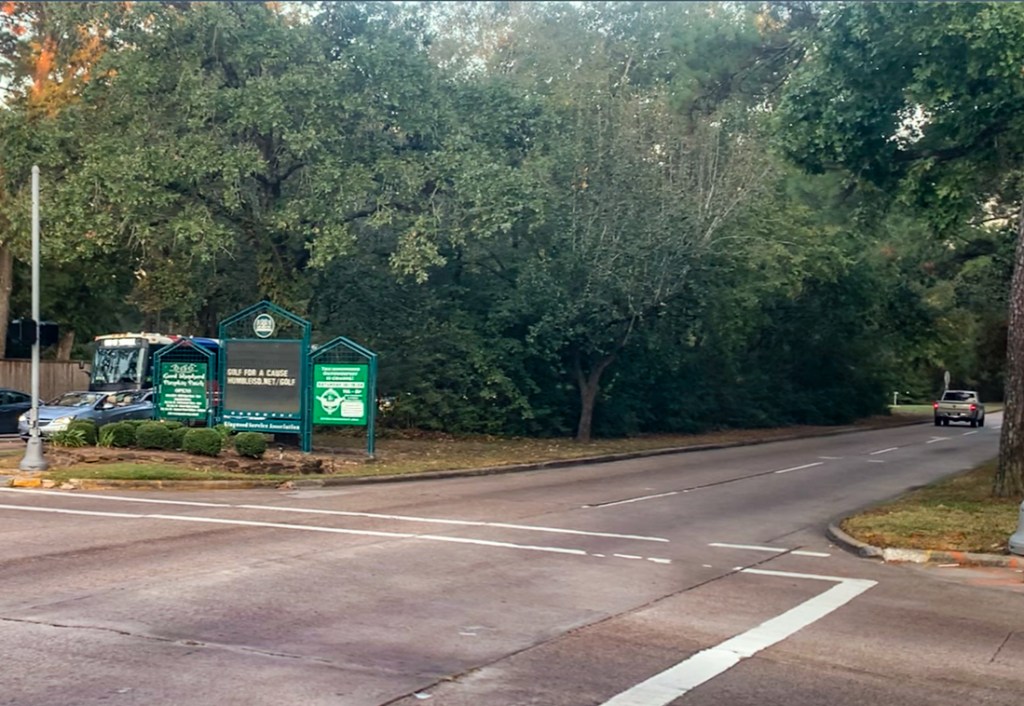
1/30/25 – The effort to build an all weather evacuation route from Kingwood along Northpark Drive has been remarkably accident free – until recently. A large and sudden surge in Northpark accidents has caused the Houston Police Department to step up enforcement.

Speeding or other violations in the construction zone could now result in double the normal fine if you are caught.

Warning signs on westbound Northpark near Woodridge Parkway. Remember: sometimes work goes round the clock.

Factors that Increase Traffic Accidents in Construction Zones

According to ChatGPT, traffic accidents in construction zones are often caused by a combination of environmental factors, driver behavior, and work zone conditions. The primary causes include:

  1. Speeding – Drivers exceeding posted speed limits or failing to slow down in work zones increases the likelihood of accidents.
  2. Distracted Driving – Using mobile phones, adjusting the radio, or other distractions can lead to drivers missing critical warnings or changes in traffic patterns.
  3. Sudden Lane Changes – Unpredictable lane shifts or merging without proper signaling can cause collisions.
  4. Tailgating – Following too closely reduces reaction time, especially when traffic suddenly slows down.
  5. Poor Visibility – Dust, debris, and temporary lighting can reduce visibility, making it harder to see workers, signs, or other vehicles.
  6. Confusing or Inadequate Signage – Improperly placed, unclear, or missing warning signs can lead to driver confusion and unsafe maneuvers.
  7. Work Zone Layout Changes – Narrow lanes, temporary barriers, and detours can catch drivers off guard if they are not paying attention.
  8. Impaired Driving – Driving under the influence of alcohol or drugs reduces reaction time and decision-making ability.
  9. Construction Vehicle Movement – Large trucks and machinery entering or exiting the work zone can disrupt traffic flow and create unexpected obstacles.
  10. Pedestrian or Worker Presence – The presence of workers near moving traffic increases the risk of pedestrian-involved accidents.

Preventing accidents requires drivers to increase awareness and alertness.

Don’t assume that the conditions you encountered yesterday will be the same you see today.

Don’t assume that everyone has the reflexes of a cat like you do. And don’t become part of the Northpark accident surge.

If you use Northpark, please share this with your family and friends. Remember, insurance rates usually increase with traffic fines. So, violations can be costly…even before car repairs.

For More Information

See the Lake Houston Redevelopment Authority project web pages. For a history of the project, see these select posts on ReduceFlooding.

Posted by Bob Rehak on 1/30/25

2711 Days since Hurricane Harvey

HUD’s $863 Million in Limbo Tonight

1/29/25 – $863 million in HUD funds sit in limbo tonight. Just last Friday, Harris County Flood Control (HCFCD) finally presented its long-awaited list of flood-mitigation and disaster-relief projects to Commissioners Court. They totaled that amount.

But by Monday, a series of presidential executive orders targeting diversity, equity and inclusion (DEI) programs put the future of those projects in jeopardy.

$863 million in limbo
Thousands of homes flooded in Kingwood during Harvey, but after 7.5 years, HCFCD has not constructed one flood mitigation project in the community.

Everyone Scrambles to Understand OMB Memo and Its Impact

On Monday, the White House Office of Management and Budget (OMB) announced that it paused funding for trillions of dollars in grants. Reportedly, the pause affected many HUD programs.

The OMB memo said that Federal agencies “must temporarily pause all activities related to obligation or disbursement of all Federal financial assistance.” 

On Tuesday, the New York Times reported, “The Trump administration’s order … prompted confusion across state capitols and local government offices, leaving them at a loss on how to even calculate its impact.”

Then late Tuesday afternoon, a federal judge temporarily blocked part of the Trump administration’s grant freeze.

After the flurry of concerns raised Tuesday, dozens of media outlets reported around noon today (Wednesday) that OMB had rescinded the pause order.

Rescission of the Rescission

But less than two hours later, The Hill quoted White House Press Secretary Karoline Leavitt as saying, “This is NOT a rescission of the federal funding freeze. It is simply a rescission of the OMB memo. … The President’s executive orders on federal funding remain in full force and effect, and will be rigorously implemented.”

Before the rescission of the rescission, I talked to official sources at the local, state and federal levels.

  • A Flood Control District spokesperson thinks that the $863 million is not in jeopardy. She said that everyone is moving forward as though the money were still committed.
  • Likewise, U.S. Congressman Dan Crenshaw’s office feels the chances are slim that Trump would revoke earmarks already approved by Congress. Crenshaw previously secured part of the funding for the Woodridge Village/Taylor Gully project in Kingwood, one of the projects on HCFCD’s list.
  • The Texas General Land Office (GLO) also feels the chances of the money being pulled back are slim. GLO hopes that any changes made in Washington would improve efficiency in the grant process.

While we sort this out, we should remember that the $863 million in HUD funds come with some very tight deadlines. Not one of the three sources above knew yet whether those deadlines would be extended because of a pause in funding federal grant applications. So uncertainty reigns.

How Did We Get Here?

Kingwood provides a clue. Ever since the passage of the 2018 Harris County Flood Bond and the County’s first Equity Prioritization Framework, I have tracked the Harris County Flood Control District’s spending by watershed.

I watched Precinct 1 Commissioner Rodney Ellis rant about how “Kingwood was getting all the damn money.” Yet Kingwood has received only $230 in capital improvement construction funds while the Brays Bayou Watershed where Mr. Ellis lives has received $206,576,424 between Harvey and the end of 2024 … all in the name of equity. That’s almost a million times more.

But denying aid to predominantly white neighborhoods may have backfired on Mr. Ellis. Only 50% of the HUD money had to benefit LMI residents. But like others who benefitted from DEI initiatives across the country, Ellis kept pushing for more.

He insisted on 70% while excluding projects in predominantly white and middle class areas. And that has fueled resentment among people who received virtually nothing for their taxes.

Of course, Ellis alone didn’t generate a backlash that catapulted Trump into the White House. He had plenty of help nationwide from others pushing the DEI envelope as he did.

And now Trump is delivering on campaign promises – terminating people, policies and programs relating to DEI.

Fairness for All Needed, Not Winner-Take-All Mentality

Perhaps had politicians like Ellis treated everyone fairly and not pushed their advantage so egregiously, we wouldn’t be in this mess. We need a “fairness for all” mentality that replaces the “winner take all” mentality currently pervading our politics.

Long before Abraham Lincoln said in 1858 that “A house divided against itself cannot stand,” Jesus used the phrase. He said in the Gospel of Matthew 12:25, “Every kingdom divided against itself is brought to desolation; and every city or house divided against itself shall not stand.”

Surely, there’s a way to divvy up the HUD money that benefits all the residents of Harris County. Withholding it all simply penalizes everyone.

In the meantime, we potentially have $863 million in limbo doing no one any good.

Posted by Bob Rehak on 1/29/2025

2710 Days since Hurricane Harvey

The thoughts expressed in this post represent opinions on matters of public concern and safety. They are protected by the First Amendment of the US Constitution and the Anti-SLAPP Statute of the Great State of Texas.

89th Texas Legislature Bills Related to Flooding, Dredging, APOs

1/28/25 – To date, members of the 89th Texas Legislature have introduced more than three dozens bills relating to flooding, dredging, and aggregate production operations (APOs) in Austin this year. The deadline for filing additional bills is Friday, March 14, 2025, 60 days from the start of the session. So, more could follow.

But here is a brief rundown on bills flood- and mitigation-related bills with links to the text of the actual bills on the Texas Legislature Online website.

Flooding

Thirty-six bills contain the keywords “flood” or “flooding.” So, I won’t summarize each. Instead, I’ll focus on those that could make the largest impact in the Houston region.

HB 2068 by Rep. Dennis Paul would amend the bill that created the Harris County Flood Control District. It would allow the district to grow beyond the boundaries of Harris County, when and if surrounding counties wish to join the District and coordinate efforts. The expanded District’s board would have five directors appointed by the governor.

HB 1209 by Rep. Charles Cunningham addresses the minimum number of instructional days required by the state’s schools affected by “flood days” or other extreme weather conditions. See also similar bills, such as HB 236, HB 683, HB 1157, HB 1703, HB 276, HB 1889, SB 233, and HB 1257.

State Representative Charles Cunningham from District 127.

HB 866 by Ron Reynolds would create a Climate Change Impact Assessment Council. The Council would assess current and potential effects of climate change and their costs. It would also research ways to mitigate climate change and recommend legislation to minimize its adverse impacts.

HB 941 by Rep. Briscoe Cain and SB 75 by Sen. Bob Hall et. al. relate to the resilience of the electric grid during extreme weather events and other hazards. It would establish a security commission to establish resilience standards, plans and provisions.

HB 798 by Rep. Armando Walle relates to the rights and duties of both residential tenants and landlords involved in disputes that may arise over flooding, broken pipes, sewage backups and other habitability issues. It defines how long the parties have to cure defects or non-payments in the disputes, and what their rights are.

Dredging

Legislators have introduced three bills containing the keywords “dredge” or “dredging.”

HB 1532 by Rep. Charles Cunningham relates to the creation of a Lake Houston Dredging and Maintenance District. It would give the District the authority to issue bonds and sell the material it dredges, but would not give it taxing authority.

HB 1069 by Rep. Chris Turner relates to the classification of construction workers in dredging and other trades, and their eligibility for unemployment benefits.

SB 766 by Senator Judith Zaffirini corrects references, including those related to dredge material and dredging plans, in TCEQ documents and regulations.

Aggregate Production Operations

Four bills refer to “aggregate production operations” (APOs). APOs include sand mines, which have contributed to flooding by increasing sedimentation in the headwaters of Lake Houston.

HB 873 by Rep. Terry M. Wilson relates to permits for APOs. Among other things, it would require APOs to control erosion by revegetating barren land. It would also require them to provide performance bonds to the TCEQ that would cover the cost of violations.

HB1163 by Rep. Charles Cunningham would amend Subchapter E (Planning and Financial Responsibility) of the state water code. It targets APOs operating within 1500 feet of the San Jacinto River or its tributaries. And it would obligate APOs to develop a restoration plan. Among other items, the bill requires APOs to return water quality of the “receiving body” (i.e., the river) to its original condition in the event of an unauthorized discharge. The main focus is on restoration of the mine itself and guarantees that would cover the costs of restoration.

HB 1018 by Rep. Terry M. Wilson establishes a certification program for APO operators, identifying those that do and don’t comply with best management practices.

SB 729 by Sen. Nathan Johnson relates to the operation of rock crushing facilities and monitoring of the air contaminants they generate.

Flood Infrastructure Fund

I couldn’t find anything yet about the state’s Flood Infrastructure Fund. Will the legislature ad to the funding? The State compiled its first flood plan last year. It contained more than $50 billion in project recommendations. What will be their fate? Stay tuned. I’ll try to review the progress of these and related bills as the session progresses.

Posted by Bob Rehak on 1/28/25

2709 Days since Hurricane Harvey

Humble ISD Contractor Reduces Sediment-Laden Runoff

1/27/25 – The Humble ISD contractor in charge of rebuilding Foster Elementary has taken multiple, positive steps to reduce sediment-laden runoff from the construction site. Neighbors complained in early January about silty runoff from the site.

Chris Parker and Robert Scarfo, two members of the school board, contacted me and facilitated a meeting with contractors and ISD construction supervisors at the site. The meeting was unusual in that the six people present all seemed eager to eliminate the problem, not just convince me that I shouldn’t worry about it.

We spent the next 90 minutes discussing preventive measures they had implemented.

Final Phase of Construction Had Just Started

As it turns out, the project had just recently entered the third phase of the reconstruction effort.

Demolition and utilities/permitting precede new construction. So, the contractors had not yet fully installed all measures designed to prevent sediment-laden runoff when the early January storm struck. However, between the initial incident and the time we met on 1/24/25, they had made considerable progress.

I went back today after a 2″ rain yesterday. I can’t say there was no runoff. But the water left standing in the street was the clearest I have ever seen around a construction site. The turnaround was dramatic.

Multiple Lines of Defense

Measures designed to prevent sediment-laden runoff included:

  • Three stormwater detention basins, two of which they will later connect into a larger basin
  • Silt fences around the entire site
  • Secondary fences to keep people back from the sharp stakes that anchor the silt fences
  • A novel form of storm-drain-inlet-protection (see pics below)
  • Wattle rolls (tubular barriers filled with straw) wherever perimeter top soil had been disturbed
  • Gravel at construction site entrances to knock mud off the tires of trucks leaving the site
  • A full-time employee dedicated to scraping mud off surrounding streets and sweeping them clean

More on the Way

In addition, they have ordered “track-out matts” to help knock mud off the tires of trucks. The matts replace gravel traditionally used at entrances. However, gravel must constantly be replenished as it gets pushed down into the dirt.

The surface of the new matts features a grid of pyramid-shaped bumps that minimize the amount of mud tracked out of job sites by construction vehicles. They also protect keep gravel from becoming embedded in tires

As an environmental bonus, the HDPE mats are re-usable for up to 10 years.

Pictures of BMPs Now in Place

I took the pictures below on Friday, 1/24/25, and Monday, 1/27/25. On Sunday and Monday morning, we received approximately 2″ of rain.

The old Foster Elementary school had no stormwater detention basins. The new Foster will have two when finished. The construction road separating the two on the left will be removed at the end of construction to connect the two halves.
Temporary channels lead runoff into the detention ponds for now until the permanent drainage is installed.
Note the filtration in front of the pipe leading from one of the ponds to the storm sewer.
Note gravel at the construction entrance in the upper right.
On Friday, a fresh load of gravel had just arrived for another entrance.
The black silt fence is semi-porous. It lets water through, but holds sediment back. The bottom is buried to keep water from rushing under it. Note sharp ends on stakes supporting the silt fence. The outer blue fence protects pedestrians from those stakes and other job site dangers.
scraper
Contractor has one employee dedicated to scraping and sweeping up dirt full time.
A wattle roll helps protect the sidewalk from erosion in the disturbed area.
Multiple layers of protection: 1) silt fence behind blue fence, 2) a wattle roll, and 3) inlet protection (see more below).
A wire cage snaps into the storm drain inlet. Porous fabric lets water enter the drain, but traps dirt, leaves and other street debris. This is an alternative to the sandbags placed beside inlets at many construction sites. This system does not force water out into the street like the sandbags do.

Surrounding Streets Looked Much Better Today

Several of the construction managers for the contractor live in Kingwood and helped rescue people during Harvey. After spending 90 minutes with them, I believe they want to avoid a repeat as much as other residents. They fully understand the importance of reducing sediment-laden runoff and seem to do a much better job than competition.

Shortly after the rain ended this morning and before the contractors arrived, I took the two shots below. They show the impact of following best management practices.

Cystal Springs Drive south of Foster reconstruction site. Note the absence of sediment buildup near the curb.
Water near the curb was as clear as any I have seen next to a construction site, thanks to all the measures above.

Construction experts say we can’t always expect runoff to be this clear. It may contain particles of clay so fine that they migrate through silt fences. But particles that small usually remain suspended and float out into the Gulf without blocking drainage.

However, we do need to prevent larger particles from settling out of suspension in gutters and storm drains, and accumulating into layers of muck.

I plan to revisit this site periodically throughout the construction to monitor progress.

The new building will have enough capacity for 800 students. The artists renderings look beautiful. The Humble ISD says the facility should open for the 2026-2027 school year. I can’t wait to see it.

Posted by Bob Rehak on 1/27/2025

2708 Days since Hurricane Harvey

The thoughts expressed in this post represent opinions on matters of public concern and safety. They are protected by the First Amendment of the US Constitution and the Anti-SLAPP Statute of the Great State of Texas.

HCFCD Spending Declines for Fourth Straight Year, San Jacinto Watershed Still Slighted

1/26/25 – According to data provided in response to a FOIA request, Harris County Flood Control District (HCFCD) spending has now declined for the fourth straight year, despite $3 billion left in the flood bond (including committed partnership funding).

HCFCD spending more than doubled after passage of flood bond in 2018, but is now less than in 2019. $2.1 billion of the $5 billion in the bond has now been spent.

High Cost of Slowing Down

HCFCD spending picked up slightly last quarter compared to the previous quarter. But overall, the trend is still down compared to the years following passage of the flood bond in 2018.

A quarter-by-quarter analysis shows the decline has not been perfectly smooth. Dips and bumps have occurred with changes in management, direction, organization, and processes imposed by Commissioners Court. But overall the slowdown has been unmistakeable and costly.

Between 2018 and January 2025, the United States experienced a cumulative inflation rate of approximately 25.62%. Thus, the $3 billion remainder of the $5 billion flood bond has lost approximately a quarter of its purchasing power. And that means some planned projects may not get done.

Equity Prioritization Index Ignores Flood Damage

One of the biggest changes: the county’s focus on equity in prioritizing bond projects. On the left of the graph above, money was allocated to mitigation projects in areas with the most flood damage.

But starting in August 2019, that changed. Commissioners started ranking projects using a multi-factor index that omitted damage while emphasizing the average income in an area. Then, they kept tweaking the formula for the next three years.

The constant changes let Democratic commissioners direct money to pet projects in their precincts. But it also has reportedly slowed down HCFCD, and delayed or denied flood-mitigation assistance to areas that desperately need it.

San Jacinto Watershed: Worst Flooding, Modest Mitigation Investment

For instance, in five major storms since 2000 (Allison, Tax Day, Memorial Day, Harvey and Imelda), the San Jacinto watershed ranked 8th among Harris County’s 23 watersheds in terms of damaged structures.

Based on HCFCD Federal Reports. Total number of damaged structures in five major storms between 2000 and 2020 shown on right.

The San Jacinto also ranked 4th in the percentage of its population that experienced flood damage in those storms. That indicates how disruptive flooding has been to a watershed.

Based on 2022 population estimates by HCFCD in each watershed.

The San Jacinto had almost half the flood-related deaths in Harris County during Harvey – 15 out of 36.

And we also had the deepest flooding in the county during Harvey – more than 20 feet above flood stage!

worst first
Chart showing feet above flood stage of 33 gages on misc. bayous in Harris County during Harvey. San Jacinto is at far left.

However, since Harvey, the San Jacinto watershed ranks 14th in terms of HCFCD spending.

Hopeful Comparisons Between Short- and Long-Term Trends

The San Jacinto watershed’s ranking increased from 8th place last quarter compared to 14th “since Harvey”. That’s a hopeful sign. Work in some other watersheds, such as Brays, finally appears to be winding down. Compare the relative positions of Brays and San Jacinto above and below.

Here are the actual spending totals during the two time periods. They vary by more than a 1000 to 1. Political priorities have skewed the numbers.

As of end of 2024

The lifecycle stages of projects have also skewed the numbers. For instance, within a project’s lifecycle, construction usually ranks as the most expensive stage by far. Looking at the percent of construction dollars within the “Total Since Harvey” column on the right above, yields the table below.

From Harvey through end of 2024

Watersheds near the bottom of the list may have had upfront studies completed, but little more. The San Jacinto’s low ranking (#17) indicates that commissioners have prioritized mitigation work in other watersheds higher.

Remember that studies don’t mitigate flooding. Construction does.

Another hopeful comparison shows how the percentage of HCFCD spending in watersheds with a majority of low-to-moderate income (LMI) residents decreased last quarter compared to the longer-term trend.

Harris County has eight watersheds with majority LMI populations. LMI means residents earn less than the median income for the region.

Since Harvey, LMI watersheds have received more than half of all funding from HCFCD, despite the fact that there are only eight such watersheds vs. 15 others.

On a per watershed basis, the LMI watersheds received twice the money on average. But last quarter, the percentages were much closer to equal.

Of course, the imminent kickoff of $863 million worth of projects funded by HUD – with a 70% cumulative LMI percentage – could skew these percentages back in the other direction faster than you can say Rodney Ellis.

I have two big worries at this point:

  • Inflation’s Toll – Will there be enough money left in the flood bond to complete all the projects in it – especially if we have to wait years more to finish the HUD projects?
  • HCFCD Spending Slowdown – Will HCFCD be able to complete almost a billion dollars worth of flood-mitigation projects before HUD deadlines?

If either worry comes to pass, projects that benefit higher income neighborhoods may not get done.

Posted by Bob Rehak on 1/26/25

2707 Days since Hurricane Harvey

The thoughts expressed in this post represent opinions on matters of public concern and safety. They are protected by the First Amendment of the US Constitution and the Anti-SLAPP Statute of the Great State of Texas.

HCFCD Recommends Projects for $863 Million in HUD Funding

1/25/25 – Yesterday, Harris County Flood Control District (HCFCD) released two lists of projects proposed for $863 million in funding.

The lists correspond to Community Development Block Grants for Mitigation (CDBG-MIT) and Disaster Recovery (CDBG-DR) programs from the U.S. Department of Housing & Urban Development (HUD). The Texas General Land Office (GLO) administers the funds at the state level.

Per HUD rules, at least 50% of the funding for all projects taken together must benefit Low-to-Moderate Income (LMI) citizens. However, HCFCD is working towards a goal of 70% mandated by Harris County Commissioners Court.

Differences Between DR and MIT Funds

Of the total $863 million awarded, $322 million will go to Disaster Recovery programs and $541 million will go to Mitigation programs.

  • CDBG-DR dollars fund areas impacted by Hurricane Harvey. CDBG-DR projects must be completed by May 31, 2026. 
  • CDBG-MIT dollars fund projects that mitigate future disasters and flooding. They must finish by March 31, 2028.

You can review one-page summaries of each recommended project on these pages:

Public Comment on Two Lists Open Through Feb. 24

HCFCD’s release of the lists yesterday opened public comment, which closes at 4:30 p.m. on Monday, February 24, 2025.

Email comments to CDBG@hcfcd.hctx.net or mail them to Harris County Flood Control District, ATTN: CDBG Communications, 9900 Northwest Freeway, Houston, TX 77092.

Only One Project in Lake Houston Area

HCFCD has proposed one project in the Lake Houston Area out of all this money: Taylor Gully Channel Improvements/Woodridge Village Stormwater Detention Basin. HCFCD estimates the project at $33 million. It will serve a population that’s 26% LMI.

The project overview says, “This project will improve the stormwater conveyance in Taylor Gully and increase the volume of detained stormwater with the construction of the Woodridge stormwater detention basin. The stormwater detention basin will be constructed on undeveloped land the Flood Control District owns and adjacent to three existing stormwater detention basins. This part of the project will be completed before the channel conveyance improvements on Taylor Gully start.”

Taylor Gully starts in MoCo on the Woodridge Village Property and runs through the northern part of Kingwood to the East Fork. Hundreds of families flooded twice in 2019 in this area after Perry Homes clearcut the Woodridge Property.

Shortly after purchasing the Woodridge property in 2021, HCFCD got a head start on the detention basin portion of the project when it entered an excavation and removal contract with Sprint Sand and Clay. But the contract ended and work stopped when HCFCD decided to apply for the HUD grant. Under HUD rules, work cannot continue while a grant application is being evaluated. That left a gaping, disconnected hole in the ground.

Start of Woodridge Village stormwater detention basin as of October 25, 2024. When complete, it will extend to small grove of trees near top of frame and the diagonal channel that bisects the property. See map above.

Other Mitigation Projects

See the other Projects in the screen captures below.

See HCFCD website for interactive list of proposed CDBG-MIT projects.

Disaster Recovery Projects

See HCFCD website for interactive list of recommended DR Projects.

Not on Lists

Notice that the Kingwood Diversion Ditch did not make either list. HCFCD’s Kingwood Area Drainage Analysis named it one of the two most important projects in the Kingwood Area, which suffered the worst flood in the county during Harvey.

Regardless, I look forward to seeing the Woodridge detention basin resume construction.

Posted by Bob Rehak on 1/25/25

2706 Days since Hurricane Harvey

Last Chance to Reduce Flood Risk from Sand Mining

1/24/25 – Only hours remain to reduce your flood risk from sand mining.

The public comment period for the Texas Commission on Environmental Quality’s (TCEQ) proposed new best management practices (BMPs) for sand mines closes tonight at 11:59 PM. As of this morning, fewer than 200 people statewide had left comments. That’s less than 1% of all the homes and businesses that flooded in the Lake Houston Area alone.

Small Response Says People No Longer Care About Flooding

And that’s a pathetically small number considering sand mining’s contributions to flooding in this area. Sediment released from the mines during floods accumulates at the mouths of rivers streams and ditches, blocking drainage. Accumulated sediment also reduces the conveyance of rivers and streams.

Blockages and reduced conveyance contributed to an estimated billion dollars in damages during Harvey. They have also cost almost $200 million to dredge in the last five years.

Yet the new BMPs do nothing to address this problem. They show the heavy hand of lobbyists on a state agency eager to create the appearance of public protection.

What We Need

In my opinion, the mines need to be on higher ground, farther from rivers. And the setbacks need to retain their natural vegetation. This will reduce the chances of:

  • Erosion at greater than natural rates
  • Rivers migrating into mines over time
  • Pit capture (That’s when a river starts flowing through a mine pit.)
  • Floodwaters inundating the mines and carrying off sediment
  • Downstream sediment accumulations that contribute to flooding homes and businesses.
Hallett and surrounding mines on the San Jacinto West Fork on May 3, 2024. This was during what amounted to a 2- to 10-year rainfall, according to HCFCD. However, flood levels downstream reached 100-year levels, a testament to the reduced conveyance of the West Fork.

The dikes around sand mines are supposed to protect them in a 100-year flood. But as you can see in the photo above, it doesn’t really work that way.

Submitting Your Comment Should Take Less Than 2 Minutes

Please help. Submit public comments to the TCEQ that urge them to include BMPs that address better sediment control.

Here’s how. It should only take a minute or two. Follow these simple steps.

  1. Copy the text between the two lines below.
  2. Go to the TCEQ web page for submitting comments.
  3. Paste the text into their webform or use your own words.

RE: APO BMP List Proposal

TCEQ’s proposed list of Best Management Practices for Aggregate Production Operations completely ignores mining issues that contribute to flooding in the Houston area.

Most mines on the East and West Forks of the San Jacinto were inundated last year in what amounted to 2- to 10-year rainfall. Floodwaters swept industrial waste downstream into Lake Houston, the drinking water supply for two million people. 

The rivers also broke through the dikes of at least six of those mines. The rivers now run through pits instead of around them. This flushes sand and sediment downstream, where it reduces conveyance, blocks drainage and contributes to flooding.

Addressing these issues requires building mines on higher ground, farther from rivers.

I recommend doubling the minimum setback from 100 to 200 feet for mines in the San Jacinto watershed. That will put the mines on higher ground, farther from the floodway.

I also recommend leaving forests undisturbed in the widened buffer zone. That will reduce the velocity of floodwater and, with it, the volume of sediment carried downstream. It will also decrease the likelihood of pit capture, by increasing the amount of time that it takes a river to migrate into a mine. The forest will also help capture sediment that may escape a mine.

Finally, the wider buffers will give rivers more room to spread out during floods. Right now, dikes are supposed to protect mines from a hundred-year flood. But when mines build tall dikes on one side of a river, they double the volume of water flooding the other side. And when they build tall dikes on both sides of a river, water has no room to spread out without invading the mines. The tall dikes effectively eliminate ALL floodplains and turn rivers into erosive firehoses.

I also support the concerns and list of alternative BMPs proposed by Texans for Responsible Aggregate Mining.


Hurry. There are only hours left. So please don’t put this off. Your voice could make a difference for thousands.

west fork mouth bar before dredging
West Fork mouth bar formed during Harvey and was 8-10 feet above water line in place. Picture taken before dredging. This backed water up into the Humble/Kingwood/Atascocita Area.

Posted by Bob Rehak on 1/24/25

2705 Days since Hurricane Harvey

More of Old Northpark Drive Disappears

1/23/25 – In an effort to build the first all-weather evacuation route from Kingwood along Northpark Drive, contractors this week took a brief break – for the weather. But today, they were back at it. Here’s where things stand in the last full week of January.

Demolition, Drainage and Weather Delay

The Lake Houston Redevelopment Authority/TIRZ 10 has resumed demolishing more of the old Northpark Drive pavement. Contractors already demolished and removed the old northbound lanes on Loop 494 south of Northpark. This afternoon, they were busy scraping away the old eastbound lanes on Northpark itself between the entrance to Kings Mill and Russell Palmer Road.

In other news:

  • Installation of culverts on the north side of Northpark has almost reached the UnionPacific Railroad tracks.
  • A concrete pour between Loop 494 and US59 was only partially completed before the big freeze. It was paused, but rebar is ready when the temperature becomes warm enough to pour concrete again. The ideal temperature for safely pouring concrete is typically between 50°F and 70°F.

Pictures Taken 1/23/25

Here are pictures of the progress taken this afternoon.

Looking east from in front of Northpark Christian Church. Old lanes have been demolished and removed all the way to Russell Palmer Road.
Reverse angle from same location. Demolition extends to Kings Mill entrance.
Drainage on outbound Northpark now extends almost to UPRR tracks visible at top of frame.
Looking South at Loop 494 northbound lanes, also demolished.

Only one of two westbound lanes were poured before cold weather set in.

But another is ready to go when temperatures improve.

Coming Soon

In the next couple weeks, the look-ahead schedule posted on the LHRA website shows that, weather permitting:

  • As soon as the main drainage reaches the UPRR, crews will drop back and begin working on laterals to businesses.
  • After the eastbound roadway is removed, a small storm sewer crew will begin the installation of laterals to the new inlets at the new curb line.
  • Paving crews will continue westbound work between 59 and Loop 494.
  • Crews will demolish the Northbound lanes on Loop 494 north of Northpark.

For More Information

See the Lake Houston Redevelopment Authority project web pages. For a history of the project, see these select posts on ReduceFlooding.

Posted by Bob Rehak on 1/23/25

2704 Days since Hurricane Harvey