The Long, Hard Road from Vietnam to Elm Grove for John Hulon

This is the story of a Vietnam veteran and former police officer who has lived in Elm Grove for more than 25 years. John Hulon’s troubles started when he was laid off from his job after brain surgery. Then he had a stroke. Followed by a heart attack. After being forced into retirement, he discontinued his flood insurance to save money. Then he flooded. Twice. John spent his life savings to restore his home and replace two vehicles. Now, a planned mitigation project that could protect his home from future flooding has become a political football. Regardless, he focuses fondly on his neighbors and the 12 volunteers from Second Baptist Church who helped him in his darkest hours. 


Interview with John Hulon

Rehak: How badly did the 2019 floods affect you?

Hulon: We lost everything.

Gutting the Hulon Residence after May Flood

Rehak: Why did you buy your house in this neighborhood?

Hulon: We always wanted to buy a house. So, we started looking around. A real-estate lady, who was an ex-Marine, took good care of us and showed us some homes.

You can tell immediately as you walk in a house if you like it. My wife fell in love with this one instantly. And then the real estate agent opened the curtains and we saw the home had a swimming pool. That was the icing on the cake. So, we bought it. And we’re still in love with it.

No Flood Insurance

Rehak: Did you pay off the mortgage before it flooded? 

Hulon: Yes. 

Rehak: Is that why you didn’t have flood insurance? 

Hulon: Flood insurance was a condition of the mortgage. But after paying the mortgage off, I dropped the insurance because, in the history of Elm Grove, it had never flooded here. And at that point, all we had was Social Security and military retirement. I couldn’t afford the insurance anymore.

Swollen doors and waterlogged studs.

High School Graduation Trip…to Vietnam

Rehak: What branch of the military were you in? 

Hulon: Air Force. In security.

Rehak: Was that back during Vietnam?

Hulon: Yeah, for my high school graduation trip, I went to Vietnam. 

You could say I grew up over there. I went when I was eighteen. In 1967.

Rehak: How long were you in the Air Force?

Hulon: Twenty years. I retired in 1987.  

Preserving the Uniform. The Army uniform belonged to Hulon’s father. He died of Agent Orange after serving in WWII, Korea and VietNam where he was also wounded.

Rehak: Were you in combat?

Hulon: Minor. Mostly I guarded airplanes. 

Switch to Law Enforcement

Rehak: What did you do when you came back?

Hulon: I was stationed at March Air Force Base in Riverside, California. And then I got out of the Air Force for a while after initially serving four years and went back to Louisiana, where my parents lived. I got a job as a city policeman in Leesville, Louisiana. And while there, I met an Air Force recruiter. He persuaded me to rejoin the Air Force. I told him I’d rejoin if he could get me changed from security to law enforcement, which he did. Then after I got out of the Air Force the second time, I started working in retail as a loss prevention manager. And later in IT.

Loss Prevention Manager Who Lost Everything

Rehak: Loss prevention! That makes a good transition to Elm Grove. You lived there for decades. Did you flood in May or just in September of 2019?

Hulon: I flooded in both. In the first flood, we only had to tear out half the walls. But we also had to buy all new furniture, new beds, new everything. We’d just finished that when it flooded again in September.

Rehak: How much of the house did you have restored before it flooded again?

Heirlooms lost to sediment-laden floodwater

Hulon: Walls and floors. We were in the process of repairing the cabinets. We had brand new cabinets before the first flood and they’re still here. They were still usable after the first flood. But after the second flood, they wouldn’t close. They still need to be redone, but we haven’t redone them yet.

Rehak: Will you tell me a little bit about your medical history. 

“I Died in the Back of That Ambulance”

Hulon: I was sitting at my desk working and I started feeling really funny and I knew something was wrong. My co-workers wanted to call an ambulance. But instead I drove my truck home. My wife and daughter were going to take me to the hospital. But we only got to the end of the street before they had to turn around. They called 911. By the time the ambulance came, I was pretty much out of it. They put me on the stretcher. 

In my mind, I died in the back of that ambulance.

John Hulon

Rehak: Why do you say that?

Hulon: I had an out-of-body experience. I was actually looking down at myself from above somewhere while they worked on me. When I got to the hospital, they did a brain scan and thought I had cancer. Turned out it was an abscess. The surgeon told me, “I just barely touched it and it popped.” So, I’m very lucky. They did the surgery and I stayed in the hospital for about two months.

Stroke and Heart Attack

Rehak: And then?

Hulon: Then I had a stroke.

Rehak: When did you have your heart attack, John?

Hulon: About two years ago. After Harvey.

Rehak: What triggered that? 

Hulon: I don’t really know. I was just sitting watching TV when I started feeling funny and had a lot of pain in my back. It wasn’t normal. I was injured pretty bad in Vietnam. So, I’m used to back pain, but not like this. I laid down on the couch and I knew something was wrong. I called 911. They came and said I was having a heart attack.

Rehak: Did you need a bypass or a stent?

Hulon: No, they just put me on a blood thinner and some blood pressure medication. 

Floods Used up Entire Life Savings

Rehak: Rebuilding your house twice must have cut into your life savings. 

Hulon: Used up every penny of it. Everything had to be redone. Everything. In the first flood, they only had to go up about four feet on the sheetrock. But in the second flood, they had to replace everything up to the ceiling, all rooms. 

Rehak: How far are you from the Perry site?

Hulon: About three blocks.

Rehak: Did the water come from that direction?

Hulon: Yes, through yards and down the street.

Rehak: Was it clear or a muddy?

Hulon: Very muddy. 

Dog encounters glove

Rehak: Was there a current going down the street?

Hulon: The water was flowing like a river.

“This is What I Could Do in My Life”

Rehak: What went through your mind as the water came up?

Hulon: I said to myself, “Look at everything we’ve built 40 years of marriage on!” Believe it or not, I was very calm at the time. I just said, “This is what I could do in my life.” 

Paid Contractor Up Front for Work Not Completed

Rehak: Were you able to find a good contractor?

Hulon: We found one that wanted $5000 upfront. They did 90 percent of the work and never showed up again.

Rehak: So sad.

Thinks About Volunteers from Second Baptist All the Time

Hulon: Yeah, but, you know, before that, volunteers from the Second Baptist Church came over. They’re great people there. They sent 12 people to our house when my daughter called. They stripped the walls for us. Wow. They were in and out in like a couple of hours, men and women. And I was so impressed.

Rehak: Incredible.

Hulon: And they kept coming back for a month after that. Every day. They brought us hot meals!

Rehak: That’s amazing.

I think about their kindness all of the time. 

John Hulon

Rehak: This was such a beautiful neighborhood before it flooded.

“These Were All Nice Houses Out Here”

Hulon: It still is, considering all the devastation. People on the internet talk about how this area is so poorly maintained. That’s a bunch of crap. These were all nice houses out here.

“We lost everything.”

Rehak: What do you hope will happen at this point?

Hulon: I hope we can recover some of our life savings and complete the work that we still need to do. I’m not getting any younger. We just need a little cash. I don’t want to leave my wife with nothing. 

“It Would Probably Kill Me”

Rehak: How do you feel about having invested your life savings in restoring a house that may flood again?

Hulon: (Choking up) I don’t know. If we flood again, I’ll probably move to Louisiana and live with my sister. Jesus, I can’t live through that again, I’ve got flood insurance now, but I don’t, I don’t, I don’t know. I’ll probably move to Louisiana. I don’t want to. But I don’t think I could take another flood. I mean, it would probably kill me.

Everybody Helping Everybody

Rehak: Is there anything else you want to tell me, John?

Hulon: How our little neighborhood came together. I mean, it was just amazing. Everybody on the street was just like family. Everybody was helping everybody. But of course, all of Kingwood is that way. That’s what makes this such a great community.

Posted by Bob Rehak on August 07, 2020

1074 Days since Hurricane Harvey and 323 Since Imelda

National Hurricane Center Increases Prediction for 2020

After predicting that the 2020 hurricane season would be slightly above average earlier in the year, the National Hurricane Center (NHC) now predicts the season will be extremely active. An NHC outlook released Thursday indicates this season could almost double the average.

NHC predicts 19 to 25 named storms, though they do not predict how many will make landfall. Of those, NHC also predicts 7 to 11 will become hurricanes and 3 to 6 will become major hurricanes.

Historically, only two named storms form on average by early August, and the ninth named storm typically does not form until October 4. An average season produces 12 named storms, including six hurricanes of which three become major hurricanes (Category 3, 4, or 5).

Factors Behind Change

Current oceanic and atmospheric conditions that make an “extremely active” hurricane season possible are:

  • Warmer-than-average sea surface temperatures in the tropical Atlantic Ocean and Caribbean Sea
  • Reduced vertical wind shear
  • Weaker tropical Atlantic trade winds
  • An enhanced west African monsoon
  • Ongoing warm phase of the Atlantic Multi-Decadal Oscillation, which reappeared in 1995 and has been favoring more active hurricane seasons since that time. 

Another contributing climate factor this year is the possibility of La Nina developing in the months ahead. Indicative of cooler-than-average sea surface temperatures in the equatorial regions of the eastern Pacific Ocean, La Nina can further weaken the wind shear over the Atlantic Basin, allowing storms to develop and intensify. 

Underscores Need for Preparedness

Said Neil Jacobs, Ph.D., acting NOAA administrator. “It is now more important than ever to stay informed with our forecasts, have a preparedness plan, and heed guidance from local emergency management officials.”

“This is one of the most active seasonal forecasts that NOAA has produced in its 22-year history of hurricane outlooks,” said U.S. Secretary of Commerce Wilbur Ross. “We encourage all Americans to do their part by getting prepared, remaining vigilant, and being ready to take action when necessary.” 

Stay tuned to the National Hurricane Center for the latest about tropical storm and hurricane activity in the Atlantic.

Posted by Bob Rehak on 8/7/2020 based on predictions by the NHC

1074 Days since Hurricane Harvey

Harris County Commissioners Vote to Take No Action on Raising Taxes at This Time

This morning in a special meeting, Harris County Commissioners debated whether to raise taxes BEFORE they had a certified appraisal from the Harris County Appraisal District.

They chose to take no action for the time being.

Request by Budget Director

The first agenda item said, “Request by Budget Management for discussion and determination if the Court would like (1) to proceed with initial consideration of proposed property tax rates based on the July 24th Harris County Appraisal District (HCAD) estimate or (2) to take no action and wait to propose rates based on the Certified Appraisal Roll expected from HCAD in late August.

Commissioners Chose Option 2

The commissioners chose option 2, i.e., to take no action. Much of the debate had to do with accuracy. The budget director outlined several different scenarios that called for different levels of tax increases. One even was based on holding the tax rate constant.

But at least one scenario called for a tax increase that would have required voter approval in November. Getting the increase on the ballot, however, would have required making a decision before August 18 and the completion of the certified appraisal.

The agenda item refers to “late August” for the completion of the certified appraisal. Those concerned about a potential tax increase should watch the calendar for the Harris County Commissioners Court.

Commissioners have scheduled two more meetings for August on the 11th and 25th.

Debate Focused on Economic Hardship

A portion of the debate and one call-in comment focused on the economic hardships that people are laboring under right now. The owner of a Chinese restaurant downtown said that her business was only 30% of the normal level. She and her family have been in business for more than 50 years. She said that they might not even be able to make their current tax payments and also said that she could not handle an increase.

This argument set the tone for the discussion. Several commissioners frequently eat at the restaurant.

At the end of the day, the commissioners voted not to take any action until they knew exactly what the tax base was. They feared raising the taxes too much or too little.

The County has not yet published the different budget scenarios considered in the meeting.

County Will Fight to Include Non-Citizens in Population Counts

The second agenda item stated: “Request by the County Attorney for authorization to file on behalf of the County friend of the court briefs and join in existing/future litigation that challenges federal efforts to exclude non-citizens in population counts when legislative boundaries are redrawn and to further authorize the County Attorney to engage Special Counsel at no cost to the County.”

A majority of the Court voted to approve this. It means the county will fight to include non-citizens in official census counts. That means, when legislative districts are redrawn (which they are after every census), Texas could wind up with more representatives in Congress rather than less. It also means that the composition of the congressional delegation could shift.

Uncertainty Surrounds Estimates of Non-Citizens

No one knows with certainty at this instant how many non-citizens live in Harris County.

The US Census Bureau estimates that 26.1% of the population is foreign born, but makes no estimate of how many foreign-born residents have attained citizenship.

A group called the Migration Policy Institute estimates that 412,000 people in Harris County are unauthorized.

Congressional Districts currently average approximately 711,000 people.

So if the Migration Policy Institute estimate is correct, AND if Harris County is successful, the inclusion of non-citizens won’t be enough to create a new district. However, it will shift some boundaries.

The Texas Secretary of State estimates that as many as 100,000 residents statewide many not have attained citizenship. However, officials are skeptical of the estimates. They are based on the number of people who did not have citizenship when they applied for drivers’ licenses. Many may have attained citizenship after applying for the licenses.

So no one really knows at this point how the inclusion of non-citizens could affect congressional boundaries.

Posted by Bob Rehak on 8/6/2020

1073 Days after Hurricane Harvey

Harris County Commissioners to Consider Tax Increase at Special Meeting Today

Under the cover of COVID, Harris County Commissioners will consider a tax increase at a special meeting today.

Harris County Judge Lina Hidalgo conducting Monday’s special meeting.

Tax Increase: #1 on Agenda

Item #1 on the agenda says: Request by Budget Management for discussion and determination if the Court would like (1) to proceed with initial consideration of proposed property tax rates based on the July 24th Harris County Appraisal District (HCAD) estimate or (2) to take no action and wait to propose rates based on the Certified Appraisal Roll expected from HCAD in late August.”

If you got a small black and white post card in the mail last week from HarrisPropertyTaxes.org, this is what it was about.

Reapportionment: #2 on Agenda

Item #2 on the agenda also promises to be a lively discussion: Request by the County Attorney for authorization to file on behalf of the County friend of the court briefs and join in existing/future litigation that challenges federal efforts to exclude non-citizens in population counts when legislative boundaries are redrawn and to further authorize the County Attorney to engage Special Counsel at no cost to the County.”

Monday Special Meeting Considered Changing Election Process

This follows on the heels of another special meeting on Monday. That meeting discussed changing the election process to bring it under the influence of politically appointed, not elected officials.

All these changes follow several decisions to replace high-level county employees with considerable experience. One for instance, was in finance.

Major changes are afoot in Harris County. And none of the mainstream media seem to have the bandwidth to cover the story.

So keep your head up.

How to View

To view archived videos of commissioners’ meetings, click here.

To view archived agendas of commissioners’ meetings, click here.

To view meetings live and in progress, click here.

Posted by Bob Rehak on 8/6/2020

1073 Days since Hurricane Harvey

TranStar Enhances Flood Warning System

Houston TranStar has upgraded its mobile app and web site in time for the 2020 Hurricane Season. They now feature more sensors and a wider area of coverage that extends throughout the Houston region. The app shows real-time traffic data and estimates areas of roadway-flooding risk during heavy rainfall.

Houston TranStar shows real-time traffic data with potential trouble 
spots for roadway flooding.

76 More Sensors Than Last Year

Developed in partnership with the Harris County Flood Control District and the Texas A&M Transportation Institute after Hurricane Harvey, TranStar’s Roadway Flood Warning System displays real-time data from 283 weather sensors, an increase of 76 sensors from 2019.

“Expanding the Roadway Flood Warning System’s footprint into counties adjacent to Harris allows us to warn even more people about potentially dangerous roadway flooding,” said Dinah Massie, Executive Director for Houston TranStar. “Information collected by this highly accurate technology is overlaid on the TranStar Traffic Map and mobile application. We’re warning motorists about flood risk and also helping emergency crews respond more quickly and safely during heavy rainfall.”

125,000 Users

To date, more than 125,000 people get up-to-the-minute roadway flood warning alerts using TranStar’s mobile app.

TranStar’s Roadway Flood Warning System was developed to warn motorists of streets with potentially high water so you can plan alternative routes and avoid dangerous situations.

The system uses a comprehensive network of 283 sensors to estimate areas of roadway flooding risk and can be easily accessed through the TranStar Traffic Map.

Reroute Around Trouble

With the addition of new sensors, Houston TranStar now alerts travelers to areas where roadway flooding risk is high in more places than ever before.

It helps commuters reroute transit plans around trouble spots, such as flooded roadways and underpasses. Unfortunately, many people have lost their lives driving into flood waters that weren’t visible because of darkness or heavy rain.

Increased Capacity to Monitor Water Levels

Harris County Flood Control District, the Brazoria Drainage District, the City of Sugar Land, Fort Bend County, the Galveston Drainage District, Waller County and the San Jacinto River Authority maintain sensors. The new sensors increase capacity to monitor water levels for possible local street inundation throughout TranStar’s region.

Download the Free App

For more information on how to Travel Smart with TranStar, visit HoustonTranStar.org. Or download their  Mobile App at the Google Play or Apple App store.

During Harvey, I relied on this system to navigate my way back into Houston from a long, vacation road trip. It works. This free app could save your car and your life.

Bob Rehak

In case you lose track of this story, you can always find the TranStar links under the Governmental tab on this website’s Links page.

Unique Partnership Saves Billions of Tax Dollars

Houston TranStar is a unique partnership of the City of Houston, Harris County, the Metropolitan Transit Authority of Harris County (METRO) and the Texas Department of Transportation (TxDOT). They share resources and exchange information under one roof to manage transportation and emergencies.

This 2 minute video shows how the system works and explains how sharing resources has saved taxpayers billions of dollars. The annual cost to operate Houston TranStar in 2018 was $25.2 million. Divided into TranStar’s annual benefit of $517 million, the benefit/cost ratio is 20.5. So, for every $1 spent on Houston TranStar, the region realizes a benefit of $20.50. Since its inception 22 years ago, TranStar has saved commuters $6.5 billion in reduced traveler delays and fuel costs.

Posted by Bob Rehak on 8/5/2020 based on a story in the Westchase Wire

1072 Days after Hurricane Harvey

City of Houston’s Stormwater Action Team Begins Ditch Rehabilitation in Forest Cove

The City of Houston’s Stormwater Action Team began rehabilitating a roadside ditch in Forest Cove on Monday, July 27, 2020. The project area includes Cypress Lane and Palmetto Lane. The map below shows the project limits highlighted in red. 

Location of work in Forest Cove

Crews will work Monday through Saturday, from 8:00 a.m. to 5:00 p.m. They should complete the work by November 24, weather permitting.

Scope of Work

The scope of work includes: 

  • Regrading and re-establishing of the roadside ditches
  • Replacing of the culverts and resetting them to match the flow line of the ditch
  • Replacing the driveway where the culverts are replaced
  • Increasing the capacity of any culverts less than 24 inches in diameter
  • Removing any unpermitted culverts or other encroachments in the City Right of Way. 

Impact on Traffic, Neighborhood

Construction will not impact any water or sewer services. 

Expect temporary loss of driveway access, lane closures, construction noise and debris, and limited roadside parking during the project.

Flagmen and orange traffic cones will help with traffic flow through the construction zone as the project will require one lane closure. However, traffic will flow two ways at all times. 

Businesses and residents will have access to driveways and sidewalks at all times, and may experience an increase in noise levels due to trucks and equipment in the area.

For More Information

For more information, please contact Mayor Pro Tem Dave Martin’s office at (832) 393-3008 or via email at districte@houstontx.gov.

Posted by Bob Rehak on 8/5/2020

1072 Days after Hurricane Harvey

New Caney ISD Clearcutting Site of High School #3 Before Installing Detention

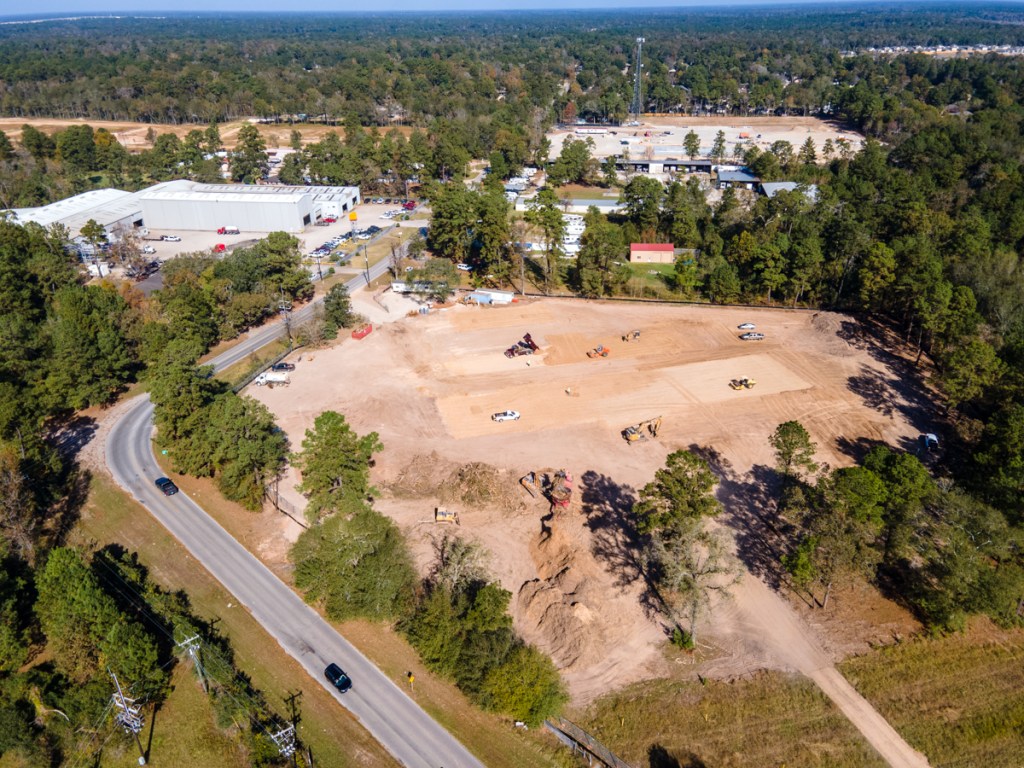
The New Caney ISD has removed a long swath of trees that separated Sorters-McClellan Road from the site of its new high school south of the Kingwood Medical Center. Removal of the trees – before the construction of the detention pond for the site – removes the last barrier between sheet flow and residents downhill.

Similarities to Woodridge Village

Clearcutting creates a condition similar to that of Woodridge Village. Woodridge contributed to flooding Elm Grove and North Kingwood Forest twice last year after Perry Homes cleared the site before installing all the required detention. With nothing to retain runoff in a major storm, water could inundate Sorters Road and the homes on the opposite side of it in McClellan Circle.

This once again raises the question of whether contractors follow best practices for construction.

The site is in both Montgomery County and the City of Houston. But Montgomery County claims the City took the lead in permitting this site. MoCo claims it does not even have any drainage plans.

Looking south along Sorters Road at the site of New Caney ISD High School #3. Land slopes from left to right and foreground to background. Recently, contractors removed all trees next to the road. A large detention pond is supposed to be installed next to the tree line at the far end of the site. See below.

Building Pad Site Complete But No Detention Pond Yet

As of July 20, 2020, New Caney ISD had this to say about the project. “The site has been cleared and rough grading is at 90 percent completion.” Contractors have completed the building pad and will start installing the concrete piers concurrent with the underground storm and sanitary systems.

General plan for New Caney High School #3. North is left, east is up. Detention pond should be at far end of the photo above.

How Site Looked in June

Site of New Caney High School Number 3 as it existed in June, 17, 2020. Note the tree buffer between the site and Sorters McClellan road on the right that is now gone. So are all the trees within the site.

Steep Slope Accelerates Runoff

This approximately 50-60 acre site slopes toward the corner in the upper right by 10 to 15 feet depending on where you start. Sources: Google Earth Pro and USGS National Map Viewer.
USGS National Map Viewer still shows old par 3 golf course on which the new high school will be built.

This is a 5% slope compared to the 1.8% slope on Woodridge Village.

Comparing Google Earth Elevation Profiles

The steepness of the slope accelerates runoff in the absence of features to slow it down.

Current State of Site

Here are some more shots showing the current state of construction on the site.

Looking NW toward the Eagle Sorters Sand Mine in the top left.
Looking NE toward HCA Kingwood Medical Center and Insperity.
Looking SE toward retail establishments that front US59, barely visible in the top left of the frame.

There seem to be some berms in the corners of the property. They may slow down sheet flow in a large storm. But the berms are absent over the large area in the center where the high school building itself will go.

Peak of Hurricane Season 5 Weeks Away

Let’s hope they get the detention in before the next big storm. No one wants a repeat of Woodridge.

Posted by Bob Rehak on 8/4/2020

1071 Days since Hurricane Harvey

The thoughts expressed in this post represent opinions on matters of public concern and safety. They are protected by the First Amendment of the US Constitution and the Anti-SLAPP Statute of the Great State of Texas.

70 Percent of HUD Grants in Texas for 2019 Floods Going to Low-to-Moderate Income Households, Neighborhoods

The Texas General Land Office (GLO) published its proposed Community Development Block Grant – Disaster Relief (CDBG-DR) Action Plan last week for floods in Texas during 2019. This 136-page document is available for public review and comment through August 27, 2020. It describes rules that the GLO will use to distribute $212,714 million in CDBG-DR grants from the US Department of Housing and Urban Development (HUD).

As matters of national policy, HUD has required grantees to spend at least 80 percent of the allocation on unmet needs in HUD identified most impacted and distressed (MID) areas; the remaining 20 percent will address unmet needs in other eligible counties. Also 70% of the funds must go to meet the needs of Low-to-Moderate Income persons.

Proposed GLO rules for HUD CDBG-DR grants in Texas for floods occurring in 2019

Eligible Counties Where Damage Occurred

The GLO is in charge of distributing money in Texas (through municipal and county governments) to people and areas affected by disasters declared as federal emergencies. In Texas in 2019 that meant ten counties in the Lower Rio Grand Valley and southeast Texas.

Eligible counties where damage occurred

From June 24 to June 25, 2019, high rain totals within Cameron, Hidalgo, and Willacy Counties in the Rio Grand Valley led to street flooding and road closures; nearly 1,200 homes destroyed or in need of major repair; and over 100 people evacuated. Rainfall totals ranged from 12 and 18 inches in some locations.

In September, Tropical Storm Imelda caused $8 billion worth of damage in Chambers, Harris, Jefferson, Liberty, Montgomery, San Jacinto and Orange Counties. Imelda, the seventh wettest storm in US history, dropped 40+ inches of rain in Chambers, Jefferson, and Liberty Counties. The highest total was in Fannett in Jefferson County where 44.29 inches fell.

How Money Will Be Distributed

HUD wants its money to increase the resiliency of homes and communities. Of the $212.714 million:

  • 70% will go to improving housing resiliency
  • 30% will go to improving infrastructure resiliency

Here’s the breakdown by by location and program in dollars and percentages. For a complete description of each program, see the Plan.

Allocation by location and program in dollars and percentages.

Eligible Single-Family Home Improvements

Single-family home resiliency solutions may include:

  • Elevating the first floor of habitable area;
  • Breakaway ground floor walls;
  • Reinforced roofs;
  • Storm shutters;
  • Use of ENERGY STAR appliances and fixtures;
  • Mold and mildew resistant products.

Eligible Multifamily Solutions

Multifamily resiliency solutions include:

  • Elevation;
  • Retention basins;
  • Fire-safe landscaping;
  • Firewalls;
  • Landscaped floodwalls

Eligible Infrastructure Solutions

Eligible infrastructure solutions include:

  • Elevating critical systems, facilities, and roadways above base flood elevation;
  • Installing backup power generators for critical systems (water, sewer, etc.);
  • Avoiding an increase in impervious cover by keeping projects in their original footprint and encouraging the use of building practices that allow for more pervious coverage;
  • Replanting with only native vegetation to preserve the natural environment;
  • Storm water management including installing retention basins, larger culverts and debris guards, and erosion control solutions; and
  • Supporting local community efforts to enhance building codes and regulations.

Limitations on Studies

Studies funded with this money may include, but are not limited to, flood control, resilient housing solutions, homelessness, or other efforts to mitigate future housing and residential damages.

Not for Feint of Heart

Warning: these 136-pages are intended for government experts and grant writers who deal with such programs all day every day. The information and its organization will prove difficult for average citizens. Think about the brain freeze you get with the giant DQ Blizzard. Now you have the picture.

Regardless, the persistent reader will be rewarded with a wealth of data about who was impacted when, where and how. Even the homeless.

The persistent reader will also get a good feeling for what’s allowed and not allowed under these rules. For instance, in 2019 disasters, victims can use grants to pay off loans. That was not allowed in Harvey.

Keep in mind that the dollars mentioned here are just for 2019 disasters, not Harvey, which follows similar, but not identical guidelines.

Posted by Bob Rehak on 8/3/2020

1070 Days after Hurricane Harvey and 319 after Imelda

Approximately 1,000 Plaintiffs File Suit Against Sand Mines in Harvey Flooding

On February 20th of this year, approximately 1,000 plaintiffs filed a 118-page lawsuit against 55 sand mining companies in the San Jacinto River Basin. Plaintiffs allege that the miners harmed them by decreasing the capacity and depth of Lake Houston and its tributaries by wrongfully discharging and negligently allowing the release of materials into waterways. That reduction of capacity, they say, contributed to flooding their homes and businesses.

Western half of LMI River Road mine in floodway and flood plain of San Jacinto West Fork. Note also in foreground how the mine undermined five pipelines carrying highly volatile liquids.

Background

To support their claims (¶613), plaintiffs cite violations of Texas Commission on Environmental Quality (TCEQ) regulations and the U.S. Clean Water Act. They claim:

  • Excessive, unauthorized discharge of silt into waterways
  • Failure to:
    • Obtain stormwater discharge permits
    • Prevent unauthorized discharges
    • Minimize generation of dust and off-site tracking

Past and Present Activities Cited

Some defendants, they say, operated above permit limits and others operated without any permits at all (¶614).

Plaintiffs say (¶615) that defendants have operated immediately adjacent to various waterways and in the flood plain, clearcutting all vegetation, and digging pits within feet of the riverbanks. Thus, there are no real barriers between mines and the rivers, they claim. Further, they allege that defendants have no plans in place for protection and preservation of their pits and loose sand during flood events, which occur frequently.

Then Came Harvey

Hurricane Harvey, they say, inundated mines and “thousands of acres of sand washed downstream, clogging the rivers and lakes, resulting in flood waters moving outside the banks and outside the flood plain, causing hundreds of millions of dollars in damages.”

Washed out road INSIDE sand mine during Harvey.
Submerged sand mines in the floodway of the San Jacinto West Fork during Hurricane Harvey in 2017

Alleged Violations of Water Code

The defendants had a duty to implement procedures to reduce the discharge of sediment into waterways, but did not, according to the plaintiffs. Thus, the proximate cause of plaintiffs’ injuries involved negligence and negligence per se. Defendants allegedly breached their duties under sections 11.086, 26.039, and 26.121 of the Texas Water Code, thus causing flooding and damage to plaintiffs’ property.

To prove negligence, personal injury plaintiffs must show that the defendants’ conduct fell below the applicable standard of care and that their actions were the actual and proximate cause of harm. 

In cases of negligence per se, defendants’ actions are assumed to be unreasonable if the conduct violates an applicable rule, regulation, or statute. That’s why lawyers cite the Texas Water Code, plus TCEQ and EPA regulations.

  • 11.086 of the Texas Water Code provides that no person impound the natural flow of surface waters, or permit impounding to continue, in a manner that damages property of another by the overflow of the water diverted or impounded.
  • 26.039 specifies that mine operators must notify the TCEQ of accidental discharges or spills that cause or may cause pollution as soon as possible.
  • 26.121 prohibits discharge of pollutants. Both the EPA and TCEQ consider sediment a pollutant.

Specific Omissions

Specific omissions, say the plaintiffs, include failing to:

  • Locate sand mines outside of floodways
  • Increase the width of dikes
  • Decrease the slope of dikes
  • Control erosion with vegetation
  • Replant areas not actively being mined
  • Protect stockpiles from flooding
  • Mine only above the deepest part of the river
Flooding from Hurricane Harvey in Kingwood’s Town Center where 100% of businesses were disrupted, most for approximately a year. Some still have not reopened. Photo by John Knoezer.

Nuisance Claim

The plaintiffs also allege nuisance. Under Texas law, nuisance refers to a type of legal injustice involving interference with the use and enjoyment of property. Specifically, plaintiffs say that the defendants’ negligent conduct caused paintiffs’ flooding, thus depriving them of the use of their homes.

Complaint against Forestar by Barrington Residents

On page 108, a subset of plaintiffs (those who live in the Barrington), lodge a complaint against Forestar (USA) Real Estate Group Inc. They allege that Forestar developed, marketed and sold homes in the subdivision without any standards for determining the elevation of a house relative to flood risk.

The Long Ride to Safety During Harvey. Barrington Photo by Julie Yandell.

“Despite having actual knowledge of the possibility of flooding in the Barrington Subdivision, Forestar did not advise homebuyers to purchase flood insurance,” says the complaint (¶640). “Nor did Forestar advise the residents of the Barrington Subdivision of its location on a floodplain, or that their elevations were changed due to lots being filled with dirt” when residents purchased homes.

Nevertheless, the complaint continues (¶643), homes were built at an “unreasonably low” elevation, given their location near the West Fork San Jacinto. “Forestar knew, or should have known, that houses needed to be built at an elevation adequate to prevent and/or reduce the likelihood of flooding.”

Clean out after Harvey in the Barrington. By Joy Dominique.

Damages Alleged

Plaintiffs allege damages that include:

  • Cost of repairs to real property
  • Cost of replacing personal property
  • Lost of use of real and personal property
  • Diminution of market value
  • Loss of income, business income, profits and business equipment
  • Loss of good will and reputation
  • Consequential costs, such as loss of time from work and alternate living expenses
  • Mental anguish
  • Pre- and post-judgement interest
  • Court costs

Conscious Indifference and Gross Negligence

¶658 asserts that the conduct of all defendants (sand mines and Forestar) qualifies as gross negligence under Texas law. The plaintiffs say that the defendants acts of omission involved an extreme degree of risk, considering the probability and magnitude of harm to others. Plus, “Defendants had actual subjective awareness of the risk involved in the above described acts or omissions, but nevertheless proceeded with conscious indifference to the rights, safety and welfare of plaintiffs and others.”

Where Case Stands

129th District Court Judge Michael Gomez signed a docket control order on 2/28/2020 that calls for:

  • All parties in the suit to be added and served with notice by 8/19/2020
  • Close of pleadings and start of mediation on 12/16/2020
  • End of discovery on 1/15/2021
  • All motions and pleas heard by 1/15/2021
  • Trial, if necessary, on 2/15/2021

To date, there have been several motions to transfer venue, dismiss the case, and change the judge.

Only Triple PG Sand Development, LLC has filed an answer to the plaintiffs’ claims; the company filed a general denial.

In a separate case, the Attorney General of Texas is suing Triple PG for failing to prevent and repair breaches in dikes that resulted in repeated unauthorized discharges of process wastewater and sediment into Caney Creek. Caney Creek joins the East Fork San Jacinto just downstream from Triple PG. Triple PG currently operates under an injunction that bars it from dredging.

Breach of Triple PG mine into Caney Creek and the headwaters of Lake Houston

Editorial Opinion

If successful, this case may force sand mines to operate more responsibly, now and in the future. For instance, it might force them to move farther back from rivers and out of floodways. Having taken thousands of photos of leaking sand mines from the air since Harvey, in my opinion, that might benefit everyone, not just the plaintiffs.

Giant sand bar at the mouth of the West Fork which backed water up through much of Kingwood, Atascocita and Humble.
Mouth bar on the East Fork San Jacinto grew by thousands of feet during Harvey and Imelda. Downstream from Triple PG and Texas Concrete Mines.

To read the entire lawsuit, click here.

Posted by Bob Rehak on August 2, 2020

1069 Days after Hurricane Harvey

The thoughts expressed in this post represent opinions on matters of public concern and safety. They are protected by the First Amendment of the US Constitution and the Anti-SLAPP Statute of the Great State of Texas.

Easy Way to Find the Elevation of a Home and the Slopes Around It

Ever wonder how high your slab is compared to the elevation of your street? Or where water is likely to collect in a neighborhood? The US Geological Survey (USGS) has given us a quick and easy way to lean more about elevation.

While the site says the elevations are not as good as a survey’s, I found the elevation for my house to be within inches. This is not something to take to the bank, but if you’re trying to:

  • Screen several properties for purchase
  • Figure out why some people in a neighborhood flooded and others didn’t
  • Understand where floodwaters might collect

…this is a good place to start.

To Find Elevation

  • Go to this U.S. Geological Survey website called the National Map Viewer.
  • Enter an address or just zoom into the area of interest.
  • Select a base map by clicking on the icon with the four squares that form another square. Different base maps allow different degrees of zooming and show various features such as streets, water features, topography, etc., so experiment.
  • Above the map area, click on the icon that shows an XY.
  • A box will pop up on the right side of the screen. Within it, click “Activate.”
  • Click on the map location or locations that interest you.
  • An info box will pop up that shows the location and elevation at the blue dot(s) where you clicked.
  • To erase the points you selected, click “Deactivate.”
Elevations for Riverwood and East End Park Parking Lot

You can click as many different points as you want. A list of ALL the places you clicked with their elevations will show up in the right hand box.

In the example shown above, you can see that Riverwood Middle School at the intersection of High Valley and Kingwood Drive is at 65.03 feet. You can also see that the entry for East End Park is at 53.68 feet – more than 11 feet lower just a couple blocks away.

How High Is A Home Above Street Level?

This question is crucial if you want to avoid street flooding during high intensity rainfalls that overwhelm the capacity of storm drains and force water to back up in the streets.

  • Switch to the base map called Streets (if you were in something else)
  • Zoom in on the area of interest or enter an address.
  • Again select the XY tool.
  • Click on the home that interests you to see the elevation of the slab.
  • Click on the street in front of it.
Note 3 foot elevation difference between slab and house in Streets Basemap.

Three feet is a pretty good difference. But another home in the same neighborhood has a 4.5 foot difference!

This home sits 4.5 feet above the street.

Click around in different neighborhoods, especially those that flooded. On a block that flooded badly in Elm Grove, one home escaped. It was also 4.5 feet above street level. Others around it ranged from 1 to 3 feet above street level.

When buying a home, elevation above street level can be a valuable consideration.

Streets are usually considered part of the flood retention system. Developers size storm drains to hold a 1- or 2-year rain. Everything beyond that up to a 100-year rain backs up into the street until it can be safely released into drainage ditches. If you aren’t high enough…

Slope Within Neighborhoods

USGS offers another useful tool called elevation profiling. To the left of the XY tool, click the tool called Profile.

  • A box will pop up on the right of the screen. To activate this tool, click on the ruler icon in the box.
  • Define a path with two or more points.
  • In the example below, I followed the curves of a street by clicking multiple times.
  • When you get to the end of the area of interest, DOUBLE click.
  • Double clicking changes the tab in the right hand box and starts compiling an elevation profile result.
  • Give the site a few seconds to compile and display the profile.

When this profile popped up, I saw that this street had six feet of slope from the west end of the block to a low point in the middle and then rose back up three feet to the school on the right.

Example of Elevation Profile Tool. Note the U-shaped profile in blue and brown on the right.

It’s common practice to slope streets; developers must to ensure that water drains to storm sewers. But when the rain comes down so fast that the storm drains can’t handle it, guess where the rain will collect. I’m not sure I would want to buy the house at the bottom of the bowl. (At least not without a discount to compensate for the risk.)

Powerful Tools at Your Fingertips

USGS has given us a fascinating tool kit. I have just begun to explore the power of this site.

Several people in Kingwood’s Woodstream Village approached me about some flooding on their street. Using the tools on this site, I quickly developed a theory that accounted for all the eyewitness stories.

Have fun exploring this fascinating tool.

Posted by Bob Rehak on 8/1/2020 with thanks to Laura Norton

1068 Days since Hurricane Harvey and 316 since Imelda