Texas Delegation Urges HUD to Release Funds Voted by Congress a Year Ago

In February of last year, Congress appropriated $4.383 billion to Texas through Community Development Block Grant–Disaster Recovery (CDBG-DR) funds explicitly to rebuild and mitigate against future storms.  Almost one year later, Texas cannot begin to utilize this important funding because HUD has not published the rules governing use of the money (i.e., the projects they are funding) in the Federal Register.

CDBG-DR funds can help provide local matches for things like additional gates for Lake Houston. I posted about how drawn out this process was on June 1 last year. The City was hoping for an answer in November for its grant reequest. Now, it’s February. HUD describes CDBG-DR funds as “crucial seed money to start the recovery process.”
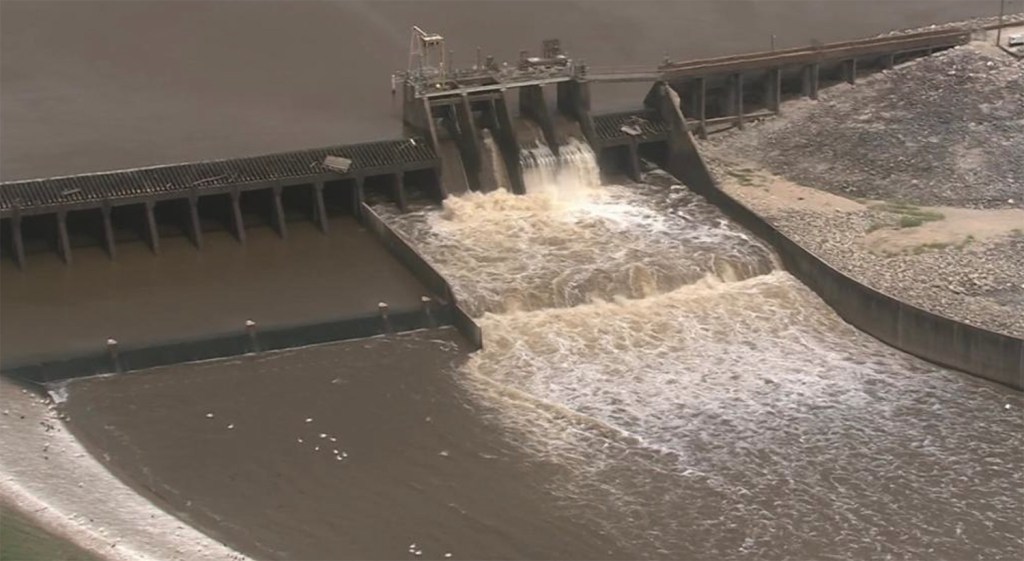
Small gates on Lake Houston limit City’s ability to release water before storms.

What Big Lebowski would say about this?

LEBOWSKI: Where’s my goddamn money, you bum?!

DUDE: Well we–I don’t–

LEBOWSKI: They did not receive the money, you nitwit! They did not receive the goddamn money. HER LIFE WAS IN YOUR HANDS!

BRANDT: This is our concern, Dude.

Taking a Cue from the Movie

As WALTER says: If the plan gets too complex something always goes wrong.

So today, Congresswoman Lizzie Fletcher (TX-07) and Congressman Pete Olson (TX-22), Governor Greg Abbott, Senators John Cornyn and Ted Cruz, and the Houston Congressional delegation sent a letter to HUD. The language is considerably more diplomatic. The letter urges acting Office of Management and Budget (OMB) Director Russell Vought to approve the rules for spending the money in Texas. Representatives Kevin Brady (TX-08), Al Green (TX-09), Randy Weber (TX-14), Sheila Jackson Lee (TX-18), Michael McCaul (TX-10), Sylvia Garcia (TX-29), Brian Babin (TX-36), Michael Cloud (TX-27), and Dan Crenshaw (TX-02) also signed the letter.

Real People, Real Needs

It has been a year since these funds were allocated by the 115th Congress. “Now, we need the money to show up,” Rep. Lizzie Fletcher said.  “There is much work still to do, and we need these funds to do it.”

“When Hurricane Harvey hit Texas over a year ago, families were uprooted, homes were destroyed and innocent lives were lost,” Rep. Pete Olson said. “I urge HUD and OMB to act quickly so we can finish the Harvey recovery process.”

The Texas Two Step

Just when I thought it was simply a matter of printing the rules, the letter tells us that there is yet another step before the money can start doing some good. It continues. Because the rules have not yet been published, “GLO has been significantly delayed in drafting a State Action Plan for the funds, the critical next step at the state level before the grants can begin to flow.”

The Plan to Make the Plan

The letter concludes, “Texans cannot afford to wait any longer. We urge you to expedite publication of these rules.  Thank you for your attention to this important matter.” The government shutdown affected HUD. But now the shutdown has ended and still no rules, no money, no plan. Hopefully, it won’t take very long.

Posted by Bob Rehak on February 4, 2019

524 Days since Hurricane Harvey

Photo of the Day #269

Harvey deposited massive amounts of sand along both sides of the San Jacinto. Here, it virtually blocks the area proposed for a new high rise marina.

Meeting 6 p.m. Monday at Community Center about High-Rise Development near River Grove

Many residents concerned about the proposed new high-rise development in Kingwood both north and south of the Barrington have requested a meeting on the subject to voice their concerns. Monday night, starting at 6 p.m., they will get that chance at the Kingwood community center.

What the Meeting Will Cover

The meeting will begin with a brief overview of the proposed development and how it will affect the flood plain, floodway and wetlands.

After that, we’ll discuss where permitting stands for the development, and the kinds of things that the TCEQ and US Army Corps of Engineers will look at in the permitting process. They are seeking public comment. This represents your chance to learn about the types of things they look at and how they will make their decision.

Comments Pro or Con Invited From Public

Finally, we’ll open the floor to public comments so that people can share their feelings pro or con for this controversial proposal.

To help you prepare for the meeting and submission of comments to the Corps and TCEQ, I have added a new page to this site called High Rises. On that page, you will find links to conceptual sketches, details, and videos that the developer has prepared. You will also find links to posts about different aspects of the project. Finally, you will find sample protest letters prepared by experts, should you wish to prepare one of your own.

Meeting Details

The meeting is free and open to the public. Please come and bring your neighbors:

Kingwood Community Center
4102 Rustic Woods Dr.
Kingwood, TX 77345
6-8 P.M.

Below is a map showing the extent of the high-rise development. It extends from Kingwood Lakes on the north to the San Jacinto River and would contain multiple buildings 25-50 stories tall.

The areas labelled Project Area are included in the developer’s permit application. The developer also owns the red area not labeled, i.e., the one west of KSA’s River Grove Park.

The developer plans to add 12 feet of fill to the flood plain, alter drainage, and fill wetlands. Because of surveys either not conducted by the developer or not supplied by the Corps for public evaluation, it’s not clear how this proposal would affect flooding in Kingwood and Forest Cove. Residents in subdivisions such as Trailwood, Kingwood Lakes, the Barrington, Deer Cove, Kings Forest, Kingwood Greens, and North Shore have expressed worries about backwater effects. A total of 650 homes flooded in those areas during Harvey, in part because of blockages in the river.

The developer’s application is based on old flood plain maps which are being revised as a result of Hurricane Harvey. They do not reflect the current conveyance of the river or an accurate extent of flood plains. The Corps has documented constrictions which the current dredging program will not address. During recent minor floods, gages documented a 10 foot difference upstream and downstream of major sediment dams. As a result the project area flooded three times between December 7 of last year and January 7th of this year. Normally, that area floods only once every other year. Still, the effect of persistent flooding on a high-end resort could be devastating. If the development fails, economic blows could ripple throughout the Lake Houston area.

A web site called VTRUSA.com shows the proposed Kingwood project and talks about it as if it exists already. Notice the redundant use of the word “is” in the copy describing the commercial project. Also notice that in one place, the site talks about the hotel, retail, offices and hotel spaces in the project all having 13,050 square feet. Immediately under that, the site claims the development has:

  • 82,500 square meters of retail space (882,750 square feet)
  • 179,780 square meters of offices (1,934,433 square feet)
  • 20,400 square meters of hotel (219,300 square feet)
  • 8,863 parking spaces (about one third of the number of spots at NRG Stadium, which has 26,000)

In total square footage, this is almost three times the size of Deebrook Mall (1.2 million square feet).

Please review the new High-Rise page and join us tomorrow at 6 p.m. Also, please share the high-rise link with any friends, neighbors or relatives who cannot attend. This is a vital issue of public policy that affects the entire future of Kingwood. We need to make sure we get this right. At least, that’s my opinion on a matter of public policy and it’s protected by the First Amendment of the U.S. Constitution and the Anti-SLAPP statutes of the Great State of Texas.

Posted by Bob Rehak on 1/13/2019

502 Days since Hurricane Harvey

More Video Near Site of Proposed New High-Rise Development

Jim Zura of Zura Productions filmed this video of rescue efforts on August 29th, 2017, during Harvey at the northern most (highest) end of the proposed new high-rise development in Kingwood.

He filmed the video at the intersection of Woodland Hills and Seven Oaks. For those not familiar with the neighborhood, it’s four blocks north of the Barrington entrance. The Barrington lies mostly in the 500-year floodplain (see FEMA map below). Zura says the people you see in the video are mostly residents of the Barrington being evacuated.

Proposed Development Area Already Vacated by Humble ISD

The site of the new development is on the left of this video and far lower than Barrington, which was built up with fill in the early Nineties. In fact, it contained Humble ISD’s first ag barn which flooded so frequently that the school district moved the ag facility to higher ground at Deer Ridge Park. Now the school district is moving the operation again – to even higher ground in Porter.

The proposed development would add fill to much of this low lying area and even fill in some wetlands. The developer would fill areas both north and south of the Barrington. Read details here and view the plans.

Zura video shot to the left of Plan View A, near northern portion of proposed development. 
The Barrington splits the development in half.

Relationship of Proposed Development to Flood Zones

Below, you can see the area of the proposed new development within this screen capture from FEMA’s flood hazard layer viewer. The Barrington lies within the bean shaped oval in the center. Brown areas represent the 500-year flood plain. Aqua areas represent 100-year flood plain. And cross-hatched areas represent the floodway of the river (main current during floods).

The blue box above the word Marina represents a “Letter of Map Revision (LOMR). The developer plans on building the marina and several high rises within that blue box. Such revisions are often granted when residents can prove that they have raised a foundation above the 100-year flood plain. The purpose: to lower flood insurance rates for people who would otherwise be IN the 100-year flood plain.

A History of Flooding

Most of the Barrington sits in the 500-year flood plain yet still flooded in 1994, Allison and Harvey. It nearly flooded in the Memorial Day weekend flood of 2016. See this other YouTube video by BYUCougarFan99. The videographer says it was shot in the southern part of Barrington. It appears to look east and south, toward Kingwood country club and the southern part of the proposed development.

Drone footage of 2016 Memorial Day Weekend Flood shot from the Barrington.

This article from the website Swamplot describes the development in detail with 3-D renderings. Note the heading: Livable Lake.

The Army Corps Wants Your Comments

The Army Corps’ public notice states that they are seeking comments on the proposed development. If they receive no comments before January 29, they will assume that residents have no objections. Comments and requests for additional information should reference USACE file number, SWG-2016-00384, and should be submitted to: 

  • Evaluation Branch, North Unit 
  • Regulatory Division, CESWG-RD-E 
  • U.S. Army Corps of Engineers 
  • P.O. Box 1229 
  • Galveston, Texas 77553-1229 
  • 409-766-3869 Phone 
  • 409-766-6301 Fax 
  • swg_public_notice@usace.army.mil 

The deadline is January 29, 2019.

Posted by Bob Rehak on January 1, 2019

490 Days since Hurricane Harvey

Over the River and Through the Dune, To Grandmother’s House We Dredge…

‘Twas the night before Christmas and all through the house, not a sound could be heard, except for the distant thrum of Great Lakes’ Dredge #2. After muscling through the giant 12-foot sand dune at River Grove Park, the dredge has moved downriver. Next, it will attack the triangular dune south of Kingwood Country Club.

Next up, the giant triangular sand bar south of the Kingwood Country Club. This bar was deposited during Harvey and blocks the entire river.

Before Prep, Note Vegetation around Dune

As of about 2 p.m. on Christmas Eve, the dredge had not quite reached the bar. Meanwhile, a backhoe prepped the bar by removing vegetation that grew up around it since Hurricane Harvey.

Vegetation around edges of the bar can get stuck in the teeth of the dredge’s cutter head and slow it down.

The shot above shows the bar from the river in October before any prep work. Vegetation like you see around the edges can get caught in the cutter head or lodged in the pipeline. That impairs productivity. Work must stop as crews manually pick vegetation from the teeth of the cutter head.

After Prep, Note Missing Vegetation

On Christmas Eve around 2 p.m., the scene looked like this (see below). Notice how the backhoe removed vegetation from the margins of the dune. I shot the photo below with a long telephoto lens from a half mile away in River Grove Park. The backhoe provides a sense of scale in this photo that shows just how much sand Harvey deposited virtually overnight!

Note missing vegetation around edge of dune with backhoe. Also note size of dune!

Today marks Day 483 since Hurricane Harvey. The length of time it takes to remediate flooding issues like this underscores the need for legislation that reduces sedimentation from sand mines upstream.

Merry Christmas to all! And to all a good legislative fight! Even the sand miners. We don’t want to put them out of business. We just want them to mine outside of the floodway, so we will remain safer.

Posted by Bob Rehak on December 25, 2018

483 Days since Hurricane Harvey

San Jacinto West Fork Watersheds Partnership Focusing on Water-Quality Issues

The Houston Chronicle yesterday reported on a coalition called the West Fork Watersheds Partnership (WFWP), tackling water quality issues on the West Fork of the San Jacinto and its tributaries. The article claims that the West Fork and one of its tributaries fail to meet water quality standards. It also cites the dangers of fecal material in the water.

The Houston-Galveston Area Council (HGAC), Galveston Bay Estuary Program, TCEQ, and EPA are leading the WFWP, which includes a wider group of organizations, businesses and residents concerned about water quality.


The map above shows critical levels of bacteria in the upper San Jacinto River basin. Red means “impaired.” Green means “not impaired.” In fresh water the indicator bacteria is E. coli. When present, it is likely that other disease-causing bacteria, parasites, and viruses may also be present. Source: H-GAC’s Water Resources Information Map.

The Houston-Galveston Area Council Water Resources Information Map above indicates just how critical bacteria have become. It features water-quality data from the H-GAC’s Clean Rivers Program, which helps ensure safe, clean surface water for the region by providing high quality data. H-GAC works with seven partner agencies to collect and analyze data from over 450 monitoring locations throughout the region.

Bacteria levels are measured at all monitoring locations. In fresh water the indicator bacteria is E. coli. These bacteria originate in the intestinal tract of warm blooded animals and can be harmful to humans. When either of these bacteria are present, it is likely that other disease causing bacteria, parasites, and viruses may also be present.

How does bacteria get into our waterways?

According to H-GAC, bacteria can enter surface waters through many pathways. Most water bodies have most, if not all, of the following bacteria sources.

  • Malfunctioning wastewater treatment plants
  • Sanitary sewer system overflows
  • Failing Onsite Sewer Facilities (OSSFs) and septic systems
  • Runoff from livestock
  • Pet waste
  • Wildlife and feral hogs

Each water body is unique in the combination of bacteria sources and the amount from each source that makes up the total bacteria present.

Why should we care about bacteria?

The water you drink from a tap has been treated to remove bacteria. However, anyone who ingests contaminated water, i.e., when swimming or during a flood, can become ill. People with compromised immune systems or individuals with open wounds or cuts that come into contact with contaminated water are especially vulnerable. A Kingwood resident who had a cut and was exposed to floodwater during Harvey died from flesh-eating bacteria.

Contaminated water can also cause diseases such as:

  • cholera
  • dysentery
  • giardiasis
  • hemolytic uremic syndrome
  • hepatitis
  • typhoid fever

Turbidity a Complicating Factor

The U.S. Geological Survey (USGS) indicates that excessive turbidity, or cloudiness, in drinking water may also represent a health concern. “Turbidity can,” says the USGS, “provide food and shelter for pathogens. If not removed, turbidity can promote regrowth of pathogens in the distribution system, leading to waterborne disease outbreaks, which have caused significant cases of gastroenteritis throughout the United States and the world. Although turbidity is not a direct indicator of health risk, numerous studies show a strong relationship between removal of turbidity and removal of protozoa. The particles of turbidity provide “shelter” for microbes by reducing their exposure to attack by disinfectants. Microbial attachment to particulate material has been considered to aid in microbe survival. Fortunately, traditional water treatment processes have the ability to effectively remove turbidity when operated properly. (Source: EPA)”

Any increase in sedimentation beyond the baseline level of nature increases the difficulty and cost of water purification. USGS data shows a spike in turbidity after every major rain. The rain carries exposed sediment to the river. Some comes from urban environments; some comes from stream beds, agricultural land and construction sites; and some comes from sand mines.

USGS has set up a special website that lets you monitor water-quality data from dozens of gages in and around Lake Houston, many of them in real time.  If you are ever concerned about water quality issues, this is a good place to start your investigation.

Graph showing how turbidity spiked in Lake Houston after three major storms in 2015, 2016 and 2017.

Posted by Bob Rehak on September 12, 2018

379 Days since Hurricane Harvey

Willful Blindness and Sand Mines

Fifty-one weeks ago, I woke to find:

Millions of Cubic Yards of Sand Trigger Willful Blindness Overnight

Millions of cubic yards of sand clogged the river and it all appeared virtually overnight. This much sand doesn’t come from a broken silt fence at a construction site or even erosion from a drainage ditch. Thus began my search for answers…and this blog.

Within days, I flew up and down the East and West Forks of the San Jacinto, taking pictures and trying to find a possible source for so much sand. It seemed so obvious to me: sand mines – twenty square miles of them. But then the naked earth revealed a naked truth about humankind – willful blindness.

People make money from sand. And not just miners. Developers, home builders, road builders, contractors, cities, counties, states, retailers. Sand fuels growth and almost everyone benefits from growth. So when groups like TACA spin fanciful tales about the environmental benefits of sand mining, how sand mines prevent flooding, and how mines trap sediment, they find a receptive audience of the willfully blind.

Omission of Key Facts

In each case, the spinmeisters begin with an element of truth to tinge their tales with credibility. However, they omit key facts.

  • Sand mines can be turned into wetlands, they say. (But are they?)
  • Sand mines can retain water in a flood, they say. (When their dikes don’t rupture.)
  • Sand mines can trap sediment, they say. (Except when the river is rushing through them at 130,000 cubic feet per second.)
  • Sand supports growth, they say. (Not mentioning its contribution to flooding.)
  • Sand came from Spring Creek, they say. (As if none came from the West Fork, and ignoring the East Fork.)
  • Brown & Root found more suspended solids in Cypress Creek, they say. (20 years ago, before sand mines lined the West Fork.)
  • Sand miners want to be part of the solution, they say. (While locating mines in the floodway.)

Such comforting statements capitalize on willful blindness. People WANT to believe them, in part, because they profit and in part because they exonerate themselves. Digging into the omissions might implicate them in someone else’s misfortune. And besides, it would mean a lot of work.

Willful Blindness as a Legal Concept

In the law, willful blindness describes a person who seeks to avoid liability by intentionally keeping himself or herself unaware of facts. Google “willful blindness” and you’ll find dozens of books on the subject. Here’s a TED Talk by Margaret Heffernan, who wrote one of the definitive books on the subject. Ironically, the subject of her talk is a small Montana town with a large environmental problem. As you listen to her, you may be reminded of conversations you have heard in the Lake Houston Area.

I’ve never said that sand mines were responsible for all of the sediment clogging our rivers. I acknowledge the contributions of other sources. However, in order to reduce sedimentation to its natural rate, TACA, sand mines and the legislature must acknowledge and address problems where they exist. As we seek to find money to dredge the river, we should also find ways to reduce discharges from sand mines to manage costs and avoid future disasters.

I would suggest that following best practices commonly accepted in other states and countries would be a good starting point for debate.

As always, these are my opinions on matters of public policy, protected by the First Amendment of the United States Constitution and the Anti-SLAPP statute of the Great State of Texas.

Posted by Bob Rehak on August 28, 2018

364 Days since Hurricane Harvey Flooded the Lake Houston Area

USGS Report on Peak Streamflows During Harvey Significantly Revises Flood Probabilities

The U.S. Geological Survey (USGS) in cooperation with the Federal Emergency Management Agency (FEMA) released a report this week that shows inundation maps, peak streamflows, detailed flood information, and new flood probabilities from Hurricane Harvey. Hurricane Harvey, it says, was the most significant multi-day rainfall event in U.S. history, both in scope and peak rainfall amounts, since records began in the 1880s.

Flood during Harvey looking east from the south side of the West Fork of the San Jacinto. Photo courtesy of Harris County Flood Control District.

Hurricane Harvey’s widespread 8-day rainfall, which started on August 25, 2017, exceeded 60 inches in some locations. That’s about 15 inches more than average annual amounts of rainfall for eastern Texas and the Texas coast. The area affected was also much larger than previous events.

New High Water Marks and Record Streamflows

USGS field crews collected 2,123 high-water marks in 22 counties in southeast Texas and three parishes across southwest Louisiana.

Record streamflows were measured at 40 USGS streamgages in Texas that have been in operation at least 15 years. At two streamgage locations, scientists determined that the percent chance for flooding of this magnitude to happen in any given year was 0.2 percent. This probability is also referred to as a 500-year flood. Thirty other USGS streamgages experienced flooding at levels with a 1 percent chance of occurring each year, also known as a 100-year flood.

Check out the “event viewer” noted in the report, especially if you are interested in high water marks in your neighborhood.

How Data Will Be Used

The USGS conducts research on the physical and statistical characteristics of flooding, estimating the probability of flooding at locations around the United States.

The purpose of the study was to check the probability of future occurrences and map the extent of flooding in Texas.

These records will assist officials in updating building codes, planning evacuation routes, creating floodplain management ordinances, providing environmental assessments and planning other community efforts to become more flood-resilient. FEMA will also use this information to revise their Flood Insurance Rate Maps. These maps help identify areas most likely to experience flooding in any given year.

Gages Closest to Lake Houston

The section on the San Jacinto Watershed starts on page 33. The maps for the San Jacinto watershed appear on pages 35 and 36. Use the maps to see the new high water marks in the area and to find the USGS gages nearest you. For most people in the upper Lake Houston Area, it will be one of these gages:

  • 08068090 – Grand Parkway and West Fork near Porter
  • 08069500 – West Fork and I-69 near Humble/Kingwood
  • 08070500 – Caney Creek near Splendora
  • 08069000 – Cypress Creek near Westfield
  • 08068500 – Spring Creek near Spring
  • 08071000 – Peach Creek near Splendora
  • 08070200 – East Fork near New Caney
  • 08071280 – Luce Bayou above Lake Houston near Huffman

After you locate the gages nearest you, cross reference the numbers of those gages with data at the front of the report. It helps to use the search function in Adobe Acrobat because much of the information is in tables with very small type.

Examples of What You Will Find

Here’s an example of what you can find. For the gage nearest many of the sand mines on the West Fork (08068090), peak streamflow was estimated at 131,000 cubic feet per second. That was the highest of the 33 peaks previously observed at that location (from Table 3 on Page 9).

Now here’s the big news: From the same table, we can see that the Annual Exceedance Probability (AEP) is 2.4.  That’s the likelihood of occurrence of a flood of given size or larger occurring in any one year, expressed as a percentage.

AEP is often expressed as the reciprocal of ARI (Average Recurrence Interval). For instance, A 10-year flood has a 10 percent probability of occurring in any given year, a 50-year event a 2% probabaility, a 100-year event a 1% probability, and a 500-year event a .2% probability.

In this case, a 2.4% AEP would have a likely recurrence interval of 42 years, given the new realities of upstream development, any changes in climate, and pocket calculators with more computing power. This means that the West Fork Gage ((08068090) at the Grand Parkway DID NOT even experience a 100-year flood! Yes, we can expect to see worse in the future.

That’s a far cry from the 1,000-year flood that some talked about earlier and raises real public policy questions about locating sand mines in floodways.

Despite the fact that Harvey was the largest rainfall event in recorded U.S. history, USGS now predicts that it would take even bigger floods to reach the reconfigured 100-year, 200-year and 500-year recurrence intervals: 196,000, 263,000 and 374,000 cfs respectively for West Fork Gage at Grand Parkway (Gage #08068090 from Table 5, Page 14). So the new 500-year flood would have almost triple the volume of Harvey.

Humble Gage Data Missing From Report

Unfortunately, the Humble Gage at I-69 does not show up in the tables even though it is on the map and the cover of the report. This is likely in part due to the fact that the gage stopped reporting during the event due to the excessive streamflow

They may also have not reported the exceedance probability due to the shorter recent record.

For all the other gages, the Annual Exceedance Probabilities translate to new recurrence intervals ranging from 35 to 250 years. The gages at the low end of that range tend to be in the fastest developing neighborhoods.

Implications of New Findings

The report will stimulate public policy debate about development near rivers and the most effective methods of flood mitigation.

After reading this, I believe more than ever that we need more detention, dredging and gates (DDG). We need all three to help us handle the volumes of floodwater that USGS expects at more frequent intervals. Prayer, while advisable, is a less certain option in my mind than including DDG in the flood bond and passing it.

BTW, there was some confusion Tuesday night at the flood bond meeting. A small number of flood control employees incorrectly told residents that dredging would not be possible under the bond. It will be according to Matt Zeve, whom I contacted today.

Posted July 12, 2018 by Bob Rehak

317 Days since Hurricane Harvey

Army Corps of Engineers Awards Dredging Bid on West Fork Emergency Project

The Lake Houston area is one step closer to removing some of those giant sandbars deposited on the West Fork during Harvey. Today, the U.S. Army Corps of Engineers (USACE) awarded the bid for its Emergency Dredging Project on the San Jacinto to Great Lakes Dredge and Dock, an international company headquartered in the Chicago area with more than 125 years of experience.

Bid Phase Comes to a Close

The Corps opened three bids for the project on June, 12, 2018. The wide variation in the bid amounts triggered a mandatory review to ensure each bidder met the bid specs. Based on submittals, the apparent low bidder at that time was RLB Contracting from Port Lavaca, TX. However, during the review RLB was judged “non-responsive.”

By law, the Army Corps must then examine the next highest bidder to ensure that they meet specs and can deliver the project for the price in their proposal. In this case, the next lowest bidder was Great Lakes at $69,814,060.

The corps will meet with Great Lakes next week to discuss details of the project. According to bid specifications, work on the project should begin within 5 days of the award. Specs also state that the winning bidder should staff the project to complete it within 270 days.

Example of equipment used by Great Lakes when dredging rivers.

Volume to be Removed Expanded during Bidding

Originally, the Corps specified 180 days. However, the amount of sand and sediment to be removed more than doubled from 780,000 cubic yards to 1.8 million. The change happened before bids were submitted as all three potential vendors went over specs with a fine tooth comb and submitted questions.

According to one vendor, during this back-and-forth phase of the project, bidders discovered that the river had changed so dramatically from the benchmark study, that some of the dredging “profiles” had to be adjusted.

The profiles are representative cross sections of the river at regular intervals between the western and eastern limits of dredging. They show the current and desired depth and width.

Despite the increase in volume to be removed, the Corps still expects at this time that the two disposal sites will accommodate the volume. The disposal sites are sand pits that will be regraded when filled to match contours of the surrounding area. One disposal area is just north of Townsen Blvd. and North Houston Road in Humble. The other is on the Kingwood side of the river off Sorters/McClellan Road just south of Kingwood College.

Prep Work Finishing

While the Corps has been sorting through dredging bids, the City of Houston has been hard at work removing debris from the shores of the lake and tributaries. Crews have finished removing dead trees from the dam and West Fork. This week they worked their way up the East Fork to East End Park. Today, fishermen spotted them working north of the FM1960 bridge.

Dead tree removal before dredging on Lake Houston is nearly complete.

Even though the current dredging project will not include the East Fork or Lake Houston, the removal of dead trees will help improve safety in the event of another flood. The deadfall could get caught up in the FM1960 bridge and create an artificial dam that would back water up into residential areas.

For more detail about Great Lakes, see their brochure on their river and lake expertise.

For more about the U.S. Army Corps, visit www.swg.usace.army.mil, www.facebook.com/GalvestonDistrict or www.twitter.com/USACEgalveston.

The USACE Galveston District was established in 1880 as the first engineer district in Texas to oversee river and harbor improvements. The district is directly responsible for maintaining more than 1,000 miles of channel, including 250 miles of deep draft and 750 miles of shallow draft as well as the Colorado River Locks and Brazos River Floodgates.

Posted by Bob Rehak on 7/6/2018

311 Days since Hurricane Harvey

New Flood Gages Fully Installed and Operational

Last month, I posted about Harris County Flood Control District’s plans to install additional new and upgraded flood gages. The goal: to give scientists more and better information with which they can create more accurate river forecasts.

New ADVM Gage installed by Harris County Flood Control at US59 and the San Jacinto River

New Gage Locations

According to Jeff Lindner, Director Hydrologic Operations Division/Meteorologist, at the Flood Control District, additional new gages have now been installed and are completely operational at the following locations:

  • West Fork of the San Jacinto River at SH 99 (rainfall and stage)
  • East Fork of the San Jacinto River at FM 2090 (rainfall and stage)
  • Peach Creek at FM 2090 (rainfall and stage)
  • Caney Creek at FM 2090 (rainfall and stage)
  • FM 1960 at Lake Houston (rainfall, stage, wind direction and speed, air temperature, humidity)
  • Kingwood Country Club has been relocated to West Lake Houston Parkway.

The Country Club location had flooding problems that affected the gage’s reliability. During Harvey, the gage at that location stopped operating early on. Lindner says the new site should help prevent the gage from flooding and provide more timely and accurate information.

All of these sites are now up and running and live on the Harris County Flood Warning System web page.

Benefits of New Gages

Another benefit: these new locations will help support the County’s new near-real-time inundation mapping system. Some will help forecasters see water coming toward us from farther away, increasing our warning time. Others will help improve accuracy closer to the Lake Houston area.

Some people commented in Facebook posts that the accuracy of the inundation mapping system’s historical feature seemed a bit off when rendering Harvey data. That was likely because the gages at 59 and the Country club both stopped functioning during the storm.

The first test of the new gages may come later this weekend.

Tropical Wave Update as Of Saturday Morning

Lindner expects “Scattered showers and thunderstorms today will become scattered to numerous on Sunday with multiple waves of activity moving inland from the Gulf of Mexico. Guidance is showing the majority of the rainfall on Sunday remaining near the coast onshore to roughly I-10. Looks like the greatest period for heavy rainfall continues to by Sunday night into Monday.”

“Widespread rainfall amounts of 2-4 inches are likely south of I-10 with isolated higher totals easily to 6 inches or greater. Rainfall totals will reduce northward with totals likely less than an 1 inch across our northern counties. Deep tropical moisture will be in place Sunday-Tuesday and will support intense short duration rainfall rates of 2-3 inches per hour. Any training or slowing of banding features will quickly result in higher rainfall rates, street flooding, and rises on area creeks and bayous.”

Because the ground is fairly dry, says Lindner, “…at this time this does not appear to be a major flooding event. Main threat will be street flooding with the intense short duration rainfall rates. Additionally, away from any training, breaks between waves of rainfall should allow systems to drain and the ground to absorb the water.”

Posted June 16, 2018, by Bob Rehak

291 days since Hurricane Harvey