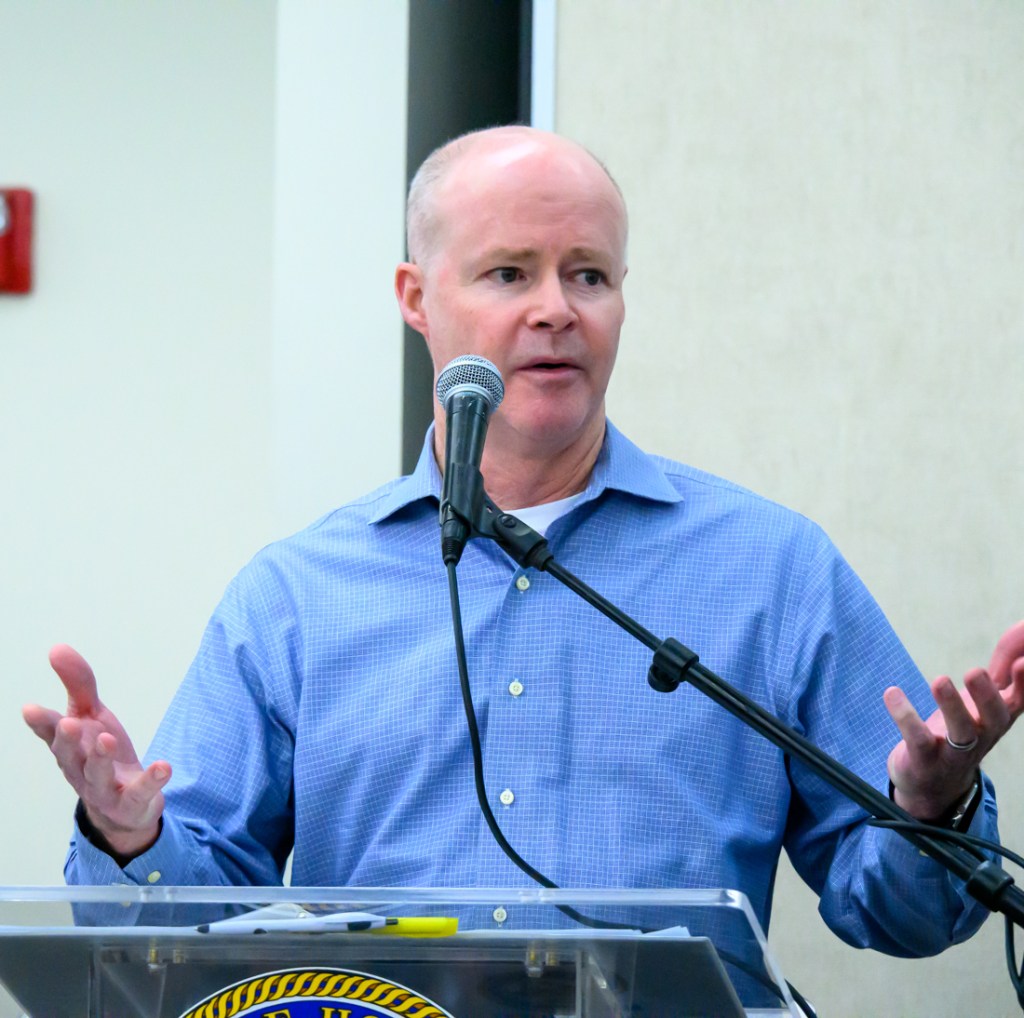
Join the Median Madness on Northpark Drive Saturday.

4/30/25 – District E Houston City Council Member Fred Flickinger has organized another Median Madness event for this coming Saturday, May 3, 2025 from 8:30 AM to noon. This time, however, volunteers will tackle Northpark Drive medians instead of Kingwood Drive’s.

Volunteers from previous Median Madness events have enjoyed the sense of community and seeing immediate results from their efforts.

Median Madness flyer

Event Details

All ages are welcome, but adults should accompany anyone under 16. Please remember to bring water and gloves and to wear closed-toed shoes.

Park at the Kroger and Northpark and West Lake Houston Parkway. That’s 3410 Northpark Drive, Kingwood, TX 77345.

Sponsors include Trees for Kingwood, Houston Parks and Recreation, Kroger, the Houston Tool Bank, and Chick-fil-A.

If you have tools, bring them. But if you don’t, the Tool Bank will supply them.

“We’ll be trimming underbrush along the south side of Northpark Dr., from W. Lake Houston Parkway to Village Manor Dr. This will help enhance the beauty of the neighborhood and the safety of our medians. It’s a great opportunity to give back, enjoy the outdoors, and connect with the community,” said Flickinger.

How to Register

As before, please register online. It will help the event planners. Once you sign up, you will be sent a waiver via email like the one below.

Bring the family, friends and neighbors! And make a difference for the community this weekend.

Posted by Bob Rehak on 4/30/25

2801 Days since Hurricane Harvey

Meritage Pumps Muck from Pond Being Excavated Straight Into Storm Sewer

4/29/25 – Meritage contractors were caught on camera this afternoon pumping muck from a pond they were excavating straight into a City storm sewer. Such a practice, while not uncommon, can clog storm sewers and raise flood risk for neighbors.

The sequence of six pictures below and a video tell the story. They show the location, men setting up the a pump and hose, then pumping the muck into the storm sewer, and bypassing normal filtration devices. The action took place on Pinehurst Trail Drive in Atascocita. The pond is on the east side of the road in Phase II of the new development.

Notice two excavators excavating dirt from the pond in the top center. Also notice the low level of water in the swale between the pond and the camera position.
A few seconds later, several workers in the lower left started extending a hose OVER the silt fence toward the swale.
The hose is still slack as one man kneels to work on the pump.
Meanwhile, just feet away on the other side of the pond excavators stir up the muck.
Minutes later, the hose is conveying the silt-laden water over the storm fence and around the corner toward the City storm sewer.
The hose also bypasses the straw wattle rolls, another filtration device used to keep the storm sewers clear. Notice water shooting out of the hose.

All of these pictures were taken minutes apart.

A reader who passed the site about an hour later snagged this video that shows the swale filled to the brim as pumping continued.

This is not the first time this month that Meritage was caught pumping stilty stormwater into the City storm sewer. On 4/7/25, they drained a veritable lake that had formed on their Atascocita site after 2.5 inches of rain.

To File a Complaint

Practices like those above are usually discouraged by the Harris County Engineer and the Texas Commission on Environmental Quality.

If you’re concerned about runoff that floods your property or potentially clogs your storm drains, please file a complaint.

Harris County Engineer 

Phone: 713-274-3600 Monday Through Friday 8 AM to 5 PM

File a complaint online at: https://epermits.harriscountytx.gov/External_Complaints.aspx

Texas Commission on Environmental Quality (TCEQ) 

For instructions to file a complaint, visit: https://www.tceq.texas.gov/compliance/complaints.

Posted by Bob Rehak on 4/29/25

2800 Days since Hurricane Harvey

The thoughts expressed in this post represent opinions on matters of public concern and safety. They are protected by the First Amendment of the US Constitution and the Anti-SLAPP Statute of the Great State of Texas.

Pace of Northpark Expansion Accelerating

4/28/2025 – The pace of Northpark expansion has visibly accelerated since March despite several intense rains. Today, crews were working from one end of the project to the other. See the ten pictures below.

Looking West toward Russell-Palmer Road. Note rebar being placed for two more inbound lanes on the left.
Still looking west. Just west of Russell-Palmer Road, note the addition of a right turn lane by the carwash.
Farther west, contractors have finished paving about a quarter-mile stretch of two more inbound lanes on left.
Even farther west, contractors have finished the sub-grade work most of the way to Loop 494 on the outbound/north side.
At the UnionPacific Railroad Tracks, contractors are getting ready to bore under the tracks next week.
They will use the steel pipe stockpiled in front of the trees on the right when boring under the tracks.
East of Loop 494, paving on the outbound (north side of the road is almost complete, as is clearing for the inbound side of the road (left).
Only one small stretch by Culver’s remains to be paved on the north side.
The Exxon Station (lower right) at 59/Northpark will soon lose part of its driveway and canopy.
Looking east from over US59. Contractors have virtually completed the sidewalk on the north/outbound side of Northpark.

Project Manager Ralph DeLeon had this to add. “The Kroger’s driveway opened last week.  That location is now complete/permanent with regard to the project. We are close to completing the radius between south bound 494 to west bound Northpark Drive. So drivers will begin to use the new permanent lanes at that location.”

For More Information

See the Lake Houston Redevelopment Authority project web pages or these posts on ReduceFlooding:

UPRR:
Evacuation Route:
Plan Details:
Phase II:

Posted by Bob Rehak on 4/28/25

2799 Days since Hurricane Harvey

Blocked Ditch Under Kingwood Drive Near High School

4/27/25 – A drainage ditch that runs under Kingwood Drive about a tenth of a mile west of Kingwood High School is blocked. Where the ditch runs through the median, it has become so overgrown, you cannot even see it.

Historical images in Google Earth suggest that the City has not cleared the ditch since 2002. Full height trees have grown up in it, contributing to the blockage.

During Harvey, Kingwood High School flooded to the second floor. Four-thousand students had to be bussed to other schools for a year during decontamination and reconstruction.

4000 Students at Kingwood High School
Kingwood High School during Harvey. Kingwood Drive (upper left), one of the area’s main evacuation routes, was also cut off.

Ditch is So Overgrown, You Can’t See It

Harris County Flood Control labels the ditch as G-103-36-01. It crosses under Kingwood Drive about one-tenth of a mile west of Valley Manor and the high school.

Location of ditch and blockage relative to Kingwood High School. Shown with floodplains in Harris County Flood Education Mapping Tool.

See the pictures below. Can you even see where the ditch is? Hint: it’s in the center of the frame.

Looking slightly south. Lake Kingwood is toward the top of the frame.
Opposite direction. The ditch runs between the two storm drains on either side of Kingwood Drive.
From a lower elevation, you can see under the forest canopy. Still no clear path for drainage.

The City has cleared all the other ditches in the map above, but not this one. It’s so overgrown, they likely can’t find it and confuse it with one of the other ditches they’ve already cleared.

Because this blockage has the potential to cut off a major evacuation route, we can’t afford to wait any longer.

I have reported it previously several times already. To be clear, Harris County Flood Control District is responsible for keeping the channel clear. But the City is responsible for cleaning out the channel under its roads, i.e., Kingwood Drive.

Posted by Bob Rehak on 4/27/25

2798 Days since Hurricane Harvey

Where Texas Gets Its Money and Why It Matters

4/26/25 – Where does Texas get its money and why does it matter?

According to data from the U.S. Census Bureau analyzed by the Pew Foundation, the State of Texas received almost as much revenue from the Federal Government as it did from taxes in 2022.

That means that cutbacks in federal spending could affect disaster preparedness, flood mitigation, and recovery efforts in the Lone Star State at a time when more and more hurricanes are rapidly intensifying.

Texas Gets 38% of Its Money From Federal Government

In 2022, the last full year for which the Census Bureau has published data, Texas received 38% of its revenue from the federal government.

Data Source: U.S. Census Bureau’s 2022 Annual Survey of State Government Finances

Texas receives more than the national average in terms of the percentage of its funds received from the federal government.

From Pew based on data above.

Over time, the percentage has trended up.

Data downloaded from Pew, Where States Get their Money

The percentage peaked in Texas during the Pandemic, but otherwise has hovered in the 30-40% range for the last quarter century.

How States Use Federal Money

According to Pew, the funding states receive from the U.S. government helps pay for public services, such as health care; education and training; public safety and justice; housing and community development; child care; transportation; and infrastructure.

In Texas, billions also help mitigate flooding in the form of buyouts; grants for studies; and design and construction of flood-reduction projects.

Budget Cuts Could Impact Disaster Spending

Recent budget cuts driven by the Department of Government Efficiency (DOGE) under the Trump administration have significantly impacted both the Federal Emergency Management Agency (FEMA) and the Department of Housing and Urban Development (HUD), affecting disaster preparedness.

The cuts come in the form of program terminations, staff reductions, and shifts in responsibilities. The administration has signaled intentions to drastically reduce or even eliminate FEMA’s role in disaster response, shifting responsibilities to states. 

The reductions not only diminish the federal government’s capacity to respond to emergencies, but also place additional burdens on state and local governments to fill the gaps left by these federal withdrawals.​

Axios published a story on 4/25/25 about the effects of staff and budget cuts on FEMA headlined “FEMA staff fear they aren’t ready for 2025 hurricane season.”

More Hurricanes Rapidly Intensifying

Sea surface temperatures in the Gulf are already raising concerns.

Yesterday’s Sea Surface Temperature Anomalies from NOAA

Recent studies indicate a notable increase in the frequency and magnitude of rapid intensification events:​

  • Increased Frequency Near Coastlines: The frequency of rapidly intensifying storms within 240 miles of coastlines has significantly increased over the past 40 years. ​National Geographic
  • Higher Intensification Rates: Between 1971 and 2020, mean maximum intensification rates for Atlantic tropical cyclones increased by up to 28.7% compared to earlier decades. ​Nature
  • Global Trends: The occurrence of rapid intensification events has tripled in global coastal regions from 1980 to 2020, highlighting a worldwide trend. ​

These changes are largely attributed to warmer ocean temperatures, which provide more energy for storms, and a more humid atmosphere. ​Wikipedia+1The Atlantic+1

Recent Examples of Rapid Intensification

Several recent hurricanes exemplify this alarming trend:​

  • Hurricane Otis (2023): Transformed from a tropical storm to a Category 5 hurricane with 165 mph winds in less than 24 hours before striking Acapulco, Mexico. ​
  • Hurricane Milton (2024): Rapidly intensified from a Category 1 to a Category 5 hurricane within 12 hours over the Gulf of Mexico, fueled by exceptionally warm sea surface temperatures. ​The Atlantic
  • Hurricane Beryl (2024): Became the earliest Category 5 hurricane on record in the Atlantic, intensifying rapidly due to unusually warm ocean waters. ​

Implications for Coastal Communities

The increasing frequency of rapid intensification events poses significant risks, including:

  • Reduced Preparation Time: Communities have less time to prepare and evacuate, increasing the potential for loss of life and property.​
  • Forecasting Challenges: Rapid changes in storm intensity complicate forecasting efforts, making it harder to provide accurate warnings.​
  • Increased Damage Potential: Stronger storms can lead to more severe flooding, higher storm surges, and greater overall destruction.​

Given these trends, it’s crucial for coastal regions, including Texas, to enhance their disaster preparedness plans and capabilities.

Tax-Free Emergency Supplies Through 28th

And that reminds me, emergency supplies such as batteries, flashlights and generators, are tax free this weekend. So stock up now. Here’s a list of tax free items from April 26-28.

Posted by Bob Rehak on 4/26/25

2797 Days since Hurricane Harvey

Lengthy Catalog of Concerns about Proposed Ryko Development

4/25/25 – A company called Ryko has proposed building a 5,500 acre development in southern Montgomery County, immediately west of US59. More than half of their land lies in the floodway and floodplains of Spring Creek and the West Fork.

The Ryko property is 20 times larger than the Woodridge Village property, which flooded hundreds of Kingwood homes twice in 2019. Did we learn anything from that experience?

Ryko land
Looking NW from over the US59/San Jacinto bridge at the general area where Ryko owns more than 5,500 acres it wants to develop.

A knowledgeable, concerned resident sent a list of concerns which I am reprinting below. However, the writer has asked to remain anonymous. I’ve also included links to posts and official documents at the end of the letter, so readers can find relevant information in one place.


– Start of Letter –

I am writing as a concerned citizen to express strong opposition to the proposed Ryko (Townsen) Development in southern Montgomery County and to raise questions about the lack of transparency and integrity surrounding its approval process, drainage study, floodplain impacts, and associated public funding mechanisms.

This project raises significant public interest concerns that demand further scrutiny before any development proceeds.


⚠️ Floodplain Fill and Inadequate Drainage Analysis
  • The development proposes significant floodplain fill in and near the 100-year and 500-year flood zones of Spring Creek and the West Fork San Jacinto River.
  • The developer’s own drainage study acknowledges increased water surface elevations during the 2- and 10-year storm events—then dismisses them for “future mitigation.”
  • The proposed Townsen Blvd bridge is modeled using outdated HEC-RAS v3.0.1 steady flow methods, failing to account for dynamic storm conditions or backwater effects common to this area.
  • Critically, the drainage report does not evaluate a Harvey-scale event, despite the project’s location at the confluence of two major watersheds severely impacted during Hurricane Harvey.

🛑 No Conditional Letter of Map Revision (CLOMR) has been approved by FEMA or signed by the Harris County Floodplain Administrator. Without this, any fill in the floodplain would violate federal NFIP regulations (44 CFR § 60.3).


🌊 Unequal Mitigation Practices Across County Lines
  • The drainage study mitigates 1:1 for fill in the 500-year floodplain in Harris County, but in Montgomery County, it only mitigates for fill placed in the 100-year floodplain.
  • While this may technically comply with Montgomery County’s regulations, it is not best practice, especially in a watershed with regional downstream consequences.

💧 Analogy: Filling the floodplain without mitigation is like filling half a bathtub with sandbags and expecting the water to stay still—it doesn’t. It simply gets pushed elsewhere, potentially flooding neighboring properties.


🗺️ Use of Outdated Models – MAAPnext Ignored
  • The report uses base models from the San Jacinto Regional Master Drainage Plan but fails to incorporate MAAPnext, the updated floodplain modeling system developed by FEMA and HCFCD.
  • MAAPnext is being adopted as the regulatory standard in Harris County and includes better data for rainfall, topography, and land use.
  • This development should be reevaluated using MAAPnext before any approvals are granted by FEMA, Montgomery County, or Harris County.

🚦 Traffic Analysis Skipped in Violation of County Review Order
  • Montgomery County regulations clearly require a Traffic Impact Analysis (TIA) to be reviewed before a Drainage Impact Analysis (DIA) is approved.
  • There is no indication that a TIA has been submitted or approved. Approving the drainage study without first completing the TIA violates the county’s own development review process.

📝 Montgomery County’s Own Records Show Deep Reservations
  • In the March 22, 2023 meeting minutes, Montgomery County engineers stated clearly that development in this flood-prone area “should be avoided.”
  • They also noted they may not support the required CLOMR/LOMR filings.
  • This clearly shows that the project is far from approved—despite misleading public statements to the contrary.

🌱 Wetlands Presence and Permitting Gaps
  • The drainage report states that wetlands are present throughout the site, but a formal wetland delineation and jurisdictional determination has not been completed.
  • If any of these wetlands are deemed jurisdictional under the Clean Water Act, then a Section 404 permit from the U.S. Army Corps of Engineers is required.
  • Proceeding without this determination and permit could constitute a federal violation.

💰 Tax Abatements, Bond Spending, and Conflicts of Interest
  • In 2017, Montgomery County granted a tax abatement to the Ryko development before these drainage and environmental concerns were studied.
  • In fall 2024, the County extended that abatement and removed the requirement to build the Spring Creek bridge, still awarding nearly $28 million in tax benefits to the developer.
  • At the same time, the County included $42 million in the November 2024 road bond to fund the northern segment of Townsen Blvd—primarily benefitting this development.
  • Although this section of Townsen was later removed from the bond project list, residents do not trust that it won’t proceed anyway, and many now plan to vote against the bond.

🧾 PAC Influence and Consultant Conflicts
  • A political action committee called Montgomery in Motion was formed to promote the bond.
  • From what I understand, major engineering firms that stand to receive design contracts from the bond appear to be contributors.
  • It is suspected that support for the bond may be informally tied to future consultant work.
  • I have not yet found campaign finance disclosures, but a prominent engineering firm has been actively speaking to trade groups promoting the bond, and unsolicited text messages are being sent to voters.
  • With nearly $100 million of bond proceeds projected to go to consultants, this raises serious conflict of interest concerns.

✅ What Should Happen Now
  • No construction or floodplain fill should proceed without an approved FEMA CLOMR.
  • The drainage models must be rerun using MAAPnext for accuracy and relevance.
  • Montgomery County should require 1:1 mitigation for all floodplain fill, including in the 500-year zone.
  • Traffic and wetland reviews must be completed before any drainage approval is valid.
  • Campaign finance disclosures for Montgomery in Motion should be made public before the bond election.
  • County and agency leaders must publicly acknowledge that this project is not approved.

The people of Montgomery County deserve flood-resilient development, honest governance, and responsible fiscal stewardship. As it stands, this project and its supporting bond failed on all three counts.

– End of Letter –


For More Information

For posts about the Ryko development, see:

22.11.19 A Townsen Bridge Across Spring Creek

25.04.17 MoCo Commissioner Taking Townsen Blvd. Extension Off 2025 Road Bond

25.04.18 Bald Eagles Live Where Developer Wants to Build 7,000 Homes

25.04.19 Building 7,000 Homes Here Would Accelerate Subsidence

25.04.20 Far More Proposals in State Flood Plan Than Funds For Them

25.04.23 Harris County Did NOT Approve Ryko Development

For official documents, see:

Pre-Project Meeting Minutes of lead Ryko engineering company with Harris County Engineering and Flood Control District from 2/27/23.

Townsen Bridge Development Meeting Minutes between the lead Ryko engineering Company and Montgomery County Engineering (Extracted from Drainage Analysis below as separate file. Was Appendix A.) MoCo Engineering office states that development should be avoided due to high risk of flooding during extreme events. 3/22/23

Letter from Montgomery County Engineering objecting to Ryko’s preliminary drainage study on 6/18/24. “Given both the history of this development and a sincere concern for the safety of the public, I can in no way approve this primary drainage study nor should anyone as the risk is too high.”

A letter from Montgomery County Engineering on 7/23/24, rescinding the previous letter (without explanation) that objected to the drainage study.

Preliminary drainage impact analysis submitted by Ryko’s engineers on 10/3/24.

Draft of a 10/25/24 letter from Chris Bennett of Harris County Flood Control to Daryl Hahn, Harris County Engineering’s Director of Permits. Letter states, “HCFCD review is limited to the proposed Spring Creek Bridge only.” It also clearly stated that additional permits, plans and studies were needed.

Montgomery County subdivision regulations: See section on Traffic Impact Analysis Requirements.

It remains to be seen whether we learned anything from the Woodridge Village experience.

Anonymous letter posted by Bob Rehak on 4/25/25

2796 Days since Hurricane Harvey

The thoughts expressed in this post represent opinions on matters of public concern and safety. They are protected by the First Amendment of the US Constitution and the Anti-SLAPP Statute of the Great State of Texas.

County’s Climate-Justice Plan Gets Weird Nephew Izzy All Excited

4/24/25 – My weird nephew Izzy called again this morning. He was all atwitter about Harris County’s new Climate-Justice Plan adopted by Commissioner’s Court on 4/10/25. And he could barely contain his excitement.

The Phone Call from Nephew Izzy

“They did it, Uncle Bob. They really, finally done did it?”

“Did what, Izzy?”

“We finally gonna get some climate justice, Uncle Bob.”

“I didn’t know climate broke the law, Izzy.”

“Oh, Uncle Bob! Justice is just a word they tag onto things they want.”

“What do they want, Izzy?”

“For starters, Uncle Bob, a carbon tax.”

“But Izzy, you can barely afford to put gas in that 1974 Lincoln of yours as it is.”

“I hadn’t thought of that, Uncle Bob. Maybe they’ll buy me a new ride. It’s getting hard to find parts for the Lincoln nowadays. Junkyards hardly carry dem anymore.”

“What else does the climate-justice plan do, Izzy?”

“They gonna make it so you can check out gardening tools at libraries.”

“That would mean you have to work, Izzy.”

“But think of all the things I could grow, Uncle Bob.”

“Cheetos don’t grow in gardens, Izzy.”

“They don’t?”

“They don’t.”

Brightening… “Well, they gonna make solar panels easier to get, Uncle Bob!”

“Where will you put them, Izzy? You live in an apartment.”

“Well, I could stick one in my window…”

“And do what with it?”

“Hook it up to my deep frier.”

“You got me there, Izzy. I’m all for sustainable fried chicken.”

Hair Gone Wild

“You know the beauty of climate justice, Uncle Bob?”

“No.”

“You can plug just about anything into it.”

“I can see that, Izzy.”

“Yeah, Lina Hidalgo might finally get some hair justice.”

“What do you mean?”

“You know how her hair always be shootin’ out all over the place from Houston’s humidity?”

Hidalgo Hair Justice
Harris County Judge Lina Hidalgo voted for the new Climate Justice Plan.

“Hmmmm, yesssss?”

“I look that way, too, sometimes when I wake up. I sure could use some hair justice myself.”

“Personally, Izzy. I’d settle for some good, old-fashioned criminal justice. You know…keep the thieves, murderers and rapists in jail…that kind of stuff.”

“Geez, Uncle Bob. You’re so old fashioned. That went out with the Nineties.”

“Look, Izzy. Is climate justice going to make you safer from hurricanes?”

“I heard they might spend some of the extra tax money to fix flooding, Uncle Bob.”

“Where? Behind Rodney Ellis’ house?”

“Who’s Rodney Ellis, Uncle Bob?”

“He’s the guy trying to take your tax dollars, Izzy.”

“I can’t afford no more deductions from my pay check, Uncle Bob. I barely got change left over for them cheesy fries at Burger King.”

“Case closed, Izzy.”

Posted by Bob Rehak on 4/24/25

2795 Days since Hurricane Harvey

Harris County Did NOT Approve Ryko Development

4/23/25 – At a Town Hall meeting on 4/14/25, Montgomery County Precinct 3 Commissioner Ritch Wheeler implied that Harris County had “approved” a proposed 5,500 acre Ryko floodplain development in MoCo. It did not.

Wheeler, who is newly elected, likely misunderstood the nuances of reports and the outcome of meetings his predecessor held.

Documents Clear Up Misunderstanding

Harris County Flood Control District (HCFCD) and Harris County Engineering did meet with the developer. They reviewed the developer’s preliminary drainage impact analysis when James Noack was the MoCo Precinct 3 Commissioner.

But Harris County did not approve anything in Montgomery County. That includes the development. They didn’t even review a complete drainage impact analysis.

Harris County only issued a “Letter of No Objection” to a portion of a preliminary study that concerned a bridge across Spring Creek.

Moreover, the letter and other associated documents made it clear that “not objecting” was conditional.

Engineers clearly labelled the Drainage Impact Analysis as “Preliminary.” HCFCD requested many supporting documents before it could make a final determination. Those requests included a geotechnical report (soil survey), site plans and a U.S. Army Corps permit (to name just three).

Such pre-development meetings help engineers, developers and regulators scope out the concerns of each other at an early stage before they invest thousands of hours in a project.

What Wheeler Said

Wheeler implied that Harris County had approved Ryko’s drainage impact analysis. And he implied that the approval covered the whole development which lies entirely in Montgomery County.

The purpose of Wheeler’s Town Hall Meeting was to talk about Montgomery County’s 2025 road bond and the Townsen Blvd. project within it, that ran through Ryko’s proposed development.

At one point, Wheeler said, “I don’t want to get too far in the weeds on the water portion of it (meaning flooding). … But I will tell you, they (Ryko) did submit a drainage impact analysis to the county. They also submitted it to Harris County. Harris County has already approved it.

That didn’t sound right. So, I checked.

What Harris County Said

The highly technical, preliminary drainage analysis covered both the development and a bridge into Harris County. That may have added to Wheeler’s confusion.

Harris County says that it does NOT approve development plans in other counties.

Harris County DID issue a “Letter of No Objection” to the Harris County portion of the proposed bridge over Spring Creek.

Harris County Engineering and HCFCD provided four documents in response to a Freedom of Information Act request. They show definitively what Harris Country regulators saw when and how they responded. They include:

  • A 2/27/23 conference report of a “pre-project” meeting between Ryko, its engineers, and the regulators. HCFCD communicated its concerns about the Harris County portion of the bridge project, potential downstream impacts, and hydrology models to be used in the final drainage impact analysis.
  • A preliminary drainage impact analysis submitted by Ryko’s engineers on 10/3/24 found no adverse downstream impacts.
  • The draft of a 10/25/24 letter from Chris Bennett of Harris County Flood Control to Daryl Hahn, Harris County Engineering’s Director of Permits. The letter clearly states, “HCFCD review is limited to the proposed Spring Creek Bridge only.” It also clearly stated that additional permits, plans and studies were needed.
  • A 4/17/25 email from Emily Woodell, HCFCD Chief External Affairs Officer. She stated, “Our organization does not conduct development reviews for compliance with the requirements of other agencies or jurisdictions. In this case, … it appears the only element reviewed by the Flood Control District was an analysis related to the proposed bridge crossing.” Woodell further stated that “to date” Ryko had never submitted any plans for the development itself to HCFCD for review.
Ryko property outlined in red. Floodways and floodplains in shades of blue. From preliminary drainage impact study.

HCFCD’s letter also made it clear that they had not checked all of the 272 pages in the drainage impact analysis. At that point, they were simply taking the word of licensed professional engineers hired by the developer.

No Response Yet from Montgomery County Engineering

I also submitted a FOIA request to Montgomery County Engineering for their copies of the developer’s construction plans and a more recent drainage impact analysis. To date, they have not responded.

Hilarious Mistake in Drainage Impact Analysis

The preliminary drainage impact study submitted by Woolpert Engineering on behalf of Ryko contains a hilarious mistake in the second sentence of the Executive Summary. The engineers say the development lies east of 59; it’s west.

To me, that calls for third-party engineers to dive deeper into the drainage impact study. No telling what else they might find.

Posted by Bob Rehak on 4/23/25

2794 Days Since Hurricane Harvey

The thoughts expressed in this post represent opinions on matters of public concern and safety. They are protected by the First Amendment of the US Constitution and the Anti-SLAPP Statute of the Great State of Texas.

New Web Page Helps Users Explore HCFCD Spending Trends

4/22/25 – HCFCD has added Microsoft Power BI capabilities to its website. They let users interactively explore and visualize HCFCD spending by watershed. Data goes back to the start of the 2018 Flood Bond. Users can even sort spending data by:

  • Source of funds (Bond, district taxes, or partners)
  • Bond Project ID
  • Calendar year and quarter
  • Watershed
  • Project group
  • Funding source
  • Project stage
  • Type of activity

See below.

Total HCFCD spending by watershed between start of flood bond and end of Q1 2025

Using those “filters” on the left-hand side of the page instantly reconfigures two charts:

  • Watersheds in a bar graph, rank ordered by selected filters (shown above)
  • Incremental and cumulative spending over time using selected filter(s) (shown below).

The BI in Power BI stands for Business Intelligence. It’s an extremely powerful and fast way to explore massive data sets online.

By “right clicking” on a selection on a PC (or “control clicking” on a Mac), users can pull up tabular breakdowns of the data with exact amounts using any variables they select. From there, they can drill up or down in the data.

Analysis that used to take weeks can now be done in seconds.

Bob Rehak

Thank you Microsoft and thank you HCFCD.

Differences Between New and Previous Visualizations

There is one huge difference between the reports I have been compiling from Freedom of Information Act (FOIA) requests and the Microsoft Power BI information. I tracked HCFCD spending from Hurricane Harvey starting in the fourth quarter of 2017. The Power BI data starts after voters approved the flood bond a year AFTER Harvey.

Instead of making FOIA requests each quarter, I plan to use this data from now on. There’s a little less of it. But the improvement in convenience will make analysis much faster.

What Latest Data Shows

Several things jump out at you when you first come to the new HCFCD spending page. Since Q3 2018:

  • HCFCD has spent more than twice as much on County-Wide Projects (which include subdivision drainage projects) as it has on any single watershed.
  • More than half of all spending has gone to County-Wide Projects and four watersheds: Cypress Creek, Brays Bayou, White Oak Bayou and Greens Bayou.
  • The overall spending rate is now 39% of what it was at the peak of activity in 2020. Compare the next two screen captures.
Spending for 2020 by project phase.
Spending through Q1 2025 by project phase.

Note: the graphs above make the spending drop look even sharper than it is. Remember the second graph shows only one quarter of spending for 2025 versus whole-year spending for other years.

To calculate 39%, I annualized Q1 2025 spending. 2024, the last full year of spending, is down 54% compared to 2020.

Drilling down a little bit in the data, I also learned that, to date, the San Jacinto watershed (the County’s largest) has had only $18 million invested in construction of flood-mitigation improvements. That’s less than a fifth of what the top four dollar getters have received.

When looking at construction spending only, the entire San Jacinto Watershed has received only $18 million out of $900 million spent by HCFCD since Harvey.

That’s less than 2% of the spending that actually reduces flooding. Other investments in the watershed have primarily been studies that talk about plans for improvements without really making them.

Where to Find Power BI Graphs, Tables

The Microsoft Power BI tables are buried on the HCFCD site. To see them, you click on:

  • The Activity Page, which contains only one sentence of copy.
  • The Learn More Button on the Activities page.

Or go straight to: www.HCFCD.org/activity

I asked HCFCD why the page is buried. They responded that the page has only been up for about a month and that they are still making some usability tweaks before advertising it widely.

Below are some other things I would do to improve the user experience.

Wish List

While much more user friendly than an Excel spreadsheet, the HCFCD’s Power BI page could benefit from some instructions. For instance, there are no instructions on how to find the underlying data (right- or control-clicking).

Q1 2025 data revealed by control-clicking on the Q1 2025 line in the second Incremental Spending graph above.

And through experimentation, I learned that “command clicking” on a Mac lets you select multiple variables in a filter, i.e., multiple watersheds, years, etc.

HCFCD used to be able to sort this data by precinct.

They also have information about the low-to-moderate income populations in each watershed and the amount of damage per watershed in various storms. But that sorting option isn’t available either.

A cross-link to project descriptions so that users can easily select projects of interest to them would also help. Right now, they’re asked to choose from a long list of numbers that are meaningless to most people. I had to open the project list archived on ReduceFlooding to identify what was what. It sure would be helpful to include that data, too.

Making data readily available has a way of anchoring political debates in reality. And that, in my humble opinion, is a valuable thing. It creates a data-driven culture that brings people together rather than having them argue over rumors.

Posted by Bob Rehak on 4/22/25

2793 Days since Hurricane Harvey

Far More Proposals in State Flood Plan Than Funds For Them

4/20/25 – There are far more flood-risk-reduction proposals (studies, projects and strategies) in Texas’ first state flood plan than funds to finance them.

Tressa Olsen, Assistant Director of Flood Planning for the Texas Water Development Board, spoke about the plan at a meeting of the Society of American Military Engineers on 4/14/25.

TWDB’s Assistant Director of Flood Planning, Tressa Olsen.

Altogether, the 15 regional flood planning groups in the state identified approximately 5,000 proposals with a combined price tag of $54.5 billion. But, she says, the legislature has allocated only approximately $1.4 billion since 2019 for them.

Of the $54.5 billion, more than $34 billion are in the San Jacinto river basin.

Page 13 from Olsen’s presentation on state flood plan. To see her entire presentation, click here.

That underscores the need for better floodplain management practices that can prevent rather than correct flooding problems – especially in the San Jacinto watershed. After more flood issues become apparent in the next big storm, it may take generations and billions of dollars to remediate them.

Right now, 14 bills pending in the state legislature mention the state’s Flood Infrastructure Fund. But most of those bills focus on prioritizing projects. Not one bill establishes a steady income stream for the Fund which helps finance mitigation projects in the State Flood Plan.

Proposed Ryko Development Makes Case For Intensive Scrutiny

Regardless, every month, it seems more and more developments are moving into floodplains and closer to rivers. Major storms can turn those rivers and streams into raging torrents that destroy homes and lives.

Last week, I focused on the proposed Ryko development immediately west of Kingwood in Montgomery County.

The company hopes to build 7,000 homes on 5,500 flood-prone acres near the confluence of Spring Creek and the San Jacinto West Fork.

Ryko’s land lies within the area bounded by Spring Creek (left) and the San Jacinto West Fork (right).

North of Ryko’s land, about halfway to the Grand Parkway and on property 30 feet higher than the confluence, is an existing subdivision called Bender’s Landing Estates. (See top of map below.) One resident told me that 53 homes there flooded during Harvey.

So, Ryko’s property below Benders Landing has even higher flood risk. See red outline superimposed over FEMA’s map below.

Ryko Flood risk
Ryko property bounded by red. Cross-hatched = floodway. Aqua = 1% annual chance. Brown = .2% annual chance. The Houston area has had four .2% annual chance floods in the last 10 years.

As the Federal government scales back disaster relief and flood mitigation assistance, and as the State doesn’t step in to provide steady funding for mitigation efforts in the State Flood Plan, the responsibility to prevent flooding will increasingly fall onto the shoulders of local officials.

But that will require local officials to update and integrate data on their own. FEMA is already years behind schedule in releasing new flood maps for the Houston region.

Elevation Data Acquired in 1988

“Base Flood Elevation” in engineer-speak is the expected height of a 1% annual-chance (100-year) flood. FEMA provides a Base-Flood-Elevation Viewer that estimates the height above ground for both 1% and .2% Annual Chance (500-year) Floods.

However, FEMA uses elevation data acquired in 1988 to estimate the height of base floods above ground level.

Near the confluence of Spring Creek and the West Fork, Ryko land would be under more than 25 feet of floodwater in a .2% annual chance flood. A point near Benders Landing Estates on much higher Ryko ground would be under 7.3 feet of water in the same flood.

A whole page in FEMA’s Base-Flood-Elevation estimates discusses disclaimers. “Everyone is at risk,” it says. “The chances of experiencing a flood can vary due to unevaluated conditions, such as the unstudied effects of community growth and development or intense storms uncharacteristic to historical trends.”

Extreme Risk Requires Extreme Caution

FEMA’s reports even suggest actions homeowners can take to reduce their flood risk and insurance premiums, such as elevating slabs. But by how much? FEMA doesn’t say. And elevation can be a shifting target.

One of the “unevaluated conditions and unstudied effects of community growth” is subsidence.

Harris-Galveston Subsidence District says subsidence at a gage next to Ryko’s property averages .73 inches per year due to groundwater withdrawal. Adding 7000 new homes would accelerate subsidence.

0.73 inches per year translates to approximately two feet of sinking during a 30-year mortgage. And that’s twice as much as the freeboard factor (safety margin) used to establish the elevation of foundations above expected floods in Montgomery County.

MoCo only requires foundations of new homes to be one foot above the base flood elevation (100-year floodplain), And we’ve had four 500-year floods in the area in the last 10-years. The image below shows what one of those floods did to townhomes in Forest Cove about a mile downstream from Ryko’s property.

Riverview townhome
Forest Cove Townhome destroyed by Harvey.

Montgomery County Commissioners beware!

Posted by Bob Rehak on 4/21/25

2792 Days since Hurricane Harvey

The thoughts expressed in this post represent opinions on matters of public concern and safety. They are protected by the First Amendment of the US Constitution and the Anti-SLAPP Statute of the Great State of Texas.