Taylor Gully-Woodridge Village Meeting Scheduled for Dec. 14

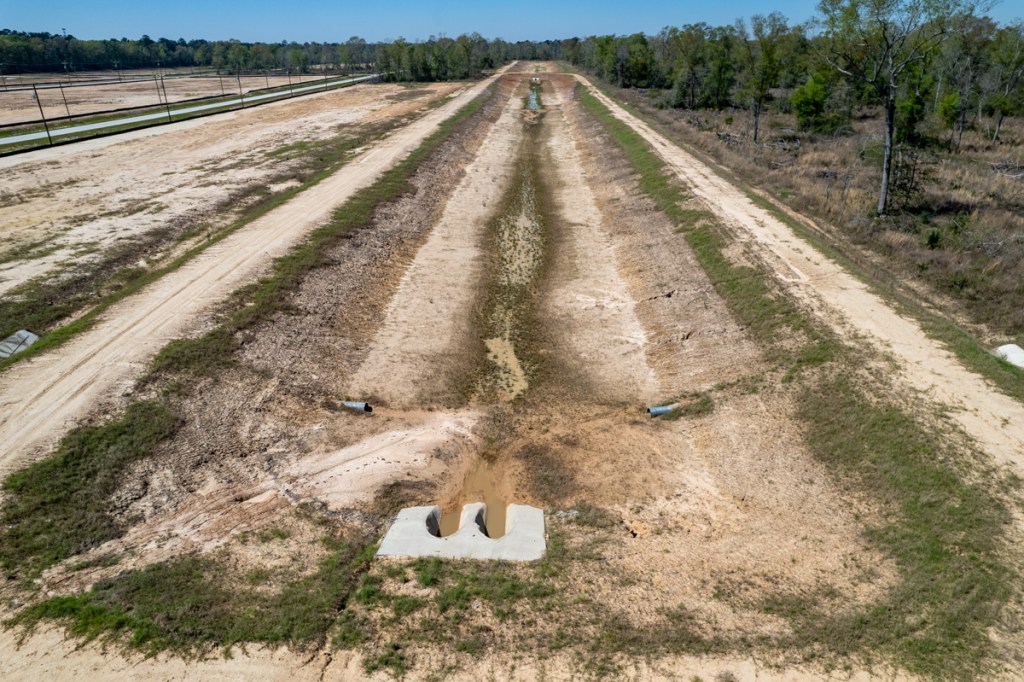
The Harris County Flood Control District (HCFCD) has scheduled a community meeting to reveal the results of an engineering study of the Taylor Gully watershed and Woodridge Village, the aborted development that flooded Elm Grove and North Kingwood Forest twice in 2019. The virtual meeting will be on:

  • December 14, 2022
  • 6:30 PM – 7:30 PM

Two Related Efforts

Because Woodridge Village sits at the headwaters of Taylor Gully, the volume of stormwater detention upstream and the amount of conveyance needed downstream are related. More of one could mean less of the other. HCFCD has been working to find the optimum solution, which should be discussed at the meeting.

Areas of Concern Identified by Community Members

Community members previously expressed concerns, including:

  • Bringing stormwater detention capacity on the Woodridge Village site up to Atlas-14 standards.
  • Straightening a Taylor Gully oxbow adjacent to Woodstream Forest where numerous homes flooded.
  • Replacing the old culvert-style bridge on Rustic Elms with an open-span bridge.
Rustic Elms Bridge on Taylor Gully
The Rustic Elms Bridge on Taylor Gully has a twin-culvert design with less conveyance than more open bridges like the one at West Lake Houston Parkway farther downstream in this image. Nearly every home behind this bridge on adjacent streets flooded in 2019.

Hundreds of homes adjacent to Woodridge Village and Taylor Gully flooded twice in 2019 after a developer clearcut approximately 270 acres before building required stormwater detention basins.

The developer then sold the troubled project to HCFCD in March 2021 after building 271 acre feet of stormwater detention capacity – an amount sufficient to meet Montgomery County’s pre-Atlas-14 standards, which were in effect at the time of permitting.

Taylor Gully One of Top Two Priorities in Kingwood Area

The Kingwood-Area Drainage Analysis from October 2020 recommended Taylor Gully as one of the top two priorities for Kingwood. However, HCFCD also recommended the Taylor Gully project be re-analyzed to determine how the use of Woodridge Village for detention could modify the recommended plan.

Here is the scope of work for the engineering company that worked on the Taylor Gully-Woodridge Village project.

42 More Acre Feet Removed to Date from Woodridge Village

In March 2021, Harris County and the City of Houston purchased the Woodridge Village property. They then started an Excavation and Removal Contract with Sprint Sand and Clay in January 2022 that could ultimately double the volume of stormwater detention on Woodridge Village.

Since February 2022, Sprint Sand & Clay has removed an average of more than 1,700 cubic feet of dirt each week from Woodridge. That’s roughly one acre foot per week. An acre foot equals 1613.33 cubic yards of material.

So, HCFCD has increased detention capacity by almost 42 acre feet since signing the contract with Sprint. That means detention capacity has already increased by about 16 percent, not quite half of what it needs to meet new Atlas-14 requirements.

Stats from HCFCD show cubic feet of dirt removed from Woodridge Village by Sprint Sand & Clay each week since start of E&R contract.

Pictures Showing Woodridge Village Status

Here are some pictures that show the extent of excavation on November 26, 2022.

Looking NE along Harris/Montgomery county line (tree line on right).
Close-up shot of active work area.
Looking S toward Sherwood Trails Village

Excavation and removal contracts give HCFCD a head start on construction of stormwater detention basins. The final dimensions may not be known yet, but HCFCD can make adjustments as it finalizes construction plans.

We should learn more about those on December 14th. Block out the date for the Taylor Gully, Woodridge Village meeting.

Posted by Bob Rehak on 12/2/2022

1921 Days since Hurricane Harvey

Hurricane Season Ends!

Hurricane season officially ended yesterday, November 30. 2022 turned out to be an average season, not the above-normal season that was predicted. No storms affected Houston. But Category 4 Ian slammed the West Coast of Florida, killing at least 144 people.

Hurricane Ian as seen from NOAA’s GOES-East satellite on Sept. 27, 2022 at 4:26 p.m. (EDT) in the Gulf of Mexico.

Four U.S. Landfalls

The 2022 season saw four hurricane landfalls in the U.S.:

  • Category 4 Ian with 150 mph maximum sustained winds, tied for the fifth-strongest hurricane ever to landfall in the U.S.
  • Ian made landfall a second time in Georgetown, SC as a Category 1.
  • Category 1 Hurricane Nicole made landfall in north Hutchinson Island, Florida. 
  • Hurricane Fiona made landfall near Punta Tocon, Puerto Rico as a Cat 1. It dumped 27 inches on the island still struggling to recover from Hurricane Maria in 2017. Fiona later intensified to a Cat 4 as it headed north.

Unusual Mid-Season Pause

According to the National Hurricane Center, this unique season was defined by a rare mid-season pause. Scientists suspect the causes were increased wind shear and suppressed atmospheric moisture high over the Atlantic Ocean.

After a quiet August, activity ramped up in September with seven named storms, including the two major hurricanes — Fiona and Ian. The season also included a rare late-season storm with Hurricane Nicole making landfall on November 10 along the east coast of Florida.

Forecasting “Firsts”

National Hurricane Center forecasts were aided by the experimental peak storm surge graphic, which allowed forecasters to more accurately communicate the severity of expected storm surge levels.

Another major first included the successful launch of the Altius 600 small uncrewed aircraft system from a Hurricane Hunter aircraft into the core of Ian hours before its landfall. It discovered 216 mph winds at an altitude of 2,150 feet. 

Why Predictable Storms Still Kill So Many People

USA Today published an exceptionally well-researched and written article by Dinah Boyles Pulver to mark the end of hurricane season. The headline: “Ian was deadliest US storm this year, with at least 144 dead. Why are predictable storms still killing so many people?”

Three major take-aways from this thought-provoking article were:

  • How older people die in disproportionate numbers from hurricanes
  • The difficulty of evacuating densely populated areas.
  • Public policy implications of the two points above.

Disproportionate Harm to Older People

Pulver’s article pointed out that, “The median age of Ian’s victims was 72 in Florida, a haven for retirees. More than 61% of the victims whose ages are known were 65 or over. Nearly half had medical conditions that contributed to their deaths.”

The USA Today analysis found that 60 people drowned and that preexisting medical conditions contributed to at least 30 deaths. At least 85 victims were 65 or older.

People Still Dying Despite Better Forecasts

Part of the problem relates to perceptions of risk. Older people are choosing to live in unsafe areas in ever increasing numbers.

The percentage of Florida’s population over 65 in coastal counties is predicted to jump from 16% to 37% by 2100. Over the past 20 years, the percentage of Florida residents aged 65 and older has increased from 17.6% to 21%. This complicates disaster planning and places extra burdens on first responders.

Pulver quotes Amber Silver, a disaster researcher at the University of Albany, as saying, “We have to look at policy failures. When you have vulnerable people living in vulnerable regions, in vulnerable infrastructure being exposed to these storms, you’re going to continue to have these shocking death counts – particularly among the most vulnerable. Until we address this challenge at a systemic, societal level, it’s not going to get better.”

Difficulty of Evacuation Points to Need for Better Floodplain and Building Regulations

Even with perfect forecasts, evacuation decisions remain difficult. Where do you go if you’re at the tip of a low-lying peninsula like Florida, hundreds of miles from higher ground.

Here in Houston, half of the 120 deaths during Rita in 2005 happened during evacuation attempts. Millions fled the Cat 5 storm bearing down on them with 180 mph winds – just weeks after Katrina destroyed New Orleans. Millions of panicked people created gridlock on the freeways.

Such examples create a powerful argument for focusing on better building and floodplain regulations. That battle is won or lost between storms.

We must focus more on creating survivable structures in survivable locations.

But people seem to like affordable homes with water views and living with the risk right up to minute they can’t.

Regardless, Pulver points out that far fewer people die today than, say in the great Galveston hurricane of 1900, which killed an estimated 8000 people. So, we are making some progress.

Posted by Bob Rehak on 12/1/2022

1920 Days since Hurricane Harvey

The thoughts expressed in this post represent opinions on matters of public concern and safety. They are protected by the First Amendment of the US Constitution and the Anti-SLAPP Statute of the Great State of Texas.

HCFCD Spending Slows; More Went to Buyouts than Flood Reduction

Harris County Flood Control District (HCFCD) released its November report on Flood-Bond progress to Commissioners Court yesterday. The report covered through October 2022. I had two major take-aways:

  • The slowdown in bond spending continues. HCFCD initiated no new construction projects during the month of October.
  • HCFCD spent more money on buyouts than flood reduction.

The major announcement: the District advertised bids for the construction of a stormwater detention basin in Inwood Forest. The project encompasses property owned by the City of Houston located both east and west of Antoine where Vogel Creek outfalls into White Oak Bayou (the old Inwood Forest Golf Course). It will eventually have a total of 12 interconnected compartments.

Funding of this project comes from the 2018 Bond, FEMA and the Texas Division of Emergency Management (TDEM). HCFCD hopes construction will begin in winter 2022-23. But let’s look at what has happened, instead of what will.

Overview

Since the last update, HCFCD:

  • Awarded NO construction projects
  • Awarded 9 non-construction agreements totaling $33 million
  • Paid $1.2 million for professional services.
  • Completed 28 home buyouts valued at approximately $5 million
  • Spent a total of $9.9 million since the last update.

Those last two bullet points mean…

HCFCD spent more on buyouts than flood reduction in the month of October.

HCFCD uses some buyouts for right-of-way (ROW) acquisition to build detention ponds or widen channels. But many buyouts simply avoid repetitive losses. The latest update does not specify which category October buyouts fell into.

Schedule performance indicators (the SPI index) for the month remained at .95 – behind schedule. HCFCD says the bond program is 23.8% completed – an increase of 0.3% from the previous month. That’s at 50 months out of a planned 120 month program or 41.6% of the way into the bond program.

Where the Money Has Gone

Only three projects out of 181 in the Bond changed stages. One went into preliminary engineering and two went from preliminary engineering into right-of-way acquisition. All are in the Cedar Bayou watershed.

The map below shows where $1.14 billion spent to date has gone.

In table form, that looks like this. I provided three months of data so you can see whether the needle is moving in your watershed. Five watersheds received no money in October.

Spending changes by watershed for the last three months.

Spending Trend Still Down

Last month I wrote about this downward trend in bond spending at a time when it should be increasing. Notice the trend in recent months:

  • July spending was $66.4 million.
  • August spending was $20.7 million.
  • September spending was only $8.1 million.
  • October’s $9.9 million was only slightly better than September.

Project Phasing Influences Spending Rates

Projects typically go through phases that comprise different percentages of the total budget. In flood control, upfront spending on studies typically comprises only 13% of the total. The big spending – 79% – happens for right-of-way acquisition and construction. Looking back at all phases of all projects since 2000…

Right-of-Way Acquisition and Construction account for almost four out of every five dollars spent by HCFCD.

Here’s how the breakdown looks:

HCFCD spending by project stage since 2000
Data compiled from FOIA Request

HCFCD typically spends six times more on Rights-of-Way and Construction, than upfront Feasibility Studies, Preliminary Engineering Reviews and Design.

More than four years into the bond, many projects should be entering the more expensive phases. So you would expect spending to increase. And July totals reflected that. But then a precipitous decline set in.

At the current spend rate, it would take 32 years to complete the bond, not 6.

Why the Slowdown?

HCFCD has not yet explained the slowdown except to say that, during the course of major programs like the Flood Bond, sometimes you hit lulls between major projects. But this slowdown has persisted for three months. No construction projects started last month. And Inwood-Forest stormwater-detention-basin construction likely won’t start for several more months.

At this point, explanations are in order. Last month, I suggested several:

Management Turnover – HCFCD recently lost its top three leaders who architected the Flood Bond: Russ PoppeMatt Zeve, and Alan Black.

Less Experienced Management – Poppe was replaced by an academic who formerly managed the Subsidence District which has a budget one-thousandth the size of the 2018 flood bond.

More Layers of Management – There’s now a whole new department – County Administration – between Flood Control and Commissioners Court.

Delays in Other Departments – Community Services has failed to submit a plan for how to spend $750 million allocated to Harris County for flood mitigation by the Texas General Land Office and HUD.

Drawdown of Flood Resilience Trust Funds – The County is already running out of money in the Flood Resilience Trust Fund – a backup to keep projects moving in case grants, such as the $750 million, were delayed.

Yesterday HCFCD recommended pursuing a grant for Greens Bayou that would consume the current balance in the Flood Resilience Trust.

Bottom line: County Judge Lina Hidalgo needs to provide an explanation for the slowdown. This affects all Harris County residents, not just those in particular watersheds.

Posted by Bob Rehak on 11/30/2022

1919 Days since Hurricane Harvey

The thoughts expressed in this post represent opinions on matters of public concern and safety. They are protected by the First Amendment of the US Constitution and the Anti-SLAPP Statute of the Great State of Texas.

Old KMS Down, But Not Yet Out

On the morning of 11/29/22, Humble ISD contractors finished demolishing the last walls of the old KMS (Kingwood Middle School). They were also draining a water tower on the property before taking that down. The next two steps: remove all the debris and start removing the foundation.

New athletic fields and a permanent larger detention pond will go where the old school was and frame the entrance of the new school.

Photo from Start of Demolition

Here’s what the extent of demolition looked like on 11/9/22.

Demolition of old Kingwood Middle School Begins

Pictures Taken at 9:30 A.M. on 11/29/22

For comparison, here’s what it looked like today. New KMS is in background; old KMS in foreground.

KMS today. Looking back E from SW corner of property.
Wide shot taken from the SE corner of the old KMS looking NW toward Woodland Hills Drive.
A parade of trucks hauls away the debris after recyclables such as steel are separated.
The giant claws pick girders from the rubble and stack them for separate removal.
Note the hole punctured in the school’s water tank.
Other steel parts will also be recycled.

Starting Year Three of Project

For photos showing the progress of KMS construction and demolition, see below.

Next Steps

The illustration below shows next steps. After removing the foundation of the old building (2A), contractors will excavate a larger, permanent detention basin to hold stormwater runoff from the property. The runoff will then be released at a slower rate to reduce the risk of overwhelming the neighborhood’s drainage system. That will reduce the risk of flooding.

stages of KMS construction
From Humble ISD Plans

The next step: rebuild the athletic fields (2B).

Check back frequently for updates.

Posted by Bob Rehak on 11/29/22

1918 Days since Hurricane Harvey

Impervious Cover Percentage Raises Downstream Concerns

The Preserve at Woodridge based its detention basin calculations on 65% impervious cover. But photos taken on 11/26/22, a full year after they cleared the land, suggest the impervious-cover percentage may have been dramatically understated.

That affects the amount and speed of runoff. And that raises concerns for downstream residents along Ben’s Branch, many of whom have flooded in recent years, in part because of dense upstream developments like this one.

Looking straight down reveals little dirt between the densely packed rental homes and the concrete surrounding them.

Taken 11/26/22

I continue to be amazed at how the developer claims that one third of this dense, concrete bungle is NOT “impervious cover.” And lest you think I selectively cropped the photo above to exaggerate the percentage of concrete, the shot below shows virtually the entire development.

Taken 11/26/22. Area on right still does not have sidewalks.

Pushing the Limits

At my age, I don’t like the idea of carrying groceries blocks from my car to my house – which I would potentially have to do here.

Nevertheless, to give credit where credit is due, it appears that this developer has a flair for pushing limits. Just look at the development’s website. They offer “unmatched amenities” like vinyl flooring.

And some homes are 660 square feet. Much smaller and you would expect the residents to wear orange jumpsuits.

But still, this new concept in luxury living has its rewards:

  • No stairs to climb like in apartments.
  • An extra wall between you and your neighbor’s stereo.
  • On-street parking, just like Manhattan.
  • 147 parking spaces for 131 homes.
  • Plenty of nearby food-trucks.
  • A “Scream Park” and fireworks stand within walking distance.
  • No leaves to rake.
  • Your own toilet.

This is way better than life in a frat house. The stainless steel refrigerators are definitely a step up from Igloo coolers.

The only thing missing is a pet run that can accommodate a Chihuahua and Cocker Spaniel at the same time.

But seriously, this developer claims to have identified a niche between sleeping bags and starter homes. Perhaps the company will pioneer a new market and this will be the future of Montgomery County. To see their construction plans, click here.

Will Detention Basin Hold Enough?

I just hope their detention pond is big enough in case their impervious-cover calculations are off.

Preserve at Woodridge detention basin is built to pre-Atlas 14 rainfall rates. It appears partially fenced in so that residents can’t walk around it.

Montgomery County’s Subdivision Rules and Regulations specify that outfall ditches, such as the one in the photo above only need to carry a 25 year rain. (See page 9.) With that in mind, it seems that this detention pond would fill up quickly from ditch overflow in a 25-year rain and provide little detention benefit during 50- or 100-year rains. And that’s no joke.

Posted by Bob Rehak on 11/28/2022

1918 Days since Hurricane Harvey

The thoughts expressed in this post represent opinions on matters of public concern and safety. They are protected by the First Amendment of the US Constitution and the Anti-SLAPP Statute of the Great State of Texas.

A Flood of Memories: The Uptown Story

Holidays have a way of bringing back memories. Almost ten years ago, I published a book of photographs based on a four-year project I started 50 years ago between Thanksgiving and Christmas. It was called Uptown: Portrait of a Chicago Neighborhood in the Mid-1970s.

The book sold well initially. But Hurricane Harvey destroyed almost all of the remaining inventory and the book is now officially out of print. So as not to lose the history, I’m making it available as a free PDF for anyone to download from my photography site BobRehak.com.

A History of the History

Fifty years ago, I was still in graduate school and trying to teach myself documentary photography when I wasn’t studying, or working as a busboy, janitor, night watchman or cub copywriter.

Because I couldn’t afford a car, I took the elevated train from sedate Evanston, Illinois, to work in downtown Chicago every day. About halfway, I passed through a neighborhood called Uptown. It both fascinated and terrified me.

The neighborhood had a glorious past. It was a center of America’s film industry before Hollywood. But by the early 1970s, it had hit rock bottom.

Crime was rampant. Gangs ruled the streets. Old mansions had turned into halfway houses. Bums slept in doorways. Flophouses cost 75 cents a night. And you could drink your sorrows away in bars that lined every block.

I sensed I could capture powerful images in Uptown. But I feared that someone would beat me over the head and steal my Nikon. I also feared that the poverty-stricken people of Uptown might feel offended when I asked to take their pictures.

Overcoming Fears

It took me months to work up the courage to get off the El in Uptown. The turning point was a book I read by a famous New York street photographer named Arthur Fellig, aka Weegee. In it, he explained his theory of success, “F8 and be there.”

A photographer would recognize “F8” as code for “nothing special.” It’s a middle-of-the-road aperture on every lens ever made. That put the emphasis on “be there.” Weegee was saying, “Don’t worry about the equipment. Just be there to get the shot.”

After reading that, I promised myself that I would get off the El the next Saturday in Uptown, walk up to the first person I saw and photograph him/her. As luck would have it, the first person I saw was a Black man wearing a fedora and chomping on a cigar while gesturing wildly to no one in particular and shouting at passers by.

I said to myself, “Why did he have to be the first one?” But a promise is a promise. So I asked if I could photograph him. He paused. Then smiled. And said with a big grin, “Sure.” As I focused my camera, he dropped to his knees, clasped his hands together in prayer, and bellowed, “My name is Jehovah.”

Thus started a four-year love affair with photographing the people of Uptown. That first shot graces the cover of my book.

Cover of Uptown book

A Glimpse into Another World: Living on the Edge of Existence

As I was posting the PDF today, memories of the project came flooding back. I remember the circumstances of each shot.

The homeless man huddled next to a fire he started in a wastebasket to stay warm. A wino passed out on the hood of a Malibu. Young kids jumping out of second story windows, shouting “Kung Fu.” A five-year-old girl, without a coat, freezing alone on the street. A drug dealer with a City of Chicago peddler’s license. A lone tear falling from an old woman’s eye. A barefoot boy fishing through trash to find discarded soda bottles so he could collect the nickel deposit to buy a candy bar. And hundreds more.

Two spreads from book

Together, these images give you a glimpse into another world of people living on the edge of existence. I met parents forced to chose between shoes and food for their children. I saw kids who had nothing … inventing games that required nothing. Uptown was a collision of cultures and a human parade. Every day, a new show began.

The book begins with a brief written introduction to the neighborhood and its history. This puts the images in perspective. I won’t go into all of that now. Except to tell one last story.

At Christmas one year, I saw a homeless man who hadn’t eaten in several days. I watched as he dropped $10 into a Salvation Army kettle – an enormous sum in those days for someone so poor. I asked him why he did it. He said they offered him help when he needed it. Profound! We can all learn from that.

I hope you enjoy the book as much as I did creating it. Happy holidays.

Posted by Bob Rehak on 11/27/22

1916 Days since Hurricane Harvey destroyed the last copies of my Uptown Book

With thanks to those who helped me create it, especially Stephen McFarland, Mike Meyers, Chris Daigle, Jennifer Gleason, Kathy Czubik, and Janice Costa.

This Is Not the Detention Basin

The photo below does not show the Royal Pines detention basin. It’s their main entrance at West Lake Houston Parkway.

And this was not a repeat of Woodridge Village on May 7th, 2019, when 7 inches of rain fell in one day. It was three separate rains totaling less than four inches spread out over four days.

Lake Royal Pines?

I’m not sure I’d want to buy a home in Lake Royal Pines. Here’s what it looks like from a lower angle.

Any more rain and the dump trucks would have to do double duty as high-water rescue vehicles.

Best Practices Call for Clearing One Section at a Time

Construction plans show that contractors appear to have clearcut 202 acres all at once. Seriously folks! This is why you don’t clearcut 200 acres all at once.

Best management practices suggest clearing one portion at a time and building the detention basin for that portion in a step-and-repeat fashion. That’s how it was supposed to work at Woodridge. But the boys on bulldozers got carried away.

This isn’t the only problem at Royal Pines. Earlier this month, runoff from the northwest corner flooded a neighbor’s property.

To their credit, the contractors subsequently put up extra silt fences in an effort to try to catch runoff. They also dug some trenches to channel runoff.

But despite the old high-school try, the measures still didn’t stop runoff from flooding the neighbor’s property for the second time in three weeks. The last time, though, it took less than an inch of rain. So at least they’re headed in the right direction.

Still, had they built the detention pond first…

Where the detention pond will go in the NW corner. Contractors appear to have graded their property toward this corner with nothing to catch the runoff except some flimsy fabric.
Runoff cascading toward the NW corner blew through and over the silt fences onto neighboring property. Photo by resident.

The mud line on the silt fences above represents the high water mark from the peak of the storm. This silt fence appears to be about 36″ tall and water pushed over the top of it in places.

Looking west from over flooded property. Despite the trench to channel runoff, earlier, the contractor graded the slope toward the left foreground where the detention pond will go.

The large trench above (and below) likely intercepted a lot of runoff and carried it away from the neighbor’s property. However, contractors dug the trench in the middle of the property. Not near the neighbor’s property. And it’s a pale imitation of the natural depression that they apparently filled in. See below.

The USGS National Map shows that, before clearcutting, the home on the left green marker was more than 7 feet above the low point several hundred feet east of the NW corner.
Looking South at trench.

Below, it looks as though they may have tried to start a second trench closer to the neighbors’ property, but if that’s what it is, it’s not nearly as deep or prominent.

Looking N. at trench (center). Notice second trench on the left that contractor started to dig but then filled in for unknown reasons.

Impact of Clearcutting on Runoff

To see a simple experiment that dramatizes the impact of runoff in clearcut areas, check out this 90-second video.

Posted by Bob Rehak on 11/26/22

1915 Days since Hurricane Harvey

The thoughts expressed in this post represent opinions on matters of public concern and safety. They are protected by the First Amendment of the US Constitution and the Anti-SLAPP Statute of the Great State of Texas.

Flood-Risk Perception Altering Migration of Retirees

An article in the New York Times asserts that flood-risk perception is altering migration patterns among retirees. by by Susan B. Garland titled “Do you really want to rebuild at 80? Rethinking Where To Retire?” describes changes in where many older people choose to retire. The lead say, “It’s a small yet noticeable shift, experts say — but climate change is causing retirees to start reconsidering moves to disaster-prone dream locales.”

Basic Premise

Safety concerns are causing retirees to rethink whether they really want beach-front views. The author interviewed real estate brokers, retirees, and demographers.

One broker told her, ““At first, they will say they want big views and deep water, but then they ask whether a hurricane or a nor’easter will wipe out the dock. They want to be on the water but more protected.”

Anecdotal Evidence Backed by Wharton Study of 1.4 Million Sales

University of Pennsylvania study of 1.4 million home sales along Florida coasts confirmed the anecdotal account. Researchers found that the sales volume on land less than six feet above sea level dropped by up to 20 percent between 2013 and 2018. “Prices on homes in riskier areas declined between 2018 and 2020,” says Garland. Meanwhile, sales rose on higher, less-vulnerable coastal land farther inland.

The biggest declines came from areas in the northeast that had been hit by Superstorm Sandy. The study’s lead author, Prof. Benjamin Keyes in the finance department at Pennsylvania’s Wharton School, said, “On one hand, you have a strong demographic pull of baby boomers who are looking for warmer climate, and on the other hand, there is a newfound appreciation of climate risks.”

Frailty Makes Evac More Difficult

The caution of retirees may result from physical impairment. It’s also more difficult to rebuild when you’re 80 than when you’re 40.

Two thirds of those who died when Hurricane Ian struck Florida in September were older than 60, says Garland. She added, “Frailty and cognitive impairments make it difficult for older people to evacuate and prepare their homes for disasters.”

I would agree with that. The single largest cluster of fatalities in the Lake Houston Area resulting from Hurricane Harvey happened at a retirement community where 12 people died. They ranged in age up to 95.

Residents trying to escape as Harvey's floodwaters rose
Residents trying to escape as Harvey’s floodwaters rose

Garland’s well-written and researched article then goes into ways to assess climate risks and plan financially for them.

The perception that climate risk is increasing seems to be driving the concerns of retirees. And as the old saying in marketing goes, “perception is reality.” It’s something sellers must deal with.

Trends Crashing Head On

In the case of Florida real estate, two trends are meeting head on, says a professor of sociology at Florida State University in Tallahassee. “Two trends we know are happening — the impact of climate change at the same time the world is aging,” Dr. Hauer said. “Those two trends, I’m afraid, will crash head-on, and we will see more catastrophic impacts than if either one had happened.”

It’s unclear whether the same trends are affecting the Houston market. We don’t get as many hurricanes as Florida. And people move here mainly for jobs. Then they may stay here to retire. If you have personal or professional knowledge of this trend in Houston, please contact me.

Posted by Bob Rehak on 11/25/22 based on a New York Times article by Susan Garland

1914 Days since Hurricane Harvey

Powerful Thanksgiving Storms Could Bring Flooding

Rainfall predictions associated with approaching Thanksgiving storms keep increasing. Jeff Lindner, Harris County’s meteorologist now says approaching storms will bring widespread impacts from Thursday through Saturday. He also warns that heavy rainfall may lead to street flooding and rises on area creeks/bayous. Models now show a band of 5-7 inches of rain in places.

Thursday

Lindner says a surface warm front will approach the upper TX coast early Thursday and move inland. He expects showers to increase in coverage and intensity near the front, which may approach the US 59 corridor by midday before slowing and potentially stalling Thursday afternoon.

Along and south of the warm front be prepared for isolated severe storms and excessive rainfall with inflow off the Gulf. All the elements are in place for flash flooding “and warm fronts are notorious in these sort of setups for producing excessive rainfall,” says Lindner.

The best case for inland areas is that the warm front is held closer to the coast.

Friday – Saturday

Models have now slowed down the movement of an upper level low to our west. Lindner now predicts a break in the rainfall Friday morning, before another round of widespread, heavy rains move back into the area Friday afternoon and evening.

Expect grounds to become increasingly saturated and runoff to increase. Showers may linger into midday Saturday, before this system finally exits to the east.

Rainfall Amounts

Predicted rainfall associated with the Thanksgiving storms has increased compared to earlier forecasts. That’s because of the potential for slow moving and training thunderstorms Thursday afternoon and the longer duration of rainfall now expected into Friday and Saturday.

Widespread amounts of 1-3 inches can be expected on Thursday afternoon with isolated totals upwards of 5-6 inches.

Some models show a band of 5-7 inches near the warm front Thursday afternoon and this is concerning.

Hourly rainfall rates of 2-3 inches may be possible Thursday afternoon and this will lead to rapid street flooding and significant rises on creeks and bayous.

Jeff Lindner, Harris County Meteorologist

Additional rainfall amounts of 1-3 inches can be expected Friday/Saturday on top of what falls on Thursday and this will only worsen ongoing run-off from the Thursday rainfall.

Runoff 

Soils are primed for run-off with recent wetting rainfall over the region. Our main concern is street flooding, but Lindner cautions us about the potential for significant rises on area watersheds, especially if the higher totals are realized in portions of Harris County.

His greatest concern is for the southern and southeastern portions of Harris County where soils are the wettest and potential rainfall the highest. But he still isn’t confident enough to pinpoint the exact locations of the highest rainfall.

He says most watersheds can handle 3-4 inches. But if we start to exceed 5 inches, the concern for flooding from the bayous and creeks listed below will increase.

IF 5-7 inches, streams most in danger of flooding will be:

  • Clear Creek and its tributaries
  • Armand Bayou
  • Hunting Bayou
  • Halls Bayou (upper around I-45)
  • Little Cypress Creek
  • Willow Creek
  • South Mayde Creek (lower near Greenhouse)
  • Keegans Bayou (lower near Beltway 8/US 59/Wilcrest area)
  • Willow Waterhole
  • Brickhouse Gully
  • Spring Branch Creeks (Spring Branch, Buttermilk, Briar Branch)

Thursday’s Excessive Rainfall Potential

From National Weather Service

If you’re out and about over the holidays, remember. Be wary of underpasses and bridges. If you can’t see the roadway, you don’t know how deep the water is. Turn around and don’t drown.

Also remember. Seven inches was the amount of rain Woodridge Village received on May 7, 2019. Woodridge now has much more stormwater detention capacity. But there are plenty of other clearcut areas around the area that don’t have much if any yet.


Friday’s Excessive Rainfall Potential

From National Weather Service

Keep your eye on the sky if you head out the door this holiday. Don’t let the Thanksgiving storms ruin your holidays.

Posted by Bob Rehak on 11/23/22 based on a forecast by HCFCD

1912 Days since Hurricane Harvey

Time for Lake Houston Area to Hit Flood-Mitigation Reset Button

During Lina Hidalgo’s first term, hundreds of millions of dollars in flood-mitigation projects went to low-income watersheds while the Lake Houston Area went begging. So what does the recent election mean for the area’s flood-mitigation goals and strategies? What can we do to reduce flood risk with the deck stacked even further against us? It’s time to hit the flood-mitigation reset button.

Before the election, Democrats insisted that they still intended to complete all the projects in the 2018 Flood Bond. But now with a super-majority on Commissioner’s Court, they have the power to spend that money wherever they want with impunity.

We need to regroup and develop new strategies to attain our goals. We can no longer afford to rely so much on Harris County.

Understanding the Process

Flood mitigation has political, technical and financial aspects. They all demand coordination. After Harvey, Guy Sconzo, former superintendent of Humble ISD, and the Lake Houston Area Chamber formed a task force with area leaders to identify the causes of flooding and work toward solutions.

After initial successes, sadly, Sconzo died. It happened shortly after the passage of the 2018 Harris County Flood Bond and the State’s Flood Infrastructure Fund. Not long thereafter, the task force disbanded. People assumed that projects would just happen. They didn’t.

Roadblocks since Harvey

No one fully understood how long the process would take, all the steps that were involved, how much projects could ultimately cost, the intense competition for funding, and how projects could languish without a coordinated effort to remove roadblocks as they arose.

For instance:

12-Step Plan for Flood Mitigation

We must overcome our addiction to expectations of fair treatment and learn that we must fight for our homes and safety. We must become masters of our own fate and hit the flood-mitigation reset button now. So, what to do?

These are my personal recommendations.

  1. Re-constitute the Lake Houston Area Task Force
  2. Educate people about the risk they still face.
  3. Acknowledge that most of our problems originate outside the county.
  4. Update and prioritize our goals.
  5. Acknowledge we can’t achieve them alone and work to build bridges to those who can help.
  6. Coordinate with them and Harris County Flood Control.
  7. Don’t count on Harris County for much help.
  8. Finish studies already started (i.e., Taylor Gully, Atascocita).
  9. Check on progress of all projects monthly to ensure next steps (i.e., construction bidding) happen promptly.
  10. Identify roadblocks and work to overcome them.
  11. Search for alternative funding and partners if necessary. UPFRONT!
  12. Stop assuming projects will manage themselves. Hire a project manager to report monthly to the reconstituted task force.

Starting Points

Harris County Flood Control District began engineering studies long before Harvey for the projects you now see in construction. Then, when Harvey hit and voters passed the 2018 flood bond, they were ready to go.

Other areas had to start from scratch and are still running the gauntlet of feasibility, preliminary engineering, final engineering, and environmental studies.

In the the Lake Houston Area:

Who is ensuring that engineering studies consider realistic funding alternatives? How much time, effort and money have we wasted by working in silos? Maybe a renewed Lake Houston Area Flood Task Force could help with those issues.

We need earmarks for funding at the state level. But who will fight for them? How will our representatives and senators know what to fight for? And how much the projects cost?

Any area with a completed study should have a project moving forward and be looking for funding.  If it doesn’t, then someone is messing up the process.

It will only be Lake Houston’s turn if someone or some group advocates for the area as they did after Harvey. 

Reliable sources tell me not to expect much from Harris County. Rodney Ellis wants to rub our noses in the Woodridge Village land purchase every chance he gets. So, we have to accept that and work around it. 

First Meeting Held on Reconstituting Task Force

The good news in all this is that a preliminary meeting of area leaders on the City, County, State and Federal levels was held on November 8th at Congressman Dan Crenshaw’s office. Everyone attending agreed on the need to reconstitute the Task Force and hit the flood-mitigation reset button. The group also examined a number of possible issues to focus on. More news on the new Task Force as it begins to set priorities.

Posted by Bob Rehak on 11/22/2022 with thanks to Dr. Charles Campbell for the post’s photo.

1911 Days since Hurricane Harvey

The thoughts expressed in this post represent opinions on matters of public concern and safety. They are protected by the First Amendment of the US Constitution and the Anti-SLAPP Statute of the Great State of Texas.