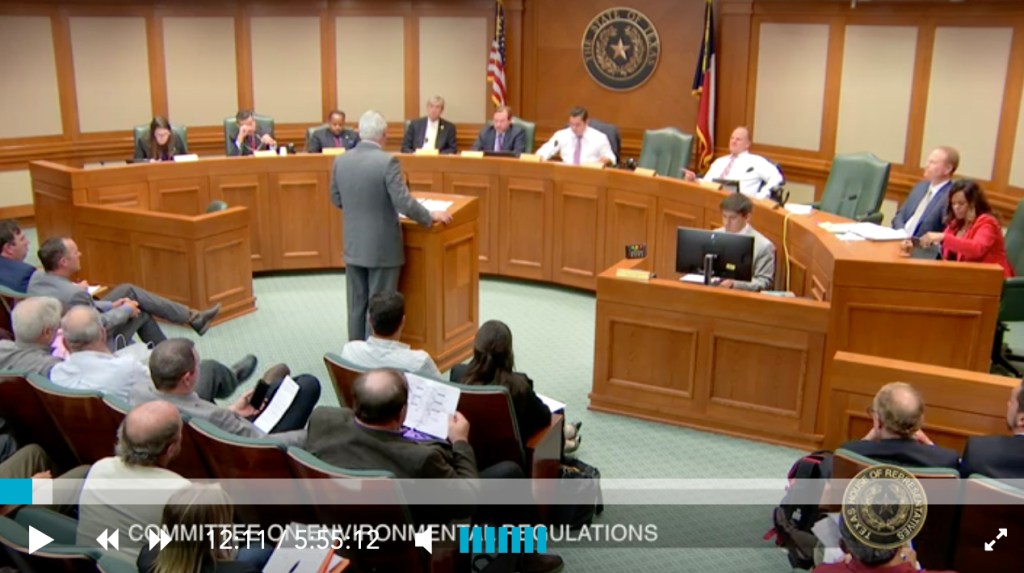
Warning: NOT for the feint of heart. Together they contain more than 300 pages! Frankly, permit evaluation is far more complex than I imagined.
Site of proposed marina after Harvey. Fresh sand deposits reached almost five feet in height. River Grove Park is beyond this, to the right of the giant sand bar which the Army Corps just dredged through. The drainage ditch it blocked drains the western third of Kingwood.
Plea for Expert Advice
I’m publishing the presentations here because thousands of engineers, project managers, and lawyers with technical backgrounds live in the Lake Houston area. With your help, I’m hoping we can sort through the material and determine a productive response to the Corps’ Public Notice.
As you review these, keep in mind what the Corps wants: “…to solicit your comments and information to better enable us to make a reasonable decision on factors affecting the public interest.” The Public Notice goes into great detail about the scope of the project but focuses largely on the environmental impact of introducing “68,323 cubic yards of fill material into 42.35 acres of wetlands and an estimated 285 cubic yards of fill material into 771 linear feet of streams adjacent to the West Fork San Jacinto River.”
Key Elements of Solicitation
Other key points to consider in the Public Notice include:
“A preliminary review of this application indicates that an Environmental Impact Statement (EIS) is not required. Since permit assessment is a continuing process, this preliminary determination of EIS requirement will be changed if data or information brought forth in the coordination process is of a significant nature.”
They say, “Our evaluation will also follow the guidelines published by the U.S. Environmental Protection Agency pursuant to Section 404 (b)(1) of the Clean Water Act (CWA).”
“The TCEQ is reviewing this application under Section 401 of the CWA and in accordance with Title 30, Texas Administrative Code Section 279.1-13 to determine if the work would comply with State water quality standards.”
“The decision whether to issue a permit will be based on an evaluation of the probable impacts, including cumulative impacts, of the proposed activity on the public interest.”
They then define the public interest as: “All factors, which may be relevant to the proposal, will be considered: among those are conservation, economics, aesthetics, general environmental concerns, wetlands, historic properties, fish and wildlife values, flood hazards, floodplain values, land use, navigation, shore erosion and accretion, recreation, water supply and conservation, water quality, energy needs, safety, food and fiber production, mineral needs and, in general, the needs and welfare of the people.”
Background Information on Corps’ Permit Evaluation Process
I pray that people, their property, and their safety count for as much as birds and fish in this process. However, I’ve talked to several birders lately who are abuzz about eagle spottings near the project site.
All of us are smarter than any one of us. Please help!
Submit Comments
Remember comments are due by January 29, 2019. If no comments are received, the Corps will assume there are no objections to the project. To submit comments: Reference USACE file number, SWG-2016-00384, and send to:
Evaluation Branch, North Unit
Regulatory Division, CESWG-RD-E
U.S. Army Corps of Engineers
P.O. Box 1229
Galveston, Texas 77553-1229
409-766-3869 Phone
409-766-6301 Fax
swg_public_notice@usace.army.mil
Posted by Bob Rehak on 12/30/2018
488 Days since Hurricane Harvey
https://i0.wp.com/reduceflooding.com/wp-content/uploads/2018/03/Harvey-SanJac_180.jpg?fit=2000%2C1333&ssl=113332000adminadmin2018-12-29 22:14:312019-01-13 12:38:25Army Corps Permit Evaluation Process
Romerica Investments, LLC has applied for a permit to develop wetlands, flood plain, and floodway in the area around Barrington and River Grove Park in Kingwood. Rumored for years, many residents, including me, assumed the project died after Harvey. After all, who would be crazy enough to build high-rises in the path of 250,000 cfs? But as they say in horror movies, “It’s baaaa-aaack.” The proposed development includes: a marina/resort district, a commercial district, a residential district, and roadway expansion.
Here’s a link to a video that describes the architect’s vision for the development. It was posted to Vimeo in February of this year. Note the sky-blue waters of the San Jacinto. (This is what you get when a developer in Mexico uses an architect in Rome.) See more specifics below.
Location of Romerica’s proposed development.
The major pieces of Romerica’s proposed Kingwood development. For details see below.
River and Floodway Alterations
The applicant proposes to construct a new navigation channel on the West Fork to the south of the proposed marina and expand the existing channel on the east for better connectivity between the proposed marina and the West Fork San Jacinto River.
Features of Proposed Resort District
The applicant proposes to develop the 25 acres north of the proposed marina into a resort district. The resort district will consist of a resort hotel, commercial, and residential space. The applicant proposes to construct:
Five towers within the resort district at a height of 90 feet for the western hotel parcel
Residential condominium towers at a height of 260 feet, and at a height of 500 feet (50 stories)for the eastern hotel and condominium parcel.
Fill material would be used to raise the elevation of the resort district 12 feet from 45 to 57 feet to raise the proposed structures above the Federal Emergency Management Agency (FEMA) 100-year floodplain of the West Fork San Jacinto River.
Features of Proposed Commercial District
In a 47 acre commercial district, the applicant proposes to construct:
Retail, residential, and office space.
Three towers ranging in height from 230 to 400 feet for the retail offices and residential condominium towers.
Additional mid-rise residential and retail spreads at a height of 70 feet.
Fill material would raise the elevation of the commercial district from 45 feet to 57 feet over base flood elevation and raise the proposed structures over the FEMA 100-year floodplain of the West Fork San Jacinto.
Parking garages with two below grade levels and concealed above grade levels to increase the footprint density.
A 19.25-acre lake (from an existing 16.25-acre lake) to create a smaller marina area for personal watercraft parking.
A 125-foot wide channel between the 80-acre marina and the 19.25-acre marina and the marina/resort district and the commercial district.
Features of Proposed Residential District
The 64-acre residential district would include:
Condominium structures, 65-feet high, on pier and beam foundations with elevated first floor parking and four stories.
They would use fill to elevate them to 58.5 feet, which is above the FEMA 100-year floodplain of the West Fork San Jacinto River.
25-story condominiums with parking garages.
Nearly 2 miles of 41 foot wide roadways with bridges over canals and streams.
Expansion of Woodland Hills Drive
The applicant also plans to bring in more than 1700 cubic yards of fill to raise and expand Woodland Hills Drive. Woodland Hills would become four lanes all the way to Hamblen.
Wetlands Mitigation: Somewhere Else
To compensate for all the fill they are bringing into the floodplain and wetlands, they would purchase mitigation credits from outside the Kingwood area. Basically this means that all of this development would be filling in local floodplains and floodway without commensurate local compensation. Said another way, it would constrict the flow of the West Fork during floods.
Comments are used to determine the need for a public hearing and to determine the overall public interest of the proposed activity. For accuracy and completeness of the record, all data in support of or in opposition to the proposed work should be submitted in writing. Concerns should contain sufficient detail to furnish a clear understanding of the reasons for support or opposition. Prior to the close of the public comment period on January 29, the Corps’ District Engineer will determine whether sufficient cause exists to hold a public hearing.
If no comments are received by that date, it will be considered that there are no objections.
Comments and requests for additional information should reference USACE file number, SWG-2016-00384, and should be submitted to:
Evaluation Branch, North Unit
Regulatory Division, CESWG-RD-E
U.S. Army Corps of Engineers
P.O. Box 1229
Galveston, Texas 77553-1229
409-766-3869 Phone
409-766-6301 Fax
swg_public_notice@usace.army.mil
Rehak’s Concerns
If not removed, the mouth bar will back flood water up into this area during major floods.
I thought Friendswood deed restrictions limited the height of commercial structures to 3 stories. When I built my commercial property, that was the limit. It was also a major point of contention during the construction of the new Emergency Hospital at 59 north of Kingwood Drive. I wonder how they’re getting around that. All these high rise buildings in the middle of a residential area will significantly change the character of the community. Most residents bought into Kingwood because of those deed restrictions.
Filling in our floodplain with mitigation credits purchased from somewhere else will significantly alter floodplain characteristics here. When KSA explored building a dog park in River Grove Park, the City engineer told us that the width of the fence posts could not reduce flood conveyance by .000001%. The maximum allowable was 0%.
Boat navigation on the West Fork has been if-fy for decades and getting worse due to sediment washed downstream from sand mines. Dredging may improve a two-mile stretch, but until the mouth bar is removed, boats will have a difficult time navigating beyond that. The Army Corps is having to dredge its way up and down the river. Any marina likely could not survive the kinds of floods we had in 2015, 2016 and 2017. Other structures would also likely be damaged.
If damaged in a future flood like Harvey, who would have pockets deep enough to repair these huge structures? Few would want to inhabit them. The one office building on Hamblen has flooded repeatedly in the 35 years I have lived here. It’s not just repairing water damage this close to the river; Harvey deposited 5 feet of sand in River Grove Park. How do you clean all of that sand out of a luxury resort?
The paving and filling of all this wetland will increase and accelerate runoff that endangers downstream properties.
It appears that no environmental impact study has been filed.
All of the floodplain calculations are based on old surveys which are currently being revised. Before these buildings could even be built, floodplain maps will be redrawn. Remember, USGS reclassified Harvey flooding at Highway 99 as a 42-year storm. The area where many of these buildings would be built has been under three feet of water at least four times this year.
I’m not an engineer, but will the soil support structures this large?
It already can take a half hour to get in and out of Kingwood at rush hour. This high density development could add thousands of additional cars when residents have indicated they do not want to widen Kingwood Drive or Hamblen Road. The information provided to date makes no mention of traffic loads.
Having said all that, the architects renderings look gorgeous. If they could solve those concerns, the development might be an asset to the community.
Please send your feelings, pro or con, to the address above.
These are my opinions on matters of public policy protected by the First Amendment of the U.S. Constitution and the Anti-SLAPP statutes of the great state of Texas.
Posted by Bob Rehak on 12/29/2018
487 Days since Hurricane Harvey
https://i0.wp.com/reduceflooding.com/wp-content/uploads/2018/12/Pieces-of-Romerica-Dev-e1546040851855.png?fit=1500%2C1095&ssl=110951500adminadmin2018-12-28 17:29:182019-01-13 12:39:04Public Notice: Army Corps and TCEQ Soliciting Comments on High-Rise Development Near River Grove Park
If they kept world records for flooding, surely Tammy Gunnels would have the gold medal. Her home flooded 10 times in 10 years, once due to Hurricane Harvey and the other times due to inadequate or damaged storm drains on her street. The lady, who works as a maid and has scrubbed toilets for 33 years, has sought help from Montgomery County, the State of Texas, and FEMA – all to no avail. But rather than walk away from her mortgage, she and her husband have spent a quarter of a million dollars on flood mitigation for an $80,000 house. This family not only slipped between the cracks, it got swallowed by them. Learn how two people’s lives changed forever when they bought a house from an unscrupulous seller who hid past flooding problems. I interviewed Tammy in her modest home in a modest neighborhood called River Club Estates. The neighborhood is between Sorters Road and the West Fork of the San Jacinto in Montgomery County.
Tammy Gunnels baking Christmas cookies in her kitchen with her son Justin Davis and husband Ronnie Gunnels.
Rehak: When did you buy this house?
Gunnels: In December of ’08, exactly ten years ago.
A low lot and inadequate drainage: a bad combination for the Gunnels family.
Rehak: When did you first flood?
Gunnels: Four months later, in April, ’09. We’ve flooded nine more times since. If the forecast calls for 2 to 5 inches, we have to prep for flooding. Before we built a concrete berm that runs 8 inches below and 8 inches above ground around the house, a heavy rain would flood us in half an hour. Now, it takes about two hours of heavy rain. It all depends on how fast it comes down.
Rehak: How do you prep for a flood?
Gunnels: We put all of our furniture up on wooden blocks that we store out in the garage. The only carpets we have now are area rugs, so we roll those up and put them up on couches or tables.
Extensive Flood Mitigation Efforts
Rehak: What else have you tried to mitigate flooding?
Gunnels: Everything anyone has ever suggested. The first thing to go was carpets. For a while, we tried indoor/outdoor carpets. A contractor told us we could just suck up the water after a flood with a shop vac and then dry it out with fans. But that theory only lasted until the septic backed up. So we ripped everything out and then painted the concrete. But floods make the paint bubble up. We repainted a couple times and spot painted for four years. Then after Harvey, we realized “NO MORE.” I wanted something that I never had to mess with again. So, we went to stained concrete.
Rehak: It’s beautiful. How do you like it?
Gunnels: When we get water, my husband shop-vacs it up and we’re good.
Rehak: What else have you done?
Gunnels: We have three-inch plastic baseboards instead of wood. They never rot. They are clipped into place so we can remove them before water starts coming in.
Removable kick plate conceals flood space under elevated cabinets.
We raised all the cabinets and sinks up off the floor, like in a motel. Some of those have removable plastic kick plates, too.
Because we usually only get a couple inches in the house, our sheetrock no longer goes all the way to the floor. It stops 2 inches short. We’ve installed pre-treated studs everywhere, even on the inside of the house. We use green board, which is made out of cement, instead of normal wall board which soaks up water. We’ve installed gutters and downspouts to carry the water away from the house. And we’ve put in French drains for the same reason. We’ve even elevated appliances like the water heater.
Wallboard stops above floor. All studs made from pre-treated timber, even in interior of house.
Rehak: How much water did you have in the house during Harvey.
Gunnels: Over 4 feet. That was from the river, not the street.
Source of Problems
Rehak: Do other people in the neighborhood have the same problems?
Gunnels: Since we’ve been here, aside from Harvey and the Tax Day Flood, no one else has flooded except for us and the house next door. When it starts to rain, water is supposed to drain out through the neighborhood. But there’s not enough slope or capacity to carry it away. We’re at a low point, in a little bowl.
First time we flooded was from a flash flood. We got 4 or 5 inches. Nobody in the whole, entire neighborhood flooded but us.
Insurance approved repairs up to two feet. Once we cut into the walls, we saw water marks three feet up on the studs. The people we bought the house from only disclosed two floods, neither more than a couple inches, and said it was because of the lack of maintenance from the county. We found evidence of other floods that were much worse when we started to investigate.
From Misrepresentation to Mitigation
Rehak: How did that affect your insurance?
Gunnels: When we bought the house, we were in the 500-year flood zone. So, our insurance was only $285.
After our very first flood, State Farm said you’ll have to go direct to FEMA; you’re high risk. That’s when we learned how bad the problem was. FEMA told us the house had flooded FIVE times. The sellers only disclosed two and said water had never gotten over the baseboards. That was an outright lie from the water marks under the wall board.
Once we found out all that, our contractor recommended that we build a concrete berm 8 inches below and 8 inches above ground around the house. So, we sunk money into that. We were good for a couple years. We later realized that our “good luck” was the drought. The following year, we flooded three times in a seven-week period. As soon as we got sheet rock cut, it would flood again. It just would not stop!
Don’t forget to step up when you leave through the front door!
When State Farm sent us to FEMA, FEMA wanted $2,000 per year. After constructing the berm, gutters, French drains, and more, my husband and I felt we would be OK without the insurance.
Hit Five Times in One Year Without Insurance
Then we got hit five times in one year. When I tried to get insurance, they now wanted $3,000 a year. But we hadn’t made any claims except for that one in ’09.
Not even a concrete wall around the exterior of the house was enough to stop the flooding. Gunnels tries to sop up the leakage with extra sheets.
We had done everything anyone had told us to do. Except for elevating the house. We got three different estimates for that. Not including electrical, plumbing or anything else, the lowest was over $100,000. That just wasn’t feasible for us.
Not Enough Claims Means No Buyout
At this point we were up to six or seven floods. Then the Tax Day flood happened. That’s when Montgomery County stepped in. They said, “We’re going to start offering buyouts. We asked for one, but they said, “You don’t qualify because you haven’t maintained insurance.”
I said, “Because I didn’t file claims, you won’t offer a buyout?” He said, “Unfortunately, that’s the way the system works.
So, we bit the bullet and got insurance in 2015. In our bathrooms, our vanities and everything are elevated. There’s nothing touching the floor.
Example of elevating cabinets to reduce flood damage.
I had my kitchen cabinets specially built. The kick plates are removable. They’re made out of plastic and clipped on. In a flood, I can pull off those kickplates and let the water go under. Usually, we only get a couple inches.
Rehak: But in Harvey the whole neighborhood flooded?
Gunnels: Pretty much. Just a few homes that sit up higher did not flood.
Advice For Others
Rehak: Knowing what you know now, what advice would you give homebuyers to avoid the situation you’re in?
Gunnels: Buy flood insurance and file a claim every time it floods.
Also, I didn’t know you could get a history. Of course, sellers should disclose. But sometimes they conceal things. Don’t take the seller’s word for it. Get a print out from FEMA. They’ll give you a history on any property that’s had a flood claim on it. Also, talk to neighbors. It’s very important to talk to the neighbors because we flooded without insurance, so it’s not on record. But our neighbors know.
FEMA had paid out a total of a quarter million dollars on this property BEFORE our claims. We’ve now made three.
Rehak: FEMA paid $250K. You put another $250K into it. So you have half a million dollars into a house that cost $80K.
Gunnels: (Laughs.) Yeah, pretty much. In a home built in 1967. It makes absolutely no sense.
Search for Help from Officials
I clean homes for a living. One of my clients is a lawyer. After Harvey, she sent some letters for me, trying to get a buyout. But the answer we got was, “No funds available, Montgomery County is no longer doing buyouts.”
I don’t know who to contact at this point. I contacted county commissioners Jim Clark and Ed Rinehart. I’ve contacted Cecil Bell, our state representative. I have already made plans to call the new county commissioner James Metz. He starts in January. We’ve talked to FEMA numerous times.
The county engineers came out and explained how the drainage works.
They said we need a wide drain that goes from Sorters Road to Lana Lane. We said, “Well, build it.” They said, “We can’t. It’s on private property.”
When the property owners gave them permission, they said, “Oh no, we can’t. It’s too much of a liability. We can’t do that.”
My neighbor uncovered some emails saying they were going to do it, and then somehow, the money wasn’t there for them anymore.
Emotional Losses Compound Financial Losses
Rehak: Financially, the floods have been devastating for you. How have you survived emotionally?
Gunnels: In every flood, I’ve lost something. I inherited things from my great grandmother, grandmother and mother. Slowly but surely, over nine or ten floods, I have lost everything they gave me. After each flood, I told myself that “It’s just stuff.” But at a certain point, I said, “It’s my stuff.”
The hundred-year-old family bible Gunnels inherited from her mother: an irreplaceable loss to flooding.
Everything that you look at in this house is brand new. Everything. From the lamps to the tables. To the throw rugs. I have lost everything. But with Harvey. This was lost. (She plops a swollen book on the table; at first I don’t recognize what it is.) This is my mother’s family bible from 1918. I can’t turn the pages because they are stuck together. (She breaks down crying.) That is what it does to me.
Gunnels’ husband and son return from an errand.
No Way Out
Rehak: What would you like to do now if you could do anything?
Gunnels: Get bought out. Give me anything. A FEMA trailer and a piece of land. I’ll be happy.
My grandkids who visit every two weeks religiously have their own room here and they have lost everything, too. They can’t keep toys or a doll house or anything here. In EVERY flood, we lose something..
The first thing people say when they hear about our situation is, “Well, just move.” “Really? Where are we going to move to?” We’ve even looked into walking away from this house and letting it go into foreclosure. But that ruins our credit. We wouldn’t even qualify to rent a plastic shed from Home Depot.”
“We also looked into buying another house while we still owned this one. But the bank wanted to see a year of payments made on two places before loaning the money.” There’s just nothing that anyone can suggest that we haven’t looked into.
Fighting a Tax Increase
Rehak: So, I’m guessing that if you’re running Tammy’s Maid Service and you’ve sunk a quarter million dollars into this place, you’re not a shirker.”
Gunnels: Right! (Laughs.) I’m not high educated, but I’ve scrubbed toilets for 33 years. We’ve worked for what we have.
The Montgomery County Appraisal District wanted to raise our taxes one year. “Oh ho ho,” I said. “You want to raise my taxes on thisplace? They tried to come at me with, “The home over here is worth this and the home over there is worth that.”
I said, “Look at the pictures. You got raw sewage in the ditch. I flooded this many times.” They dropped our valuation down to $60-something thousand dollars. At first, they tried to argue with us. But the board voted unanimously to lower our appraisal.
Montgomery County wanted to increase the appraisal on Gunnels’ flood-prone property, but ultimately backed down.
If this house didn’t flood, it would be worth about $160,000 with all the improvements we made. We upgraded everything. We even replaced all the wiring in the house. Replaced aluminum with copper. Put in smoke detectors. A new breaker box. The works.
I’m not asking for anything more than what I have. I’ll even take smaller. As long as it doesn’t flood.
Gunnel’s Husband: My family all lives near here. So it’s important to us that we stay in the neighborhood.
Impact on Retirement and Savings
Rehak: What next for the Gunnels family?
Gunnels: Every single time a claim is paid out on this house now, it’s taxpayer money. We waste taxes on this.
Rehak: How much have you received in flood insurance claim reimbursements?
Gunnels: About $180,000.
Home Wet Home! No way to live with it and no way to leave it.
Rehak: What has happened to your savings?
Gunnels: We’ve burned through his 401K and every bit of savings we had. DONE! He is 53. I will be 49 next month. To our name, we have about four grand in savings.
Gunnels’ Husband: I didn’t know we had that much!
All: (Belly laughs.)
Gunnels: He’s got a little bit left in his 401K. Maybe 20 grand.
Rehak: That’s not going to last very long in retirement.
Gunnels: One year. Maybe. Everybody I talked to has empathy, but apparently there is no sympathy … because “Here we are.”
This was going to be our retirement home. When we moved here, we still had two kids left in school between us. Now they’ve moved on and we have grandkids. This was going to be our last home ever. We were fixing to die in this home. And we probably WILL.
Everyone: (More belly laughs.)
Posted by Bob Rehak on December 28, 2018
486 Days since Hurricane Harvey
https://i0.wp.com/reduceflooding.com/wp-content/uploads/2018/12/Gunnels_01_01.jpg?fit=1500%2C844&ssl=18441500adminadmin2018-12-27 18:00:012018-12-27 21:14:49Tammy Gunnels Flooding Story: Ten Times in Ten Years
The rain overnight became pretty intense between 4:30 and 5:30 a.m. about the time the NWS issued a tornado watch. Once again, areas north and northwest of us received more rain that we did. The NWS has issued a flood warnings for the West Fork of the San Jacinto. West Fork. They expect the river to crest at 51.3 feet, well below the major classification.
The River should rise above flood stage Friday morning and crest on Sunday. The flood will impact low lying roads near the river. The north side turnaround at US 59 and low points on Thelma Rd, Aqua Vista Dr, and Riverview Dr. will begin to flood. Water levels should approximate those reached in the December 7-8, 2018 event. Nearly all of the water heading into the West Fork is from significant run-off being generated on Cypress, Spring, and Lake Creeks.
The City did not lower Lake Houston in anticipation of this flood. However, the Coastal Water Authority is currently releasing 2500 cubic feet per second through the tainter gates on Lake Houston. It will be interesting to compare the ultimate water height to the Dec. 7-8 flood when the City did lower the Lake.
Here’s what the dock at River Grove looked like this morning. Photo courtesy of Bruce Casto.
Boat dock at River Grove around 9 a.m. on Thursday 12/27/18.
On December 8, River Grove looked like this.
River Grove Flood Level on December 8. Will this flood be higher?
East Fork Crest Delayed and Prolonged
East Fork residents can breath a little easier.
River is already rising at FM 1485 and nearing bankfull at FM 2090 (Plum Grove). Heavy rainfall over the headwaters of the river will move downstream from the Cleveland area and reach Plum Grove and FM 1485 this weekend. The river should rise to flood stage midday Friday and have an extended flat crest over the weekend near 60.5 ft. FM 1485 may be threatened at these levels along with low lying roads in subdivisions downstream of FM 1485. That’s Huffman and Kingwood!
Spring Creek
Significant run-off is in progress over the upper headwaters of Spring Creek and the creek is rising along the entire channel. Hegar Rd is at bankfull this morning and near bankfull conditions will be possible along the creek downstream to SH 249 and I-45. No structure flooding is expected, but some low lying roads near the creek or that cross the creek may be impacted…especially upstream of SH 249.
Cypress Creek
Significant run-off in the headwaters into Cypress Creek. Creek may reach near flood stage later today at Katy Hockley. Harris County Flood Control does not expect any significant downstream flooding east of Hwy 290 along Cypress Creek, although the creek will be very high as upstream water moves downstream.
Posted on 12/27/18 by Bob Rehak
485 Days since Hurricane Harvey
https://i0.wp.com/reduceflooding.com/wp-content/uploads/2018/12/image002-1.png?fit=600%2C465&ssl=1465600adminadmin2018-12-27 10:21:412018-12-27 10:49:27Moderate Flooding Expected on West Fork, Minor Flooding on East Fork
Dredge currently operating near West Lake Houston Parkway
Shutdown’s Impact on Current Dredging
It’s not immediately clear how the government shutdown will affect Army Corps employees supervising the job. Technically, the Corps is “military,” but many Corps engineers and project managers are civilian employees. The Corps may have listed its inspectors as emergency personnel since the West Fork was an emergency project. However, the Corps’ information office did not return emails to verify that. Holiday vacations likely caused the lack of response. But if the shutdown does affect Corps inspectors, contractors may experience delays at some point.
Possible Impact on Mouth-Bar Project
A bigger question: how the shutdown will affect consideration and approval of Mouth Bar dredging. Readers may remember that at a meeting in Austin on October 11, all agencies involved reportedly gave conditional approval to the mouth bar project subject to a favorable environmental report and the location of a suitable disposal site. After two and a half months, the project still has not been approved. City officials are hopeful that the project could be approved before the end of April when contractors should begin demobilizing from the current job. Remobilizing could cost another $18 million if FEMA or Congress does not approve an extension of the current project that includes the Mouth Bar.
Sources are hard to find between Christmas and New Years. Hopefully, we will have an update from City Hall and greater clarity when people return to work after New Years.
All of this underscores the need for more urgency and timeliness in government decision making, in my opinion. Harvey happened 16 months ago.
Posted by Bob Rehak on December 26, 2018
484 Days since Hurricane Harvey
https://i0.wp.com/reduceflooding.com/wp-content/uploads/2018/12/CallanDredge_01-e1545881134297.jpg?fit=1500%2C501&ssl=15011500adminadmin2018-12-26 21:30:362018-12-26 21:34:07Impact of Government Shutdown on West Fork Dredging
HB509 Stipulates Consideration of Hydrologic Impact During Permitting
Currently, sand mines in Texas are permitted and inspected by the Texas Commission on Environmental Quality (TCEQ).
New legislation proposed by Representative Terry Wilson of Marble Falls would require regulators to consider hydrologic impacts of sand mining during the permitting process.
HB509 enables the Texas Railroad Commission to work with the TCEQ; adopt, amend and enforce rules pertaining to aggregate production operations; issue and revoke permits; and inspect APOs without notice. It also:
Creates criminal penalties for non-compliance.
Requires a hydrology assessment of the operation’s impact on surrounding surface and groundwater – including water availability.
Enables regulators to consider the cumulative impact of multiple APOs in an area when evaluating new applications.
Requires the operation to prevent material damage to the hydrologic balance outside the permit area.
Requires public notice of permit applications
Provides for public comment on permit applications
Makes permit approval contingent on past performance
Requires permitting agencies to publish the public comments
Allows the agencies to deny permits based on public comments
Grandfathers operations with existing permits
New Fines and Creation of a Criminal Offense
A person commits an offense if the person “knowingly makes a false statement, representation, or certification, or knowingly fails to make a statement, representation, or certification, in an application, record, report, or other document filed or required to be maintained under this chapter or under an order of decision issued by the commission under this chapter.”
Violators may be punished by fines of up to $10,000 and a year in prison.
Positives of HB509 from Residents’ Perspective
While this bill will not immediately and directly address sand-mine issues on the San Jacinto, I think it could eventually help this area. Things residents will like include:
Significant penalties for false statements!
Having more eyes on the problem; TCEQ complains that it doesn’t have enough staff to enforce regulations.
River-impact assessments, especially the idea of looking at the cumulative impact of all providers in the area! Twenty square miles of sand mines between US59 and I-45 on the West Fork have decimated the environment immediately upstream from the drinking water source for 2 million people.
Public hearings for permits. Right now, regulators hear one side of the story.
Making the permit application approval contingent on past performance. This gives sand miners the ultimate incentive to comply with regulations: “Don’t comply and you’re out of business in this state.”
Shortcomings From Residents’ Perspective
Things residents probably won’t like include:
Grandfathering existing operations; the cumulative impact of sand mining is already a huge problem on the San Jacinto. However, I’m not sure a fair alternative exists, short of buyouts.
Lack of definitions for what they’re trying to prevent under “hydrologic impact.” That creates flexibility to cover unforeseen consequences, but also leaves a huge “out.” HB571 in the 2011 session, the first bill to regulate sand mining in Texas, also lacked specificity. It said for instance that the mines had to comply with all applicable laws and regulations, but did not specify what they were. It left lots of wiggle room. This could, too.
No prescription for minimum setbacks from rivers or prevention of mining in floodways.
Use of the words “designed to” in front of hydrological impacts. That creates a big “out.” Anybody who places a bale of hay in drainage ditch on the mine could say he designed the drainage to prevent erosion, However, the real issue is what happens when the river reroutes itself through mines during a flood.
Lack of Specificity Concerning Hydrologic Impact
My biggest concern is the lack of specificity re: adverse hydrologic impacts. No references exist in the bill to:
Dangers of river migration
River capture of sand pits
Draw down of the water table
Effects of such drawdowns on surrounding vegetation and farms
Repeated breaches of dikes
Increases in rates of sedimentation
Loss of downstream lake capacity at increasing rate
Poor water quality
Loss of river conveyance
Increases in erosion
Escape of chlorides from wash pits during floods
Contamination of groundwater and wells by chlorides
Pipeline corrosion
Loss of riparian vegetation
Downstream flooding
Eventual need for dredging and other costly remediation.
All in all, though, it’s a good start and can only help curb the excesses of sand mining in the long run.
Congressman Wilson represents the area west of Austin. His district includes Burnet, Milam and Williamson Counties and the cities of Round Rock and Marble Falls. His web page in the House of Representatives states that he was born in Odessa, Texas, and that “He is a lifelong conservative Republican, committed husband and father, and a decorated combat veteran. He holds a BS in Business Administration from Texas A&M University and an MS in Strategic Logistics Plans and Management from the Air War University.”
Wilson retired from the Army after serving more than 30 years. Since retiring from the Army, he has leveraged his military experience as an advocate for small businesses.
No Other Bills Filed in House or Senate So Far
Neither Representative Dan Huberty, nor Senator Brandon Creighton, have so far introduced any new legislation affecting sand mining. Wilson’s HB509 appears to be the only bill regulating sand mining filed so far in either the House or Senate as of Christmas Eve, 2018.
As always, these are my opinions on matters of public policy. They are protected by the First Amendment of the United States Constitution and the Anti-SLAPP statute of the Great State of Texas.
Posted by Bob Rehak on 12/24/2018
482 Days after Hurricane Harvey
https://i0.wp.com/reduceflooding.com/wp-content/uploads/2018/06/SourceOfWater-e1529593516550.jpg?fit=1300%2C846&ssl=18461300adminadmin2018-12-24 12:12:392018-12-24 12:14:05First Proposal to Improve Sand-Mine Regulation in House
As of Saturday, Dec. 22, 2018, at 10:15 a.m., the Porter Dam had turned into the Porter Trench. Excavation of the undersized culvert continued.
Hopefully, their removal, will eliminate flooding like you see below after the 4.5 inch rain we had on Dec. 7.
Flooding on East Knox in Porter near Loop 494 after a 4.5″ rain on December 7th. Caused by an undersized culvert that backed water up for blocks. Photo courtesy of Mike Eberle.
Mike Eberle of Mike’s Hobby Shop on East Knox sent me these pics at the end of Saturday. They show the progress that the crew made during the day.
Downstream trench at end of Saturday. Photo courtesy of Mike Eberle. Mid-trench at end of Saturday. Photo courtesy of Mike Eberle.Upstream end of trench at end of day on Saturday. Photo courtesy of Mike Eberle.
It’s unclear at this time whether workers will install a larger culvert or just eliminate the Road to Nowhere altogether. I will continue to follow the story.
Street flooding, such as this blockage caused, can devastate homes and businesses every bit as much as river flooding. It only takes an inch of water to cause months worth of repair work.
This morning I learned of several more instances of tragic street flooding in Porter near Sorters Road. Apparently a broken or collapsed storm drain flooded the homes below repeatedly. Montgomery County has not fixed the drain despite repeated pleas from homeowners.
One home owner, a retired Marine, flooded five times in five years. His neighbors, a middle aged couple, flooded ten times in ten years.
Street flooding caused by another bad culvert. Photo courtesy of Tammy Gunnels.
The couple invested more than a quarter million dollars trying to flood-proof their home and virtually wiped out their life savings.
Let’s hope Montgomery County fixes that drain soon…as fast as TexDoT jumped on the Porter Dam problem.
Posted by Bob Rehak on 12/22, 2018
480 Days since Hurricane Harvey
https://i0.wp.com/reduceflooding.com/wp-content/uploads/2018/12/Porter-DamPorterDam_1_01.jpg?fit=1500%2C1000&ssl=110001500adminadmin2018-12-22 14:43:412024-09-07 15:52:21Porter Dam Rapidly Becoming Porter Trench
Mike Eberle (owner of Lakeside Plumbing, Mike’s Hobby Shop, and Gulf Coast Raceway) and his son led the fight to have the Porter Dam removed. Mike’s son, a contractor, contacted TexDoT, showed them Mike’s pictures of the flooding, and TexDoT responded. By this afternoon, I found workmen with a backhoe and bulldozer removing blacktop and earth.
I could not tell whether the workers represented TexDoT or the owners of the property. They were not eager to talk to me while I had a camera. Their truck had no logo.
Backhoe begins removing the blockage that flooded several blocks of homes and businesses.
Regardless, the good news is that they are removing the Porter Dam. I will follow up again later if the job doesn’t get done.
But for now, it looks like Christmas has come early to the people of Porter, thanks to the efforts of Mike Eberle and his son. And this gift is so big, it won’t fit under the tree.
A much-happier Mike Eberle, in his hobby shop on East Knox Drive in Porter in front of his collection of miniature trains.
Posted by Bob Rehak on 12/21/2018
479 Days since Hurricane Harvey
https://i0.wp.com/reduceflooding.com/wp-content/uploads/2018/12/Porter-DamPorterDam_5_01.jpg?fit=1500%2C1000&ssl=110001500adminadmin2018-12-21 15:38:182018-12-21 15:38:25Christmas Comes Early to Porter Dam Flood Victims
I’ve posted dozens of times about the dangers of mining in floodways. A local canoeist, Don Harbour, Jr., paddled down the West Fork of the San Jacinto twice during the last flood. He says he saw three breaches in one sand mine. The water was moving too fast to get pictures of all three, he says, but he did manage to get several shots. They eloquently illustrate the dangers of mining so close to the river.
Harbour, Jr. says he paddled by this mine on Saturday, December 8, and noticed water rushing into it.
River breaching into mine. Photo courtesy of Don Harbour, Jr.
The following Wednesday, December 12, he paddled down the river again and saw the reverse.
Sand mine sending sediment into river as flood went down. Photo courtesy of Don Harbour, Jr.
On that same trip, he photographed the owners frantically trying to plug the leaks in dangerous conditions.
Repairs to other breaches. Photo courtesy of Don Harbour, Jr.
Altogether, Harbour, Jr. says he saw three breaches in one mine in one week.
I have seen video of a fourth breach at the same mine last August. It appeared as though it was created with a backhoe. Six months later, the TCEQ says it is still investigating the August breach.
When Pro Business Means No Business, It’s Time to Rethink Mining in Floodways
Breaches allow the escape of sand and silt. They contribute to the buildup of sediment dams in the river. Those then contribute to downstream flooding.
When a rain that averaged only 5 inches across the watershed breaches the dike of one mine three times in one week, it’s time to rethink mining in floodways.
Such dangerous business practices can reduce growth.
The growth rate in the Humble ISD this past year dropped from 6% to 1% due to flooding, in part, caused by sedimentation.
44% of the businesses in the Lake Houston Chamber were damaged or destroyed during Harvey.
100% of the businesses in Kingwood Town Center and Kings Harbor were damaged or destroyed.
Move Miners Back from River
We don’t want to drive miners out of state; we just need them to move out of the floodway.
We don’t allow unsafe vehicles on the road. Why do we allow unsafe mining on the river?
Here’s the dike of another mine farther upriver. I took this picture shortly after Harvey. But the same dike breached again during the July 4th flood this year.
Sand mines on the West Fork come right up to the river where floodwaters repeatedly breach dikes.
Texas is the only state that has no minimum setbacks of mines from rivers. In contrast, Alaska allows no mining within 1,000 feet of a public water source. Other states and countries establish erosion hazard zones taking into account factors such as:
Many geologists and engineers believe erosion hazard zones represent a safer approach to determining setbacks.
Posted by Bob Rehak on December 21, 2018
479 Days since Hurricane Harvey
https://i0.wp.com/reduceflooding.com/wp-content/uploads/2018/12/Harbour3.jpg?fit=750%2C587&ssl=1587750adminadmin2018-12-21 06:00:272018-12-21 06:18:21Sand Mine Dike Breached 3 Times in 1 Week During Minor Flood
Mike Eberle, a local entrepreneur owns Lakeside Plumbing, Gulf Coast Raceway and Mike’s Hobby Shop in Porter just off 494 on Knox. He arrived at work on December 8th to find his plumbing business flooded and his other two businesses surrounded by water.
Ditch Backing Up
This time, the culprit wasn’t Harvey or the San Jacinto River; Eberle’s businesses lie more than 3.5 miles from the river. It was someone who built a needless road over a drainage ditch. Because the capacity of the culvert under the road did not match the capacity of culverts farther up the ditch, water backed up for blocks. It flooded surrounding properties including homes, businesses and a church.
Properties flooded by constriction of drainage ditch. Photo by Mike Eberle. Flooded lot at Gulf Coast Raceway. Mike’s Hobby Shop and Lakeview Plumbing are on same property in background. Photo by Mike Eberle. Nearly submerged mailboxes show depth of flooding. Photo by Mike Eberle.
The Ditch Constriction
According to Eberle’s son, TexDoT permitted the Road to Nowhere (see below), which Eberle dubbed “The Porter Dam.” Eberle’s son says TexDoT told him that the permit should never have been issued. Supposedly, TexDoT will rip the road out on Friday, December 21. This should make an early and welcome Christmas gift to the neighbors up-ditch who flooded.
The Road to Nowhere crosses a ditch only to end at a detention pond. Photo taken after flood.
On the Road to Nowhere, Eberle looked up the ditch toward his property during the flood. Below is what he saw – water everywhere.
Above the ditch, water backed up for blocks.
Below the ditch…he saw a much different story.
Below the ditch, looking south, the water level was much lower, proving that construction constricted the flow.
Several days after the floodwater receded, you could see why, Note the size of the culverts above the road. In contrast, here’s what the culvert under the Road to Nowhere looks like.
The new culvert has much less capacity.
Property Owner
According to the Montgomery County Appraisal District, the Road to Nowhere is on property owned by Randal A Tr Hendricks, 400 Randal Way in Spring. Hendricks Interests, LLC, also at that address, promotes itself as a developer of residential and commercial properties and has been doing business since 1978. Hendricks currently lists eleven pad sites for sale in the Kroger Center at North Park and 59, slightly south of the Road to Nowhere.
One can only speculate why someone would build a useless road that backed water up onto neighbor’s property.
Posted by Bob Rehak on 12/20/2018
478 Days since Hurricane Harvey
https://i0.wp.com/reduceflooding.com/wp-content/uploads/2018/12/Eberle-Flood.jpg?fit=1500%2C1125&ssl=111251500adminadmin2018-12-20 16:26:312018-12-20 17:06:05The Porter Dam: Road to Nowhere (Except Flooding)