Eight TCEQ Investigations Reprimand Colony Ridge Construction Practices

The Texas Commission on Environmental Quality (TCEQ) finalized nine investigations into Colony Ridge construction practices this week. Eight of the nine found violations. And six of the eight scolded Colony Ridge for lack of best management practices relating to erosion controls. The other two cited Colony Ridge for operating without a permit.

Summary of Violations

The TCEQ meticulously documented the findings with dozens of photos and supporting documents. The nine investigations total 2,341 pages. Below is a summary of the investigation numbers, subdivisions and violations:

  • #1699286, Sante Fe #6, operating without a permit
  • #1704908, Long Branch, best management practice (BMP) violations
  • #174909, Sante Fe #5, failure to meet final stabilization requirements, large bare areas of unstabilized soil
  • #1704910, Sante Fe #7, BMP violations, unstabilized drainage channels, damaged BMPs, improperly installed BMPs
  • #1704912, Sante Fe #8, erosion control measures not installed
  • #1404914, Sante Fe #9, erosion control measures not installed
  • #1704916, Sante Fe #10 and #11, erosion control measures not installed
  • #1704918, Sante Fe #10 and #11, no violation
  • #1707467, Sante Fe #10 and #11, operating without a permit

The best management practices and erosion control measures cited above are designed to prevent the rivers of mud seen coming from Colony Ridge. The mud has partially plugged local creeks in Plum Grove, contributing to flooding. It has also contributed to sediment buildup farther downstream near the mouth bar of the San Jacinto East Fork.

Violations apply only to TCEQ regulations, not Liberty County’s drainage standards. The Liberty County attorney is reportedly conducting a separate investigation into Colony Ridge construction practices and engineering reports.

Nature of Violations

Six of the TCEQ violations relate to best management practices and erosion control. For instance:

  • Planting grass can stabilize soils.
  • Silt fences can prevent dirt from entering ditches.
  • Rock gabions can reduce the velocity of water, thus reducing erosion.

But the investigations found little evidence of any such practices. And when they did, the measures were often ineffective due to lack of maintenance. For instance, water eroded around and under silt fences, rendering them useless.

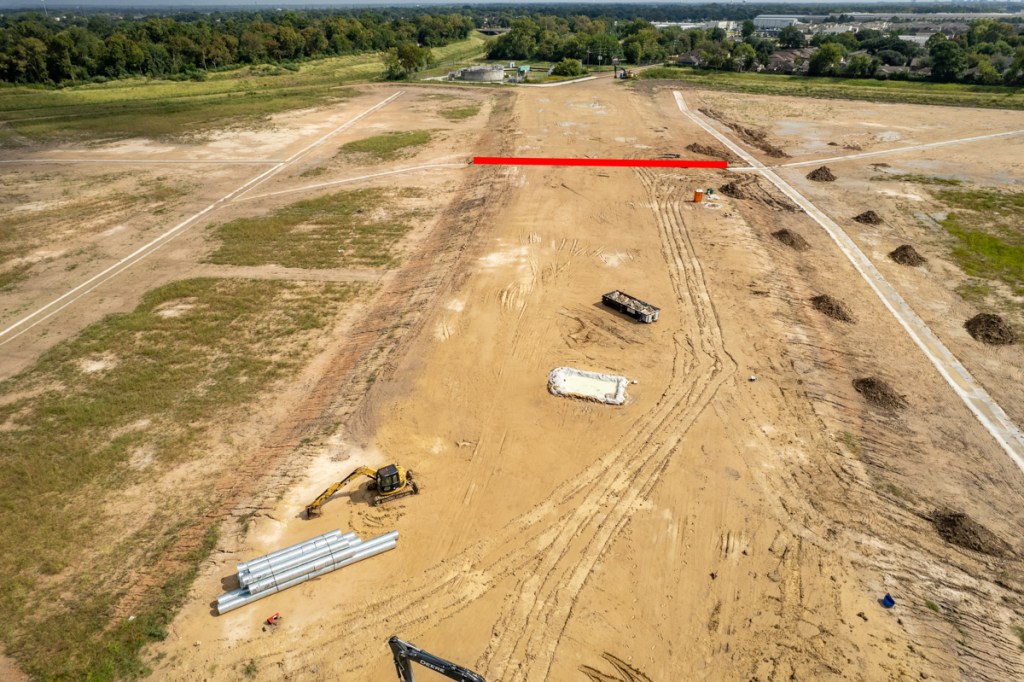
Dirt piled on sides of ditches. No silt fences, grass, or gabions. Photo taken May 26, 2021.

When you clear thousands of acres at a time, erosion control is important to protect downstream neighbors.

Two of the other investigations found Colony Ridge operating without a valid permit.

Conditions For Obtaining Permits

The National Pollution Discharge Elimination System (NPDES) requires developers to formulate Stormwater Pollution Prevention Plans (SWPPP) as a condition of obtaining their permits. The plans should:

  • Control the perimeter of the site
  • Protect receiving waters adjacent to the site
  • Follow pollution prevention measures
  • Protect slopes and channels
  • Stabilize the site as soon as possible
  • Minimize the area and duration of exposed soils at any one time
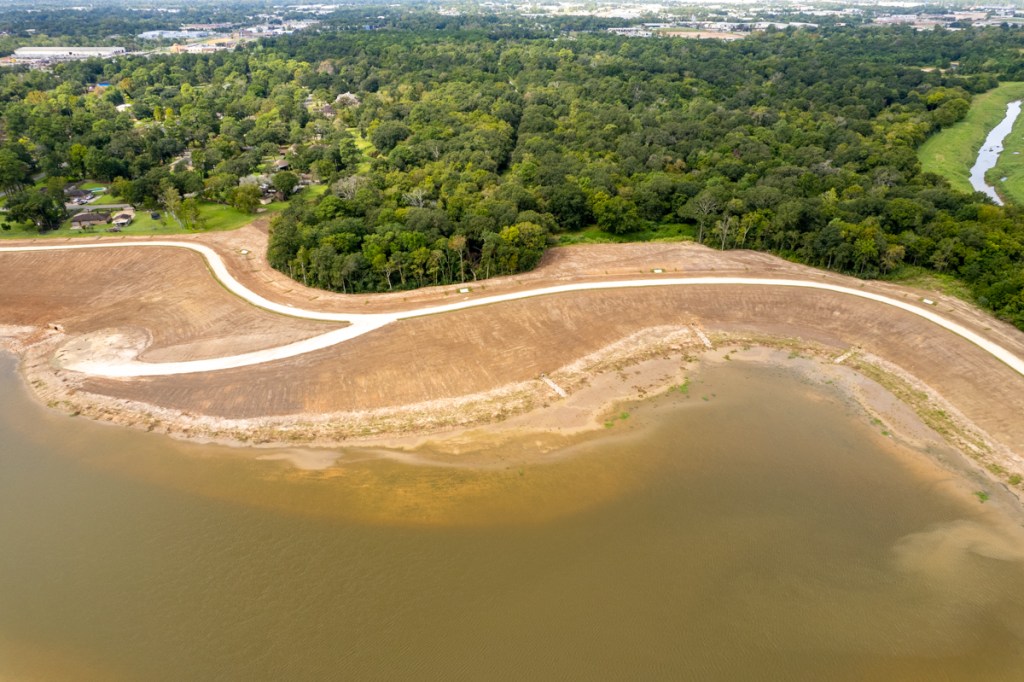
Part of Colony Ridge expansion area covered in TCEQ investigations. Photo taken March 3, 2021.

The goals of pollution prevention plans include:

  • Retaining sediment on the property
  • Selecting, installing, inspecting, and maintaining sediment control measures in accordance with good engineering practices
  • Removing offsite accumulations of sediment that escapes the property at a frequency sufficient to minimize offsite impacts
  • Preventing litter from becoming a pollutant source in stormwater discharges
Accumulations of litter on banks of Colony Ridge ditchdefinitely not a best management practice. Photo taken March 3, 2021.

Penalties Unclear at This Time

It’s unclear at this time whether the TCEQ violations will result in any fines for Colony Ridge. Typically, the TCEQ gives regulated entities a chance to remedy violations before levying fines. However, the recurring nature of these violations may call for a new approach. TCEQ has warned Colony Ridge about similar issues in the past, saying that Colony Ridge violations could adversely affect human health. However, violations continue.

Clearly, the ability to fix problems without a fine – after silt has been discharged into bayous, streams and rivers – seems like an incentive to ignore, not obey, regulations. Violators can simply fix problems if caught and, if not, take their profits to the bank.

Looking south. Photo taken May 26, 2021. Colony Ridge continues to push north with same construction practices.

Conclusions of All Nine Reports

The reports comprise almost 650 megabytes. They are far too large to post in a forum like this. However, I have captured screen shots of the reports’ conclusions for those who wish more detail.


#1699286: operating without a permit

#1704908: failure to maintain and properly install BMPs

#1740909: failure to achieve final stabilization requirements, large areas of bare soil

#1704910: Failure to maintain BMPs, install them properly and stabilize drainage channels.

#1704912: erosion control measures not installed

#1704914: failure to install even minimum erosion controls.

#1704916: no erosion control measures installed

#1704918: No violations.

#1704467: Operating without a permit.

For full reports, visit the TCEQ website.

Posted by Bob Rehak on 6/5/2021, based on TCEQ investigations

1376 Days since Hurricane Harvey

The thoughts expressed in this post represent opinions on matters of public concern and safety. They are protected by the First Amendment of the US Constitution and the Anti-SLAPP Statute of the Great State of Texas.

TCEQ Joins Aggregate Company in Appealing Revocation of Air-Quality Permit

The Texas Commission on Environmental Quality has joined an aggregate company it regulates in appealing a judge’s decision that voided an air-quality permit issued to the aggregate producer.

Photo of blasting used in limestone quarries. Courtesy of Stop 3009 Vulcan Quarry. According to the group, “Quarry blasting, crushing, and hauling operations emit high levels of carcinogenic particulate matter.”

Much at Stake

On March 5, 2021, two Texas Hill County environmental groups, Stop 3009 Vulcan Quarry and Friends of Dry Comal Creek won a lawsuit voiding the air-quality permit issued to Vulcan Materials. Vulcan needs the permit to turn a former ranch in Comal County into a 1500-acre open-pit limestone quarry and rock crushing plant. The property is in the middle of residential developments. It also sits atop the recharge zone for the Edwards Aquifer. That aquifer supplies drinking water for 2 million people.

The environmental groups’ celebration of the judge’s ruling was short-lived, however. On April 30th, the TCEQ joined Vulcan in filing an appeal.

Battle Started in 2017

The court battle between residents, Alabama-based Vulcan and the TCEQ has raged since June 2017 when Vulcan initially applied for a TCEQ air-quality permit. The groups objected. An administrative judge first supported the TCEQ and Vulcan. But District Court Judge Maya Guerra-Gamble overturned that decision. The most recent legal filing is an appeal of the appeal.

Response from Environmental Groups

In response, Stop 3009 Vulcan Friends of Dry Comal Creek said, “Unsurprisingly, TCEQ and Vulcan Construction Materials are filing a legal appeal, attempting to overturn the decision rendered by Judge Guerra-Gamble vacating Vulcan’s air permit. The appeal will be heard by the Third Court of Appeals.”

“While Vulcan’s motivations seem transparent, it’s a bit puzzling that TCEQ is spending taxpayer dollars and agency resources ostensibly supporting an out-of-state corporation, and in visible opposition to hundreds of Texans they are supposed to protect!”

Gist of Judge’s Ruling

I first reported on this issue on March 18, 2021. 459th Civil District Court Judge Guerra-Gamble ruled that:

  • TCEQ’s assertion that the quarry would not harm human health or welfare was not supported by evidence.
  • Vulcan’s emissions calculations were not representative and not supported by substantial evidence.
  • Vulcan’s air quality analysis did not account for cumulative impacts or emissions from the quarry and roads.
  • Vulcan’s choice of background concentration was arbitrary or capricious.
  • In the contested case hearing, the State Office of Administrative Hearings (SOAH) judge erred in allowing Vulcan to hide behind “trade secret” claims.
  • Plaintiffs were denied due process when the SOAH judge allowed Vulcan to conceal data using the “trade secret” excuse and did not allow plaintiffs to cross-examine Vulcan.

This May 20, 2021, story by Stephanie Johnson in My Canyon Lake, an online newspaper, provides additional detail.

Whom Does TCEQ Represent?

The TCEQ describes its mission as protecting the state’s public health and natural resources consistent with sustainable economic development. Its goal is “clean air, clean water, and the safe management of waste.”

Texas Commission on Environmental Quality

However, some feel that the regulators have become too close with those they regulate. And there was an attempt in this year’s legislature to transfer regulation of aggregate mines to the Railroad Commission of Texas. The bill, HB4341, died in the House Environmental Regulation Committee. Notably, it would have created criminal offenses for making false statements in official documents such as permit applications and reports.

Finding Balance Between Over-Regulation and Under-Protection

If Texas is to continue to grow, it must find the right balance between over-regulation and under-protection. We must also find ways to live with the legacy of 3-mile-wide quarries, such as the one Vulcan proposes – if that is, indeed, the only way to grow.

Below is a picture of the San Jacinto West Fork. Twenty square miles of sand mines ring the river between I-69 and I-45. This area will be scarred forever.

The giant Hallett aggregate mine on the West Fork of the San Jacinto is almost 2 miles east to west and 2 miles north to south.

Concrete lasts a few years, but the giant pits and the equipment concrete producers leave behind last forever. We must protect the environment that provides quality of life in order to attract new residents.

Posted by Bob Rehak on 6/4/2021

1375 Days since Hurricane Harvey

The thoughts expressed in this post represent opinions on matters of public concern and safety. They are protected by the First Amendment of the US Constitution and the Anti-SLAPP Statute of the Great State of Texas.

Houston in Bullseye: NWS Predicting Another 4-6 Inches of Rain in Next 5 Days

The National Weather Service released this map around 7 a.m. Houston time this morning. It shows Houston in the bullseye with another 4 to 6 inches of rain predicted in the next five days. Jeff Lindner, Harris County Meteorologist, warns that flash flood watches may be needed by Friday into the weekend.

Houston Area is in the Bullseye and could receive another 4-6 inches of rain in the next five days.

Atmosphere Moisture Levels Support 1-3 Inches Per Hour Later Today

Yesterday’s active weather pushed down toward the coast overnight. The local air mass stabilized by Thursday morning. But afternoon heating and a rapid influx of Gulf moisture favor the development of numerous thunderstorms later today over the region.

Moisture levels in the atmosphere support heavy rainfall with hourly rainfall rates of 1-3 inches per hour possible under the strongest cells. Lindner notes that we saw this yesterday evening throughout the Lake Houston area.

Heaviest Rains Expected Friday

However, the main storm system will begin to move slowly into southwest and west TX on Friday. It will dominate local weather through the weekend, according to Lindner, as several disturbances rotate around around it and feed off the near-continuous stream of rich Gulf moisture over the area.

Expect widespread showers and thunderstorms Friday through the weekend with frequent rounds of heavy rainfall.

Jeff Lindner, Harris County meteorologist

Upper level winds will support cell training over the area this weekend. Flash flooding will be a concern. 

Rainfall Amounts, Impacts

Additional rainfall amounts of 4-6 inches will be possible over the next 5 days. Much of this will fall during periods of heavy rainfall. Isolated totals could be significantly higher under any areas of sustained training. Hourly rainfall rates of 1-3 inches will be possible, which could support rapid street flooding.

Ground Still Saturated

Grounds are still saturated from heavy rainfall in May. And some watersheds are still elevated from the rainfall yesterday evening. Rainfall over the next several days will likely generate run-off into local watersheds resulting in rises. Any areas of sustained heavy rainfall will increase the threat for channel flooding given the delicate groundwater situation currently in the area.

Posted by Bob Rehak on June 3, 2021, based on info from the NWS and HCFCD

1074 Days since Hurricane Harvey

Brays Bayou Received Approximately Half Billion in Flood Mitigation Funding In Last 23 Years

Since 1998, the Brays Bayou watershed has received approximately a half billion dollars in flood-mitigation funding. To compile that estimate, I consulted Harris County Flood Control District’s (HCFCD) 2019 Federal Briefing (see page 45) and HCFCD’s “active construction projects” page for May 2021.

Map of Improvements

From page 57 of HCFCD 2019 Federal Briefing. Note all of the projects recently funded, completed or under construction.

Nature of Improvements

The 2019 Federal Briefing (page 56) separates Brays improvements into two areas:

  • Upstream (west of Sam Houston Tollway)
    • 3 detention basins: 595 surface acres; 9,623 acre-feet of storage – enough to hold a foot of water falling over 15 square miles (13% of entire watershed)
    • 3.7 miles of channel conveyance improvements, including control structures, from Old Westheimer Rd. to SH 6
  • Downstream (east of Sam Houston Tollway)
    • 17.5 miles of channel conveyance improvements from the mouth to Fondren Rd.
    • 1 detention basin: 252 surface acres; 1,865 acre-feet of storage – enough to hold a foot of water falling over 3 square miles
    • 30 bridge replacements/modifications, and/or channel conveyance improvements under bridges (16 due for completion this year)

Harris County Flood Control District (HCFCD) manages, designs, and builds the projects; buys land, easements, rights-of-way; relocates utilities; adjusts bridges (except for railroads); and operates and maintains the channel after construction.

Benefits and Costs

After completion, upstream improvements should give residents a 100-yr. level of flood protection (1% annual chance).

Likewise, downstream improvements should reduce the number of structures:

  • In the 4% or 25-year flood plain from 3,520 to 50.
  • In the 100-year flood plain from 16,800 to 1,800.

Total Cost Estimate: $480M though 2019 (Source: 2019 HCFCD Federal Briefing, Page 45)

Benefit-Cost Ratio: 7.0 (Source: 2019 HCFCD Federal Briefing, Page 56)

The size of the cost in conjunction with the benefit-cost ratio makes these numbers impressive. The primary requirement for the ratio is that it exceeds 1.0, i.e., that the benefits exceed the costs.

Brays’ watershed includes 114 square miles. That makes the cost per square mile a whopping $4.4 million throughout the watershed. However, one must also consider that the population of Brays is the largest of any watershed in Harris County – more than 700,000 of which (57.5%) qualifies as low-to-moderate income.

The map below, taken from a 2020 HCFCD grant application to the US Department of Housing and Urban Development (HUD), shows the distribution of income throughout the watershed. Areas such as West University and the Medical Center in the middle (blue) rank higher in income than areas east and west (tan/red).

LMI quartiles within Brays Bayou Watershed as of 2020. Source: HCFCD HUD grant application.

Possible Reasons for Large Investment

You could justify this extraordinary level of investment any number of ways. By the:

  1. Large population
  2. High population density
  3. High benefit/cost ratio
  4. Protection of critical infrastructure, such as the Texas Medical Center
  5. Number of homes and businesses flooded historically – also the largest in Harris County: 32,194 structures since Allison (Source: 2019 Federal Briefing: Pages 16-21)
  6. Length of time projects have been in the pipeline (most before Harvey and some even before Allison)
  7. Proximity to older, central part of county

Do not underestimate the last two points. Funding for many flood-mitigation projects can take decades.

Disproven Theories

Regardless of the reasons why Brays has received so much investment, one can also look at what this example does not show. It does not support the “equity” narrative propounded by some. That narrative asserts low-to-moderate-income neighborhoods receive less flood-mitigation funding because of lower home values compared to more affluent neighborhoods. Those affluent neighborhoods theoretically get more flood-mitigation funding because they allegedly support higher benefit-cost ratios (BCRs).

Home Value Alone Does Not Determine Benefit/Cost Ratio

The 7.0 BCR in Brays proves that low-to-moderate income neighborhoods are not automatically disadvantaged. Population density can offset lower property values. A whole apartment complex can sit on the same amount of land as one suburban home, yet the apartments would have higher value.

Experts also point out that many other elements affect calculation of BCRs. This study from the William & Mary Law School summarizes the approaches of HUD, FEMA, the Corps and others in determining BCRs. Table I.1 on page 11 shows many of the factors considered:

  • Resiliency benefits
    • Direct Physical Damages to Buildings, Contents and Inventory
    • Essential Facility and Critical Infrastructure Serivce Loss
    • Human Impacts
    • Economic Losses
  • Environmental Benefits
    • Provisioning Services
    • Regulating Services
    • Supporting Services
    • Cultural Services
  • Social Benefits
    • Recreational Benefits
    • Health Benefits
    • Aesthetic Benefits
  • Economic Revitalization
Brays Watershed Investment Not Suffering From Discrimination

The Brays watershed cuts across racial, ethnic and socio-economic boundaries. Flooding has been recognized as a problem here for decades and HCFCD has successfully obtained many grants during that time. HCFCD has also invested more in Brays than any other watershed. Like Halls Bayou and Greens Bayou, the narrative re: Brays is far more complex than some acknowledge.

Photos of Improvements in Bray’s Bayou Watershed

On May 26, I flew from Beltway 8 West to the Ship Canal east of downtown along Brays Bayou. Out of more than 1100 images, here are 16 that represent what you see along the way. Lots of detention ponds, channel improvements, and new bridges. The bridges are higher and often wider, with wider supports to avoid constrictions and blockages. New bridges never have more than two supports in the water flow; some old ones had seven.

Arthur Storey Park at Beltway 8 West and Bellaire Blvd. Looking N toward Westchase District.
Southern part of same park. Looking NE across BW8 West.
Looking NNE at Hilcroft and North Braeswood Blvd.
Looking WSW across same new bridge at Hillcroft. Note wide spans and wings designed to prevent erosion.
Looking north at new bridge over Brays at Chimney Rock
SW Corner of Loop 610 looking toward downtown in upper right.
Same intersection south of Galleria area. Note complexity where seven streams of traffic intersect.
Looking east toward downtown along Brays just inside of Loop 610 at detention pond. Note sewage treatment plant across bayou.
Looking north across new bridge over Brays along Buffalo Speedway toward Greenway Plaza in background.
Looking NE toward downtown in background along Main Street. Medical Center is in middle of frame.
Looking NE toward downtown where Fannin St. crosses Brays at UT Health Science Center.
Looking NE toward Med Center and downtown in background across another new bridge over Brays. Note the electrical infrastructure next to the bayou.
288 and Brays. Bridge construction on Almeda.
New Bridge over Brays at South 75th.
Looking NE across Brays at new railroad bridge near Tipps Street.
Downstream end of Brays near Buffalo Bayou. The ship canal and Port of Houston are in background.

As these pictures show, flood mitigation funding isn’t all about home value. Brays traverses some of Houston’s most critical infrastructure, job centers, rail lines, diverse neighborhoods and employment centers.

HCFCD describes Project Brays as the largest it has ever managed. To learn more more and see before/after pictures of many improvements, visit Project Brays’ own website.

Posted by Bob Rehak on 6/3/2021

1374 Days since Hurricane Harvey

I-45 Feeder Over Cypress Creek Is Cattywumpus

Ever since Harvey, Cypress Creek residents near I-45 have been caterwauling that the southbound feeder road is cattywumpus. For those who may not speak fluent Texan, that first word means “screaming” and the second means “skewed” or “out of alignment.”

So on my latest helicopter flight, I flew over the bridge to see what was up. Or down. Actually, the road bed appears level. And nothing has yet fallen into the creek.

However, aerial photos indicate that the bridge panels are indeed cattywumpus. Note how the side guardrails seem to be out of alignment. Also note uneven gaps in the bridge panels (tight on one side, wide on the other). Finally note the vegetation growing or stuck in the cracks, and the un-level bridge support – at bottom of center oval in row of three.

This image taken on 5/26/2021 and cropped from image below.
I-45 Southbound Feeder Road at Cypress Creek

For now, the bridge seems to be holding. But I’m not sure I would want to be the first one to drive over this after the next big flood.

During Harvey, residents say, this bridge went completely underwater. It appears that the force of the water lifted and twisted the bridge panels as much as 6 to 10 inches. However, TxDoT, the responsible authority in this case, has not yet fixed the issue.

Repairs Delayed

According to resident Frank Adamek, TxDoT originally said it would fix the bridge in 2020. Now, says Adamek, TxDoT says they hope to bid the job by the end of 2021 and start construction in March of 2022.

The bridge has other issues, too. Adamek says, the supports under the main lanes are 110 feet across. That allows trees swept downstream in floodwaters to pass through. However, the supports under the southbound feeder road are only 26 feet apart. Adamek says that they have caught trees and backed water up toward homes in the area.

Extreme events, such as Harvey, tend to reveal problems we didn’t even realize existed. Once you see them, though, they’re hard to forget. I, for one, intend to stay off that feeder road.

Posted by Bob Rehak on 6/2/2021

1373 Days since Hurricane Harvey

Humble ISD New North Transportation Center and Ag Barn Shaping Up Nicely

North Transportation Center Status

Humble ISD’s new North Transportation Center appears to be “dried in,” as they in construction. That means the main building has walls, windows and a roof. Photos taken on 5/26/21 show construction equipment still in front of the building indicating they have moved to the “interior buildout” phase of construction.

Humble ISD’s new north transportation center is nearly 100% concrete except for the large detention pond on the far left, much of which is out of frame.

When complete, the property will store buses for a large portion of the District’s 14,000 students who use them.

The property at 24755 Ford Road encompasses about 12 acres.  The target opening date for the new transportation center: sometime in 2021. It certainly looks, at this point, as if the District will accomplish that goal.

Having an additional transportation center will save an estimated $2 million in operating costs due to shorter routes and improved response times, according to Humble ISD. It will also free up space at the district’s main transportation center to accommodate growth in the southern part of the District.

The groundbreaking ceremony for the new North Transportation Center occurred just about 8 months ago on Friday, November 6, 2020. 

New Agricultural Science Center Status

About a quarter mile south on Ford Road from the Transportation Center, DT Construction has erected steel to frame out most of Humble ISD’s new ag barn facility. The old one at Deer Ridge Park in Kingwood flooded several times in recent years placing the animals at risk.

The center, measuring 29,000 square feet, will have the capacity to hold 70 pigs, and 70 goats or lamb. Additionally, there are 20 poultry and rabbit pens, along with room for 24 cattle. The new center will also include a practice arena, teacher offices, restrooms, a designated turnout area, comprehensive security measures, and expanded parking. Cost to build the new center totals $4.5 million.

Status of construction at Humble ISD’s new ag barn in Porter as of 5/26/2021.

Target completion date for this facility is also later this year. Although it doesn’t look quite as far along, keep in mind that some of these buildings will be open-air barns that require far less work than the transportation center facilities.

The new 6.9-acre facility sits on higher ground. Although it’s near the headwaters of Mills Branch (wooded area at top of photo above), only a tiny portion of it sits in the 500-year flood plain, according to construction plans. Mills Branch drains through Kingwood’s Royal Brook and joins White Oak Creek downstream. (See map below.)

Base map from Harris County Flood Education Mapping Tool. Red indicates location of new Ag Barn.

New Minimum Detention Pond Requirements

The ag facility, too, has a substantial detention pond. See the triangular area in the upper right portion of the photo above.

Google Earth shows the pond measures about .53 acres. Harris County Flood Control recommends a new minimum detention rate of .65 acre-feet per acre for properties smaller than 640 acres under new Atlas-14 rainfall rates.

That means this pond would have to be about 8.5 feet deep to comply. I haven’t surveyed it. But it appears to be that deep.

The pond for the transportation center measures about 1.7 acres out of a 12-acre site. Assuming that pond is also approximately 8 feet deep, that appears to offer more than enough detention capacity to comply with the .65 acre-feet per acre rule of thumb also.

The North Transportation Center is in Montgomery County and the Ag Science Center straddles the Harris/Montgomery County line. However, both lie within the City of Houston’s Extra Territorial Jurisdiction and the detention ponds would need to meet the City’s requirements which mirror Harris County’s.

It’s good to see the Humble ISD taking a responsible approach to floodwater detention. The Humble ISD 2018 school bond made both of these projects possible.

Posted by Bob Rehak on 5/31/2021

1371 Days since Hurricane Harvey

Preparation Checklists for Hurricane Season

It’s that time of year again. Hurricane season officially starts Tuesday and runs through November 30. Here are checklists that can help you prepare for and recover from hurricanes.

Hurricanes can strike anywhere, anytime. The time to prepare is not when one is bearing down on you. It’s now. When you have time. Supplies are plentiful. Internet access is available. You’re calm. And can think things through.

Any number of agencies offer preparedness guides from Harris County Flood Control to the National Weather Service and your insurance company. I also discovered a site that specializes in preparedness and recovery checklists for hurricanes. It’s PreparednessGuide.org. And it has both general lists and lists tailored to the needs of special groups, such as children, senior citizens, and families with pets.

Rosie the Dog on the Harvey Cruise Line. Photo Courtesy of Denise Faulkner.

They also sent me links to several other special-purpose sites. For instance:

For future reference, you can find these checklists on my Links Page under the Preparedness subhead.

Start reviewing these now. It’s never too early to plan!

Posted by Bob Rehak on 5/30/2021

1370 Days since Hurricane Harvey


Thanks A Million

This week, ReduceFlooding.com passed up a million total page views. I launched the site on 3/3/2018, about six months after Hurricane Harvey. In the early days, it averaged 10-20 page views a day. This month, views ranged from 1,000-5,000 a day. That’s not bad for a one-issue website focused a small geographic area. Especially one that doesn’t promote itself. Over half of local business websites receive less than 500 visits a month.

Objectives Have Never Changed

Since the beginning, I have posted 1,596 news stories and taken 26,211 photos. After all that, my objectives have never changed. They remain to:

  • Raise awareness of how sedimentation and other man-made factors contribute to flooding along the San Jacinto River and Lake Houston
  • Describe ways to reduce flooding
  • Inform people how they can get involved in the political process and help
  • Provide concerned citizens with resources to bring about change.

Major Ongoing Stories

Through the years, several ongoing stories stand out:

Mouth Bar of the West Fork of the San Jacinto after Harvey.
The same area today is virtually unrecognizable. The above-water portion of the mouth bar is gone. (Turbidity caused by recent rains.)

Reporting as a Learning/Sharing Process

Several things have become clear to me while researching, writing and photographing hundreds of stories about flooding and flood mitigation.

Flooding is not very high on most political agendas unless we make it so. People pay attention to flooding after major floods. Then they hear about big dollars for flood mitigation funding and assume the money is being put to work immediately. It’s not.

Flood Mitigation Is a Dog Fight

Unless communities stay on top of flood mitigation and people work together to ensure they get their fair share of funding, they won’t. It’s a dog fight. We collectively have more needs than dollars. Never assume the machinery of government is working for you.

As State Senator Brandon Creighton once said, “If you don’t get involved in government, you’ll get run over.”

That’s why I want to thank each and every reader of ReduceFlooding.com. Your continued interest creates a collective voice that is louder than any of us could have as individuals.

So thank you again for the ideas, photos, tips, and suggestions that hundreds of you send in each month. You help shine a light on the problems. Thanks a million for your support.

Thanks also to our local representatives: Dave Martin, Mayor Pro Tem and District E City Council Member, City of Houston; Ted Poe, former US District 2 Representative; Dan Crenshaw, current US District 2 Representative; US Senator Ted Cruz; US Senator John Cornyn; State Representative Dan Huberty; State Senator Brandon Crenshaw; Harris County Precinct 4 Commissioner Jack Cagle; and Harris County Precinct 2 Commissioner Adrian Garcia.

Posted by Bob Rehak on 5/29/2021

1369 Days since Hurricane Harvey

The thoughts expressed in this post represent opinions on matters of public concern and safety. They are protected by the First Amendment of the US Constitution and the Anti-SLAPP Statute of the Great State of Texas.

New Caney High School #3 Taking Shape

It was about a year ago that New Caney ISD cleared land for its third high school between Sorters-McClellan Road and US 59 south of Kingwood Drive. Today, the site is a beehive of activity. Construction crews have erected walls that will eventually define the shape of High School #3. I took the pictured below on 5/26/2021.

New Caney ISD Campus #3 on Sorters McClellan Road south of Kingwood Drive.

The New Caney ISD says that as of May 2021, “The site work at Comprehensive High School #3 includes storm drainage which is 95 percent complete. The sanitary sewer is 85 percent complete. The electrical is 98 percent complete and the water is 90 percent complete. The concrete slab on the building is 85 percent complete. The form and pour tilt-up panels are 95 percent complete. The erect panels are 80 percent complete and the structural steel is five percent complete.”

New Caney ISD still expects construction to finish construction of High School #3 in the Summer of 2022.
When complete, the building(s) will be 320,000 square feet.
The building pad behind the crane in the foreground will be the field house. (See plans below.)
General plan for New Caney High School #3

New Caney ISD’s enrollment grew 31 percent between 2011 and 2016. That ranked NCISD first in the greater Houston area and fourth in the state for percentage enrollment growth. Eventually, the high school will hold 2,250 students. However, the school will open with only 1,350 in August 2022.

FEMA’s National Flood Hazard Layer Viewer shows that the extent of the floodplain in this area roughly parallels Sorter’s McClellan Road. The high school property falls roughly within the red circle.

Posted by Bob Rehak on 5/29/2021

1369 Days since Hurricane Harvey

Railroad Commission Plugs Three Abandoned Wells Near Forest Cove Townhomes

This week, the Railroad Commission of Texas finished plugging three abandoned oil wells in the Forest Cove townhome complex near Marina and Timberline Drives. The Commission cited the owner for leaks in the past. However, the owner, Noxxe Oil & Gas, went bankrupt in 2020. That put the responsibility for remediation on the Railroad Commission. The Commission began plugging earlier this month and finished in this location on Wednesday afternoon. See photos below.

About Plugging

The National Petroleum Council says that a well is plugged by setting mechanical or cement plugs in the wellbore at specific intervals to prevent fluid flow. The plugging process usually requires a workover rig and cement pumped into the wellbore. The plugging process can take two days to a week, depending on the number of plugs to be set in the well.

Oil and gas can not only seep up through the well’s pipe, but also through the annulus. The annulus is the area between the outside of the pipe and the surrounding earth. Therefore, plugging often involves perforating pipe and forcing cement into the annulus, too.

First of three wells being plugged. Photographed on Sunday May 9, 2021. The larger townhome complex in the background was torn down on Wednesday, May 26, 2021.
Pump jack from second well ready to haul away. Photographed on May 26, 2021. Note West Fork bridge in background.
Railroad Commission contractors plugging third of three wells near townhomes on Wednesday, 5/26/2021 at 8am.

Pumpjacks like the one above represent a form of “artificial lift. They give nature a hand when pressure in the well cannot bring oil and gas to the surface by itself in produceable quantities.

Photo taken at noon on May 26, 2021. Contractors packing up. Note location of previously demolished townhomes to left of rig and top center. Water in foreground is the San Jacinto West Fork.

Plans For Rest of Wells Remain Unclear

The Railroad Commission has not returned multiple calls or emails regarding its plans for other Noxxe wells near the Forest Cove little league fields. Earlier this year, the Commission said that someone might buy those wells and try to produce oil from them, using the tanks already on the property.

Approximately 10 wells remain on the portion of the old Noxxe lease between the Forest Cove Little League fields and the San Jacinto West Fork at the top of the frame. Photo taken on 5/26/21 around noon.

Posted by Bob Rehak on 5/28/2021

1368 Days since Hurricane Harvey

The thoughts expressed in this post represent opinions on matters of public concern and safety. They are protected by the First Amendment of the US Constitution and the Anti-SLAPP Statute of the Great State of Texas.