City Begins Cleanup of Marina Drive Townhomes in Forest Cove

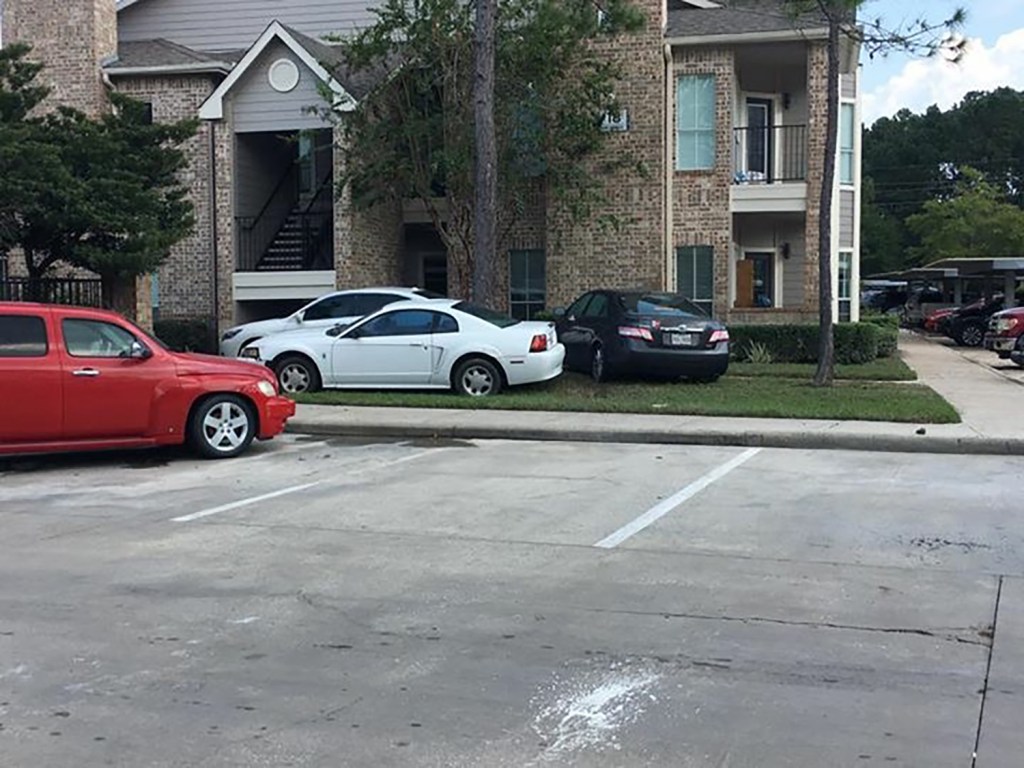
Around noon today, I received news that the City of Houston Solid Waste Department had cleaned up two parking lots filled with trash on Marina Drive in Forest Cove. The lots were between three rows of townhomes opposite the Forest Cove Community Room and Pool. The cleanup is a huge boon to the Forest Cove community. It was the last area in this part of Houston to have trash removed from Harvey and was featured in a FEMA video.

The two lots in question contained – by far – the worst piles of debris.

Before Cleanup

Before pick up. Trash littered the parking lot of townhomes on Marina Drive in Forest Cove.

Before pick up. More debris opposite the Community Center in Forest Cove.

After Clean Up

Here’s what the parking lots look like now – a huge improvement. Houston Police have said they are stepping up patrols in the area to help stop illegal dumping.

Townhomes on Marina Drive after Trash Pickup

Townhomes on Marina Drive after Trash Pickup

Still Work Yet to Do

The uncollected trash made the area a prime target for vandals, looters, graffiti, squatters and illegal dumping. Our thanks for work so far go out to City of H0uston Solid Waste Department, Council Member Dave Martin and his chief of staff Jessica Beemer for work to date.

A quick check of the area, however, shows that much trash remains. Hopefully, the cleanup will continue.

Trash still remains uncollected in places.

More still uncollected. Smaller trash piles like this exist throughout the area.

Long-Term Plans For This Area

Gary Bezemek, Harris County Precinct 4 Coordinator, says that the County is in the process of buying out these townhomes. When buyouts are complete, the County will tear them down tear out the parking lots, and even tear out the streets. It’s not clear yet whether the county intends to let the land revert to nature or turn it into part of their new Edgewater Park which begins at Hamblen and U.S. 59.

Bezemek says that another option is to build soccer and baseball fields on the land if the community desires them. “The beauty of such facilities for land in the floodway like this is that when the floodwaters go down, there’s very little cleanup to do.”

Posted by Bob Rehak on October 31, 2018

428 Days since Hurricane Harvey


Status Report on 21 Flood Mitigation Projects 14-Months After Hurricane Harvey

Fourteen months ago today, people started waking up to water in their homes. What has happened since then to mitigate risk from the next flood? Below, a status report on almost two dozen mitigation projects that affect the future of the Lake Houston Area.

SJRA
  1. By executive order of Governor Abbott in March, the SJRA adopted flood management as part of its mission. They later hired Chuck Gilman to head the new department.
  2. The SJRA added two new members from the Lake Houston area to its board to ensure the views of downstream residents are considered. The members are Kaaren Cambio and Mark Micheletti.
  3. Responding to Lake Houston area requests, the SJRA adopted a resolution to temporarily lower the level of Lake Conroe by 2 feet during the peak of hurricane season and the rainiest months in spring. This should help reduce risk to dredging equipment. Lake Conroe was in fact lowered between mid-August and October 1. The Lake has now to its normal for winter months. However, the Lake Conroe Association has announced it plans to fight the lowering again next spring.
  4. Funding for the SJRA watershed study is still pending after seven months. Mitigation efforts that could come out of the study include identification of upstream detention sites and a long-term maintenance dredging plan.
Lowering Lake Houston

Last spring, the City of Houston has adopted a policy of lowering the lake every time a forecast calls for three or more inches of rain from a storm. The City has already lowered the lake in anticipation of four storms and likely prevented home flooding each time.

Dredging
  1. Phase 1: After the Governor’s visit in March, the U.S. Army Corps of Engineers began a survey of the West Fork that was supposed to have gone from US59 to Lake Houston – a distance of 8 miles. The Corps decided to focus the survey on the area between River Grove Park and Lake Houston.  Then, for reasons that were never clearly enunciated, they decided to restrict the scope to the area between River Grove Park and Kings Harbor. They bid the job in June and awarded the job to Great Lakes Dredge and Dock on July 6. The first dredge launched on September 20. The second dredge started dredging last week. The project will continue through mid-April next year, at which time, the contractor will begin demobilizing unless an extension of the project is approved before then.
  2. Phase 2: During the summer, residents began protesting the limited scope of the dredging. The fact that the Corps was leaving the biggest blockage in the West Fork alarmed them, especially since it was at a strategic choke point where it could continue to flood the entire Humble/Kingwood area. In mid-October, the City, State, Corps and FEMA met to consider the request to expand the scope. They reached agreement in principle to do so. However, two hurdles remained: an environmental survey and location of a suitable placement area. At this point, no one is releasing any information about plans to overcome the hurdles. If officials can agree on a plan before the current project is complete, it may be possible to save the cost of a second mobilization/demobilization – approximately $18 million. That could go a long way toward funding additional dredging. If officials can agree on a closer disposal site, they could also reportedly save tens of millions of additional dollars. Let’s hope for an announcement this week from the City.

    Great Lakes’ second dredge is now working around the clock seven days a week.

  3. Phase 3: At the Kingwood Town Hall Meeting on October 9, Stephen Costello, the City’s Chief Resiliency Officer, identified the area between River Grove Park and US59 as a potential Phase 3 of the dredging process. No plans or funding sources have been announced yet.
  4. East Fork: A difference map released by Costello, also on October 9th, showed a serious loss of conveyance in the East Fork due to sedimentation. No one has yet addressed this issue.
  5. Maintenance Dredging: The Corps, Harris County, the City of Houston, Dan Huberty, and the SJRA have all identified a need for maintenance dredging to keep sedimentation from building up again to a critical level. It’s not clear how that would happen at this point. A source of funding has not been identified. Some people favor allowing sand miners to dredge the river commercially and are exploring ways to make that happen. That could reduce costs to government, but others fear the prospect of commercial mining in rivers, which is outlawed in many countries because of the damage it frequently causes.
Stopping Sediment at Its Source

Sediment comes from several sources: some natural, some man-made. We can’t do much about the natural. We could about the man-made if the political will existed.

Sand mine adjacent to Kingwood on the west fork of the San Jacinto. Note the breach in the dike to the left allowing flood water to escape into the river. Note sand deposits in drainage ditch below break in dike. This breach remained open for three years.

The TCEQ, State Rep. Dan Huberty and State Senator Brandon Creighton will meet with community representatives and sand mine representatives – AFTER the election. It remains to be seen whether Texas will follow best practices commonly adopted in other states and countries. Hey, if you can dump sediment into the river, leave dikes broken for years, walk away from a mine when you’re done without cleaning up, and get away with an $800 fine, why would you take regulations seriously? It’s taken an entire year to try to set up a meeting that no one except community leaders has yet confirmed. Meanwhile, the industry has quadrupled its lobbying budget and openly brags about the legislators they are pursuing to block what should be common-sense regulations.

Putting Teeth into Environmental Regulations

This is a job for the next legislature. TCEQ fines currently average about three times what you would pay for failure to fully stop at a stop sign. The cost of dredging 2.1 miles of the West Fork is now up to $73 million. The cost of dredging the mouth bar could be another $100 million. Doesn’t feel very fiscally conservative to me.

Ditches

Many drainage ditches that empty into Lake Houston have become clogged with sediment and fallen trees. The City and County agree on the need to clear them, but spent months and more than half a million dollars in legal fees quibbling over who could clean which portions of which ditches. Finally they arrived at a cost-saving compromise. The City would handle all underground drainage and the County would handle everything above ground. But before the County could start, they needed the City to hand over deeds and/or easements that would allow them onto the property. Documents for some of the ditches have been turned over to the County. But the City has been unable to locate the documents from several ditches including Ben’s Branch, the largest in Kingwood. They have not made any demonstrable progress in months despite supposedly having “five lawyers working on it full time.” Every time I ask, the response I get is, “We are still working on it.” The City has a major opportunity for improvement here. If this were the private sector, someone would have been fired by now. In anticipation of receiving the missing documents, the County has already surveyed the ditches and is ready to begin working on them. Let’s hope the City locates easements before another hurricane or the spring rains.

Additional Flood Gates for the Lake Houston Dam

The County allocated $20 million for the gates in the flood bond package. That means the City has to come up with another $50 million somewhere. Costello reported that the application for funding has been filed with FEMA. The Army Corps of Engineers would have to check off on the plans. I’ve heard rumors of pushback from downstream interests worried about the flooding that additional gates might create for them. This must be studied because of all the chemical plants and hazardous waste downstream. Net: this could easily take another five to ten years … if it happens at all.

Additional Upstream Detention

This is largely a Harris County issue. Money for it was approved in the $2.5 billion flood bond passed on August 25th. But the watershed study is still pending. Even after funding approval, the study could take a year to complete. Once the County identifies a location (which may be in another county), it has to purchase property, design the dam and construct it. That could easily be another five years also.

Proposition A

Funding for City-led mitigation projects may depend on the success of Propositions A and B in the current election. If B succeeds and A doesn’t, money will be even harder to find for mitigation. A purports to validate a lockbox around drainage fees so that the money can only be spent on drainage projects. B grants a huge pay increase to firefighters which would create pressure to divert money from the drainage fund.

New Flood Gages

Harris County and the SJRA have installed new flood gages that should fill in gaps in their upstream network and give us more warning time and greater accuracy in river forecasting. Some of these gages, like the ADVM at US59, can also measure sedimentation in real time.

Real-Time Inundation Mapping System

Harris County has developed a near-real-time inundation mapping system that will help give people better information about flooding. The County is reportedly sharing the system with the SJRA to allow them to model the impact of future releases during floods.

Subsidence

Subsidence has emerged as a factor that could potentially worsen flooding in north Harris and Montgomery Counties. The problem is caused by excessive groundwater pumping. And yet some in Montgomery County are pushing to pump even more groundwater. Voters there are voting on a measure to elect directors to the Lone Star Groundwater Conservation District for the first time. Let’s hope they elect people who believe in science and real data or we could all be sunk. It’s shaping up as the classic battle between saving a few bucks today versus ensuring the future. We will know how far sighted voters are in November.

Harris County Flood Bond

In August, voters passed a $2.5 billion flood bond that should make many projects possible. Commissioners have already started approving projects.

Harris County Edgewater Park

County has purchased the land and is finalizing plans. Construction should start next year. The value of the project from a flood mitigation point of view? It keeps the area green.

Buyouts

The County has received the first batch of funding for 985 buyouts and is in the process of closing on several properties on Marina Drive in Forest Cove.  Each is voluntary and each must be treated like an individual purchase. In other words, every single one requires a survey, appraisal, deed research, etc. Part of the difficulty is that several townhomes were swept off their foundations by floodwaters and no longer exist. When buyouts are complete, the County will convert this area to parkland or allow it to go natural.

Townhomes on Marina Drive in Forest Cove 14 months after Hurricane Harvey.

Meanwhile, I wish we could get the City to pick up the trash.

If you have additions or corrections to this list, please send them to me via the contact page on this web site. My apologies in advance for anything I may have missed. There are a lot of moving parts here.

Posted by Bob Rehak on October 28, 2018

425 Days (14 months) since Hurricane Harvey

How Parks and Green Spaces Improve Real Estate Values

When I ran last week’s post about Harris County’s new Edgewater Park, I got pushback from several people who feared more green spaces could bring in outsiders and create traffic woes.

Value of Green Spaces in Reducing Flood Damage

Since Harvey, hardly a day goes by that we don’t read about the value of parks and green spaces in protecting us from flooding. So I was surprised at the resistance. How many more homes would have flooded in Kingwood had it not been for greenbelts and parks along the east and west forks? Google Earth shows approximately 3200 acres currently used for golf, parks and greenbelt trails in Kingwood. When floods recede these areas usually require little more than some extra maintenance.

Even after Havey, the repair costs for all of Kingwood’s parks put together was less than one home that I know of near the river.

Plus, consider this. Had you divided those 3200 acres up into typical quarter acre lots and put a home on each, 12,800 additional homes would have flooded. Every single one. And if each suffered a quarter million dollars worth of damage, the total would have exceeded $3 billion dollars.

Kingwood and Forest Cove: 4X the Recommended Green Space

Kingwood and Forest Cove are exceptional in the amount of green space that we have per household. About 20% of our acreage is in parks, golf courses or greenbelts, something that makes us especially attractive to active, younger families with children. It’s one of our distinguishing characteristics and most attractive features.

Many cities cannot reach the minimum of 10 acres of park space per 1,000 residents recommended by the National Recreation and Park Association (NRPA).  Kingwood has four times that! Truly, we were blessed by a visionary developer.

Floods Negatively Impact Price

Floods clearly affect home values in a negative way. A study of 8000 homes in a flood-prone area of North Carolina after Hurricane Floyd in 1999 confirmed this. It found that homes outside of a flood plain had a higher market value than equivalent homes inside the flood plain. Further, the price discount for homes inside the flood plain was significantly greater immediately after the hurricane.

Proximity to Parks Positively Impacts Price

But what is the correlation between home values and proximity to parks. Does the proximity help or hurt (as some people suggested)?

There’s been a fair amount of research on this subject. When I googled it, the search returned 330 million results. Seriously! I scanned the first five pages. Luckily, there seems to be consensus. The answer is, “Yes, there is a positive correlation.”

Would you pay extra to live close to this? Studies show most people would.

Some of the landmark studies on this subject were conducted at Texas A&M. One by John Crompton in 2001 reviewed 30 scholarly articles and found that abutting a passive-use park, such as East End, had a 20% positive impact on property values. Crompton also found that abutting active-use parks (such as ball parks or soccer fields) with large numbers of users had little discernible impact, but that properties a block or two away experienced a 10% bump.

800% Premium for Proximity to Central Park

Since Crompton’s study, mathematical analysis has become more sophisticated. The results are not as dramatic, but still positive. They often use a statistical technique called hedonic analysis that helps tell us how much of a home’s increase in value can be attributed to a particular factor, such as proximity to a park versus proximity to a park, say, downtown. Having a view of Central Park in New York City (as opposed to your neighbor’s air vent), for instance, bumps a home’s value by a whopping 800%. Furthermore, the 800% increase can be seen up to 1500 feet (about a quarter mile) from the park.

Role of Hedonic Analysis in Pricing

Hedonic analysis is particularly popular in real estate. It focuses on the things that people like most or least about property, in other words, what drives or hurts sales. It gages the influence of various pleasant and unpleasant factors on prices. For instance, proximity to the park might be visually pleasant, but noise created at the park might be unpleasant. The word “hedonic” comes from hedonism, the pursuit of pleasure. In this case, the focus on pleasure is as a component of price. The more pleasure people get from something, the higher the price it commands.

The newer studies also isolate price variance by the type of park (active-use, passive, greenbelt, near water, urban, rural, etc.).

Another review of scientific literature by Sarah Nicholls found that in Austin and Indianapolis, proximity to greenbelts accounted for 0%, 2%, 6%, 12% and 15% of average sale value. The variance resulted from different types of greenways, proximity to access points, maintenance, the beauty of vegetation, and the amount of regulation/protection.

Nicholls also found that, “In no case reviewed by this author to date has an open space been found to have a negative impact on surrounding property values.”

Nicholls concludes that it is possible, using hedonic analysis, “to place dollar values, verifiable using rigorous scientific techniques, on the economic contributions of …(green space) … amenities to local communities.”

Offsetting the Negative Influence of Harvey

As the county buys flood-damaged homes below Hamblen Road, I hope they create a greenbelt between River Grove Park and Edgewater Park. It would reduce repetitive flood losses to FEMA and the National Flood Insurance Program. It would protect the community from future development that could exacerbate flooding. And it would turn a negative into a positive impact for surrounding homeowners. The county estimates that its current greenway, which stretches from 59 to 45 along Spring Creek, could extend all the way to Tomball within four years. Connecting that trail to Kingwood’s network, could in my opinion, create the kind of high profile amenity that helps counteract any lingering negative influence of Harvey.

Personally, I can’t wait. It may be what I need to get this old bag of bones back on a bike again.

Posted by Bob Rehak on October 27, 2018

424 Days Since Hurricane Harvey

Second Dredge Starts Dredging

It’s official. There are now two dredges actually dredging on the West Fork. Dredge #2, owned and operated by Great Lakes Dredge and Dock, moved downriver from the command site on October 16.

Getting 2-foot Pipe Through Water One Foot Deep

However, the company had not yet reached placement area #2 with the pipeline. Great Lakes had to dredge their way upstream through water less than one-foot deep in places to get to the placement area with five miles of pipeline that is 2 feet in diameter.

Next Steps: Patches and Pressure Testing

After reaching the placement area with pipe, Great Lakes then had to test it. During testing, dredgers slowly increase pressure in pipe as they look for leaks. The most common place to find leaks is at the joints, but sometimes they need to replace entire sections of pipe. The dredgers then make repairs in the water from pontoons loaded with backhoes and welding equipment. Backhoes bring the pipe up from the bottom of the river and position it in the welding machines.

After that, the dredging company had to test the booster pumps and throttles as they started them up. They also perform dye tests to calibrate velocity measurements. This helps ensure that water in each stage is moving at the same rate of speed. Great Lakes and its subcontractor Callan Marine will each use up to three booster pumps to keep five miles of sediment-laden water moving upriver to their respective placement areas.

One of three booster pumps that Great Lakes will use. This one can be seen from the northbound 59 feeder road.

While dredge #1, which started the same process on September 20 is diesel, dredge #2 is electric. Electric dredges run quieter, but take longer to warm up. As my source said, “An electric dredge slowly heats up the equipment to drive the moisture out; water and electricity don’t mix well.”

Now Working 24/7 Until Completion

With all those steps complete, dredging is now in full swing. By this weekend, both dredgers will be working 24/7 until completion.

To help jumpstart dredging, Great Lakes hired Callan Marine as a subcontractor. Callan had equipment available earlier and started this same process on September 20. The diagram below shows how both companies plan to work together.

Dredge #1 started at the halfway point and will work its way east to the end point. Dredge #2 started at River Grove Park and is working its way toward the midpoint.

Great Lakes will start at the western edge of the project area and work its way to the middle. Meanwhile, Callan, which started in the middle will work its way to the project’s end point – east of the West Lake Houston Parkway Bridge (by Chimichurri’s).

Callan will send its spoils to placement area #1 while Great Lakes will send its to placement area #2.

No News Yet on Next Phase of Dredging

When City of Houston representatives including City Council Member Dave Martin returned from Austin two weeks ago for a high level meeting about the need to remove the mouth bar, hopes were running high. Decisions makers needed only an environmental survey and a placement area before the mouth bar project could proceed. Reportedly, they had reached agreement in principle on all other requirements including funding. However, the City has made no announcements yet about either the survey or a third placement area.

It took 3.5 months for contractors to fully mobilize for the current project. If FEMA, the Corps, the State, and the City can lock down phase two before mid-April, 2019, taxpayers have a chance to save the cost of another mobilization/demobilization – about $18 million.

It would also save precious time. Without having to remobilize, dredgers would have a chance to cut a channel through the mouth bar before the onset of next hurricane season.

Revised, estimated timeline for first phase of the West Fork Emergency Dredging Project

What About River Grove Boat Launch?

Cutting a channel through the side bar at River Grove will probably be the last thing Great Lakes does as part of this phase of dredging. Dredgers are concerned about boater safety and worry that opening the channel now will increase the number of boats on the river and the chance of accidents.

Posted on October 25, 2018 by Bob Rehak

422 Days since Hurricane Harvey

San Jacinto River Watershed: Underfunded, Overdamaged

When I go to various flood mitigation meetings around town, I often hear – with some jealously and resentment – that the San Jacinto River Watershed seems to be getting the lion’s share of flood mitigation funding. This is not true, but it’s a popular misperception. Those who believe they are underfunded tell me constantly how unfair they think it is.

Flood Damage and Mitigation Funding Varies Greatly by Watershed

So I’ve done some research on this subject and would like to call your attention to two reports. The first is a regional report by the Greater Houston Flood Mitigation Consortium called Strategies for Flood Mitigation. It examines equity in funding between different watersheds. It found that the San Jacinto River Watershed has 3% of the region’s population, historically has received 0% of the region’s flood mitigation funding, and yet sustained 14% of the region’s damages during Harvey. That would seem to suggest that San Jacinto River Watershed residents suffered almost five times more damage per capita than other watersheds.

I wondered if there could be a correlation between underfunding of flood mitigation projects and excessive damage. That led me to another report that lists spending by watersheds in dollars: Harris County Flood Control District’s (HCFCD) annual federal briefing. It’s Flood Control’s annual report to the Federal Government about how Federal funds are being spent here. The link above is to the 2018 version, published last March. That was just BEFORE the U.S. Army Corps of Engineers started its West Fork dredging project. Note also, it was BEFORE Harris County passed its $2.5 billion flood bond in August. So what follows is a snapshot of the way things were BEFORE Harvey, not now.

SJR Flood Mitigation Projects Underfunded Until Recently

A re-reading of that Federal Briefing confirmed my suspicions and the findings of the Greater Houston Flood Mitigation Consortium. The San Jacinto River watershed is by far the biggest in Harris County. With the exception of a few buyouts and flood gages, until now, it has received NO federal dollars for flood mitigation projects (at least through the County).

Source: Harris County Flood Control 2018 Federal Briefing. Harris County has 22 watersheds. The San Jacinto appears to be the largest.

By far, the vast majority of the money spent goes to capital improvement projects such as channelization and detention. Virtually all of that money is spent in six areas according to the Active Federal Projects Summary in the HCFCD Federal Briefing. They are:

  • Sims Bayou
  • Clear Creek & Tributaries
  • Greens Bayou
  • Brays Bayou
  • Hunting Bayou
  • White Oak Bayou

Previously, projects were completed for the Addicks and Barker Reservoirs, Halls Bayou, Buffalo Bayou, Vince Bayou, Little Vince Bayou, and Cypress Creek. There are no capital projects listed for the San Jacinto River Watershed, past or present.

Higher Percentages of Budget than Damage

So how did the watersheds fare that are receiving federal funding? According to pages 24 and 25 of the Greater Houston Flood Mitigation Consortium  report:

  • Sims Bayou had 19% of the budget and 2% of the damage.
  • Clear Creek had 13% of the budget and 7% of the damage.
  • Greens Bayou had 8% of the budget and 7% of the damage.
  • Brays Bayou had 23% of the budget and 18% of the damage.
  • Hunting Bayou had 8% of the budget and 1% of the damage.
  • White Oak Bayou had 14% of the budget and 3% of the damage.

With No Budget, SJR Tied for Third Highest Amount of Damage

Compared to the six creeks and bayous above, the San Jacinto River had 0% of the budget and 14% of the damage. Here’s how it looks in graph form, taken from the Flood Mitigation Consortium report.

The Greater Houston Flood Mitigation Consortium Report dramatizes the need for equity in funding throughout the region. For a complete breakdown of all watersheds, see the table on page 25 of the report.

What can we deduce from this?

Flood mitigation spending, without a doubt, reduces damage.

The San Jacinto River watershed is by far the most underfunded compared to others.

Vigilance Needed

People in the Lake Houston Area need to fight future underfunding. We have been too quiet and therefore neglected for far too long. We must remain vigilant in coming years to ensure that the projects we have been promised (additional dredging, detention and floodgates, plus better ditch maintenance) are in fact delivered.

Harris County and the federal government together are spending $1.342 billion dollars on capital projects for Sims Bayou, Clear Creek, Greens Bayou, Brays Bayou, Hunting Bayou and White Oak Bayou. The San Jacinto currently gets only one twentieth of that due to the current Corps dredging project.

Before you call Judge Emmett and your county commissioners, I would like to point out that they have already committed to a more equitable distribution of project dollars from the $2.5 billion flood bond passed in August and that the Lake Houston area should get its fair share in the future. Phone calls at this moment are not necessary. Vigilance is. We can’t change the past, but together we can change the future.

Posted by Bob Rehak on October 24, 2018

421 Days since Hurricane Harvey


New Reports and Data on ReduceFlooding.com

As this site has grown, the Reports section started to get unwieldy. To make information easier to find, I separated it under tabs. Some of the tabs even have subsections. Here’s a list of current tabs and some significant new additions to the report data base.

City Proposition A (NEW)

Contains Supreme and Trial Court rulings on the 2010 amendment to the City Charter that created a Dedicated Pay-As-You-Go Fee for Drainage and Street Improvements. Also contains the 2010 and 2018 wording for comparison purposes (hint: they differ by one word). Finally, it contains a link to my post that tries to put everything in context.

Dredging (NEW)

Contains all of the information relating to the current (Phase 1) US Army Corps of Engineers Emergency West Fork Dredging Project. Includes all contract documents including plans, specs, value engineering study, all eight amendments to the contract, the original bids, and the revised bids after vetting.  Also contains a presentation by Kissling and Garfield, two Lake Houston area geologists who argue for expanding the scope to include the mouth bar. Finally, includes a template for maintenance dredging using Galveston Bay as the example.

Harris County Flood Control District (Expanded)

Gathers all the information published by HCFCD that has been discussed on this site, including all the information and project lists related to the 2018 $2.5 billion flood bond. Also includes a new item, the 2018 Federal Briefing that is Flood Control’s annual progress report to Congress. This doc shows all the Federal money being spent in different parts of Harris County. It was published before the Corps started its current dredging project. It shows that the Lake Houston Area was the only part of the County NOT receiving Federal help at the time.

Hurricane Harvey and Flooding (Expanded)

Includes new information from Rice, University of Houston, USGS, the SJRA, NOAA, Texas General Land Office, Texas State Comptroller, and Texas Water Development Board. Also includes a link to a Slate Magazine article about floodplain development in Houston.

New Report on the State Recovery Plan from the Texas General Land Office: 360 Pages!

River Health (NEW)

Contains one item: a Texas Commission on Environmental Quality report about water quality in the San Jacinto River Watershed.

San Jacinto River Authority (Separated)

There’s not much new in this category, but it’s been separated to make the information easier to find.

Sedimentation (Expanded)

Contains most of the original reports posted on this site plus a few new ones. Most of the dredging information was moved out of this section because it was getting voluminous enough to require its own tab.

Subsidence (NEW)

A brand new section on what could become a long-term flooding threat to Montgomery and northern Harris Counties. Includes information from the Harris-Galveston Subsidence District, the Lone Star Groundwater Conservation District, and USGS.

Tax Appraisals (NEW)

Information about how sand mines are appraised in Montgomery County. Also, how the flood could affect the appraisal on your house and what you can do about it.

Other Flood Mitigation (Expanded)

This contains information about mitigation efforts that don’t fall into one of the categories above, for instance, the engineering report on adding gates to the Lake Houston Dam.

Please Help This Site Grow

Click on a tab to expand or contract it. Hope this helps make information easier to find. Remember, too, there’s always the search bar! I hope these changes make all the information easier to digest. In about a year, this site has amassed thousands of pages of reports and its still growing every day.

From the beginning, my goal for this site has been to create a one-stop resource for all information related to flooding in the Lake Houston area.

If you know of something that should be added, please email me through the contact page on this site.  And please send more of your flood pics for the new Submissions page. Thanks!

Posted by Bob Rehak on October  23, 2018

420 Days since Hurricane Harvey


Boating Safety around Dredges

Now you see it. Now you don’t. Watch out for submerged pipeline.

This public service announcement paid for by the School of Hard Knocks. Please send this link to every boater you know. It could save a friend’s life.

Near Miss with Dredge

Today, I received yet another request to remind boaters about safety issues on the West Fork. A near miss prompted the request.

Dredging has attracted a higher than usual number of boaters.

In this incident, a boater zoomed up from behind a dredge at a high rate of speed just as the dredge was swinging a cutter head into his path. Luckily the man is OK, but he nearly decapitated himself on a cable.

While the San Jacinto may seem like a big river, it’s not – especially when numerous small boats are trying to maneuver around two 200-foot dredges, six booster pumps, 10 miles of 24″ pipeline, welding equipment, supply boats, cranes, backhoes, and support barges.

The Main Safety Dangers

When you see a dredge, remember that it’s there for a reason. The river is shallow. Watch out for:

  • Sand bars that the dredge is working on
  • Cables as the dredge swings its cutter head from side to side.
  • Submerged pipe
  • Backhoes that are rotating on pontoons

Common-Sense Precautions

Stay away. Boat somewhere else. If you must be on the West Fork:

  • Go slow around dredges, especially when coming from the rear.
  • Leave plenty of room between yourself and the dredge.
  • Stay as far from them as you can.
  • Remember: they have equipment that swings from side to side. It’s guided by cables that you may not see until it’s too late.
  • Make eye contact with the dredge’s operators. They’re focused on their work and not looking for you.
  • Don’t create a wake that will rock their boats, barges, pontoons or pipelines.
  • Don’t expect them to get out of your way; they can’t maneuver like you.

There’s never been anything quite like this on the river within the memory of most living people. Recreational boaters on Lake Houston just aren’t familiar with the safety protocols around such equipment. The easiest and safest thing is just to boat, canoe or kayak somewhere else.

Posted on October 21, 2018 by Bob Rehak

418 Days since Hurricane Harvey


Background on Houston Proposition A: Drainage Fee Re-vote

Warning: I’m not making a recommendation in this post. I am just trying to provide background information that may help you understand this issue and why its on the ballot again.

History of the “Drainage Fee”

Historically, Houston issued bonds to finance capital projects related to drainage and street improvements. About a decade ago, a group of engineers worried that we spent too much on interest, perpetually underfunded drainage, and constantly diverted money to less important things. So in 2010, they managed to get a referendum on the ballot that would create a dedicated fund out of current revenue for such improvements.

Ads featured a man who had flooded repeatedly. He blamed politicians who diverted money away from needed drainage projects. He said we needed to create a “lockbox” around future funds to ensure they were spent for their intended purpose.

Photo by Kilee Northrup. Forest Cove Drive in Forest Cove. From Wednesday, August 30th, late afternoon, "once I was able to drive out of my villiage (Mills Branch)."

Photo by Kilee Northrup. Forest Cove Drive on August 30th during Harvey.

Voters narrowly approved the Amendment (51-49). Subsequently, the City Council voted to add it to the City Charter (Article IX, Section 22: Dedicated Pay-As-You-Go Fund for Drainage and Streets.)

Court Challenge

The new amendment ran into problems immediately, not because of the supposed lockbox, but because of the way the City worded the summary of the amendment on the BALLOT itself.

The summary simply said, “Shall the City Charter of the City of Houston be amended to provide for the enhancement, improvement and ongoing renewal of Houston’s drainage and streets by creating a Dedicated Pay-As-You-Go Fund for drainage and streets?”

In 2015, the Texas Supreme Court ruled that the summary (not the amendment) was misleading. It failed to disclose that the money would be raised through a new tax/fee on residents. The Texas Supreme Court then remanded the issue back to a trial court. which voided the election and ordered a new one.

Re-vote Confusing

Now, in 2018, we’re getting a chance to vote again on the 2010 measure. However:

  • The City claims that a positive vote will affirm the drainage fee, but a negative vote will not invalidate it.
  • The wording for the funding formula has changed and no one has yet explained why.
  • The vote is being positioned as a chance to create the lockbox promised eight years ago, but the referendum’s wording is virtually identical to the 2010 wording.
  • Even though this is popularly known as the drainage fee, the language that created it allows money to be used for a wide range of things not related to drainage (streets, salaries, vehicles, etc.)
  • The wording does not define the terms used within the amendment, nor does it specify the percentage of the money that should go toward drainage.

Let’s look at each one of these issues.

Texas Supreme Court and the Do-Over Vote

When you read a summary of any proposed amendment at the ballot box, it’s supposed to be a fair and accurate reflection of the proposal. The Supreme Court ruled that the 2010 ballot language in this case could mislead voters. That’s because it did’t disclose that voters would pay for the dedicated fund with a new tax on themselves.

Justice John Devine said in the conclusion of the ruling (see page 15) that, “The City did not adequately describe the chief features—the character and purpose—of the charter amendment on the ballot. By omitting the drainage charges, it failed to substantially submit the measure with such definiteness and certainty that voters would not be misled.”

The court found no problem with any other wording in the amendment. The new 2018 ballot language DOES disclose the tax on residents this time. Here’s how it reads.

Ballot Language for 2018 Proposition 

[Relating to the Creation of a Dedicated Funding Source to Enhance, Improve and Renew Drainage Systems and Streets]

“Shall the Houston City Charter be amended to establish a Dedicated Pay-As-You-Go Fund, to be used for the enhancement, improvement, and ongoing renewal of Houston’s drainage and streets, funded annually from the following sources: (i) developer impact fees; (ii) drainage charges, to property owners or users, to recover costs of providing drainage to benefitting real properties; (iii) a portion of the City’s ad valorem tax levy; and (iv) third-party contracts, grants, or payments earmarked or dedicated to drainage or streets?”

Vote Could Affirm, But Not Invalidate

After voters narrowly approved the 2010 amendment, a City Council vote actually added it to the City Charter. The City now argues that the Supreme Court ruling does not invalidate the City Council vote, only the results of the referendum. The tax will not go away regardless of how you vote, according to Mayor Sylvester Turner. So why are we having a re-vote if there is no real consequence?

Said Mayor Sylvester Turner in the Houston Chronicle, “We are simply saying in November to the voters: Go and reaffirm the dedicated purpose for which this fee is intended, put a lockbox around it. Voters are not being asked to increase the fee or create another fee, just to reaffirm what already is.”

Does the 2018 Language Create a Lockbox?

According to the Houston Chronicle, Mayor Turner believes that the Supreme Court decision removed a lockbox around the source of funding and that “approving the charter amendment this year would restore it.

Even though he feels the City does not need voter validation to retain the fee, for some reason, he feels the need for validation to keep the fee dedicated to drainage and streets. Perhaps he feels financial pressures.

Critics claim that revenues have been diverted for unintended purposes in the past. The City is trying to re-sell the concept by saying that a YES vote will create a lockbox around the money and a NO vote will allow money to be used in the general fund. There’s truth to this, and also some scare tactics, especially at a time when the firefighters are asking for large raises. However…

Critics say that there never was an effective lockbox. Moreover, there is NO new language in the 2018 amendment that creates or strengthens one. In fact, the 2018 language  is virtually identical to the 2010 language.

When I asked the Mayor’s office to point out the language in the 2018 referendum that created a lockbox around the money, I received a response from an aid who simply asserted it did so without explaining how.

Equal Vs. Equivalent

One key word has changed out of 518 words in the amendment. Amidst all the talk about lockboxes and affirmation, it has been overlooked.

The formula for allocating money to the fund mysteriously changed.

In section B (iii) the word “equal” became “equivalent.” There has been no public discussion of the impact of this change.

It’s not clear whether any change in the language of the amendment is even legal. The Trial Court’s Final Summary Judgment ordered a new election for Proposition 1 (what it was called in 2010), not a new election on a variation of it.

Here’s the change – in context of the funding mechanism in the bill:

City Charter Section B (iii) as adopted in 2010 (see Article IX, Section 22) reads:

“An amount equivalent to proceeds from $0.118 of the City’s ad valorem tax levy minus an amount equal to debt service for drainage and streets for any outstanding bonds or notes…”

B (iii) in the current 2018 ballot reads:

“An amount equivalent to proceeds from $0.118 of the City’s ad valorem tax levy minus an amount equivalent to debt service for drainage and streets for any outstanding bonds or notes…”

You might ask, “Don’t they mean the same thing?”  Not necessarily.

Equal means exactly the same in number; equivalent means the same value or weight. For instance, one 2010 dollar equals one 2018 dollar. However, adjusted for inflation, that same dollar would now be equivalent to $1.16. Another example: At this moment, $1 U.S. dollar is equivalent to $1.31 Canadian dollars.

Changing equal to equivalent makes me wonder whether something else is changing that could affect the debt-service calculation and therefore the amount that comes out of the city’s ad valorem tax. A change in the property tax rate? Interest rates? Home values affected by Harvey?

Usually when finance people talk about “equivalents,” they adjust for something: inflation, deflation, currency fluctuation, discounts, exchange rates, time value, etc. It’s not clear why they made this change….especially if the election is only to “affirm what is.”

The change might or might not be something crucial. But changing one word out of 518 makes me believe that someone did it intentionally, not accidentally, especially in this age of cut-and-paste.

Lack of Clarity

Vagueness and self-contradictions have plagued this amendment from the start.

  • Fees were originally intended for capital projects, but the amendment allows 25% of the money to go toward  maintenance and operations.
  • The public knows Proposition A as a drainage fee, but the fee also pays for street improvements. What constitutes a street improvement? New pavement and bigger storm drains? Surveys? Engineering fees? An asphalt patch? A bicycle lane? A bus lane? Stop signs? Traffic lights? Salaries of Public Works employees? The vehicles they drive? Turns out, it’s all of the above. Pretty much anything that touches a street.
  • Proponents keep talking about a lockbox. But the amendment contains no provisions for financial transparency, segregation of funds, council approvals, audits, or public reporting that would create a true lockbox.

Early Voting Starts Monday

If you believe money was diverted from this fund to pay for services other than drainage, then Proposition A won’t give you much comfort. The language is virtually identical to the last one.

How you vote will depend on:

  • How happy you are with the existing drainage fee
  • How much you trust people to do the right thing
  • Whether you’re a “something-is-better-than-nothing” person or a “let’s-start-over-and-get-this-right” type.
  • Whether you’re satisfied with the speed of mitigation efforts.

Now that you have the backstory, review the original language you’re voting on. Will it do what you want? If so, vote yes. If not, vote no.

Posted by Bob Rehak on October 20, 2018

417 Days since Hurricane Harvey


New Edgewater Park: First Good Thing to Come Out of Harvey

Until now, any good news coming out of Harvey has had to do with mitigation or restoration – preventing future flooding or getting things back to the way they were. Here’s the first story about creating something new out of Harvey’s wreckage that will go far beyond what we had, improve the entire Lake Houston area, and benefit the entire county.

Harris County has bought four parcels of land for a 90-acre park at Hamblen Road and Loop 494. The new Edgewater Park will be built around an old, defunct private park on the San Jacinto River near U.S. 59 that went by the same name. However, the new Edgewater Park will cover much more area, include many new amenities, and be a gateway to new recreational opportunities.

Tentative plans for a new Edgewater Park at Hamblen Road and Loop 494

Features of the new Edgewater Park

According to Dennis Johnston, County Precinct 4 Parks Director, the park will contain nature trails, picnic areas, a playground, rest rooms, an office and a boat ramp among many other features. From the park near U.S. 59, boaters will be able to put their boats, kayaks and canoes into the West Fork.

“There are currently no public boat ramps in that area along the San Jacinto River,” says Johnston. “Edgewater Park will provide residents access to a brand new, doublewide concrete boat launch.”

Hopefully, by the time the park opens, the U.S. Army Corps of Engineers will have completed dredging that reach of the San Jacinto River. From Edgewater Park, boaters will be able to explore Spring Creek, Lake Houston, and the East Fork as well as connecting creeks and bayous.

City of Houston Chief Resiliency Officer Stephen Costello announced at the Kingwood Town Hall meeting on October 9, 2018, that the City hopes to eventually dredge the entire West Fork between 59 and Lake Houston.

New Trailhead for Spring Creek Greenway

The park will also form the new trailhead for the Spring Creek Greenway, a network of hike and bike trails that will eventually connect the Woodlands and Kingwood. Just last week, Harris County Precinct 4 finished the last connection between U.S. 59 and I-45.

The most recent iteration of the Edgewater Park plans shows a re-routing of Hamblen Road, but that is far from certain at this point. Feasibility depends on approval of a grant request by the county’s Transportation Enhancement Program.

Johnston also said that he hopes to establish a bike rental program at the Townsend Park ‘n Ride and a connector trail between the Park ‘n Ride and the Greenway. “That would enable people from the City to take buses or cars out to Humble on weekends when the Park ‘n Ride isn’t being used and make use of the Spring Creek Greenway,” said Johnston.

Connection to Kingwood Trail Network

Plans also indicate a possible connection to Kingwood’s trail network. However, the Houston Parks Board, not the County, is working on that portion of the project as part of their Bayou Greenways 2020 program.

Harris County is currently buying out properties that have repeatedly flooded between Hamblen Road and the river. For instance, the County has already initiated a five-phase buyout program for the townhome/apartments along Marina Drive in Forest Cove that were destroyed in Harvey. The county expects to close on many of those properties soon.

Matt Zeve, Deputy Executive Director of the Harris County Flood Control District, said, “The apartments will either become parkland or be planted with native vegetation and allowed to go back to nature and function as a floodplain.”

Forest Cove Townhome destroyed by Harvey.

Timetable for Edgewater Park Development

Harris County’s web site says that Phase I of the Edgewater project (south of Hamblen) will begin in mid-2019. It will include the boat launch, parking lots, entry roads, rest rooms, a concession stand, park lighting, a fish-cleaning station, concrete picnic tables and trail access to the Spring Creek Greenway.

Phase II of the project (north of Hamblen), including the possible re-routing of Hamblen itself), will begin later. Phase II includes development of a trail system that will highlight interesting natural features of the ecosystem, including cypress ponds, with interpretative stops and signage along the trail.

“The park will be fully staffed and maintained by Precinct 4 and patrolled by constable park deputies. Edgewater Park will be an important anchor park for the Spring Creek Greenway and a day-use park that residents of all ages can enjoy,” Johnston says.

“If Hamblen is re-routed, it will NOT affect the cypress ponds.” The ponds are one of the signature features of the area and a natural treasure that the county is preserving. “The floodplain forest of Edgewater Park is a varied habitat with beautiful Texas red yucca shrubs, bluejack oaks, and old cypress trees,” says Johnston.

When asked when construction could begin, Johnston replied, “It depends on when our grant application to Texas Parks and Wildlife is processed. We should hear by February of 2019, but Parks and Wildlife sometimes approves grants and releases money months later. As a result, our construction could begin as early as May of 2019 or as late as January of 2020.

Harris County Precinct 4 is already fencing off Edgewater Park in preparation for construction.

“In the meantime, we are fencing off the area.  Architects have already been hired. Design work is in progress. We have wetlands and archeology studies to perform. We’re not wasting time,” says Johnston.

Parks Role in Reducing Flooding

By preserving this area as green space, the county will reduce the risk of flooding. Green spaces absorb more water than developed areas during rainfalls. They also slow the rate of runoff. “The ground acts as a sponge,” Johnston says.

Posted on October 18, 2018 by Bob Rehak

415 Days since Hurricane Harvey

Second Dredge Reaches Start Point at River Grove Park

Dredge #2 has moved down the West Fork of the San Jacinto River to River Grove Park, the western limit of the U.S. Army Corps of Engineers Emergency Dredging Project.

An aerial view of the starting point at River Grove Park for Dredge #2; photo taken 9/14/2017.

At River Grove, the second dredge, which is owned by Great Lakes Dredge & Dock, the primary contractor, will cut a 150-foot-wide opening in the giant sand bar above that blocks the drainage ditch. That ditch empties the western third of Kingwood. Approximately 650 homes flooded above this blockage. The opening should allow the drainage ditch to flow directly into the river again. It will also let boaters use the launch at the park.

Ugly Photo, Beautiful Sight

Dredge #2 has reached its starting point at River Grove Park. It should begin dredging in the next day or so once pipe reaches Placement Area 2. Here, the dredge is seen behind the 10-12 foot high “side bar” seen in the first photo above. Foliage in the foreground has grown since the first photo was taken shortly after Harvey.

Plans for the 150-foot-wide path through the giant sand bar.

Second Dredge Will Start This Week

Even though the dredge has moved into position, it has not yet started dredging. The dredge pipe that will carry sediment is still several thousand feet short of an old sand mine, Placement Area #2 on Sorters Road south of Kingwood College.

The second dredge will begin working after pipe reaches the old mine.

Sediment in the West Fork has made it difficult to float the pipe upstream. Mechanical dredges have had to cut a path through the sediment, which has reduced the river’s depth to one foot or less in places.

Easterly Direction for Dredging

Both dredges will work in a downstream direction until they complete their respective portions of the river.

That is because the river is so shallow. Dredge #1 reportedly bottomed out five times on its way to its starting point between Kingwood Greens and King’s Lake Estates. Mechanical dredges also had to clear a path for it. Starting west and working east reduces the amount of time it takes for each dredge to get to its starting point.

By completion of the project, expected around April 1 next year, West Fork channel conveyance between River Grove and Chimichurri’s should be restored to pre-Harvey conditions.

Meanwhile, Officials Continue to Plan Phase II

Between now and then, the City, County and State will work with FEMA and the U.S. Army Corps of Engineers to plan and launch Phase II of the dredging. Phase II would include the mouth bar area. Details yet to be worked out include an environmental survey and identification of a placement area for the spoils.

As of this morning, Houston City Council Member Dave Martin was confident that both could be accomplished and that the mouth-bar dredging could be approved before the current project is done. If so, that would save taxpayers $17 million on mobilization and demobilization costs for a second, separate job.

Posted on 10/16/2018 by Bob Rehak

413 Days since Hurricane Harvey