Harris County Flood Control District, Montgomery County, City of Houston, and San Jacinto River Authority (SJRA) will host a virtual public meeting on August 13, 2020. Purpose: to provide information about work to date in the San Jacinto Regional Watershed Master Drainage Plan (SJMDP) and give you a chance to provide input.
Light pole near River Bend in North Shore as Harvey receded. Note the “wet marks” several feet up on pole. Photo by Jim Balcom.Water was so high that rescue boats had to dodge electrical wires.
About the Study and Its Goals
The study began in April 2019. Its goal: to reduce flood risks to people and property throughout the San Jacinto River regional watershed by identifying future flood mitigation projects for the near- and long-term. The SJMDP study area covers nearly 3,000 square miles in seven different counties and includes approximately 535 miles of stream.
The SJMDP team has updated and integrated hydraulic and hydrologic models for all the major streams in the watershed. This provides the technical basis for identifying vulnerabilities. It also allows the team to estimate impacts to existing infrastructure from future growth.
Meeting Details
Community engagement is an important component of the Bond Program. Feedback from residents helps “ground truth” models, assumptions and plans. So please attend the virtual meeting, ask questions, and volunteer feedback.
Or by phone at 855-925-2801 with Meeting Code: 9742
You can register now, download a reminder for your calendar, submit questions, and sign up for future updates on this important study.
The meeting will begin with a brief presentation to share project updates, followed by a moderated Q&A session with Flood Control District team members. Residents will be able to submit questions and comments throughout the presentation. Any comments not addressed during the Q&A session will receive a response after the event.
A recorded version of the meeting will be available on the Flood Control District’s website and YouTube channel after the event.
Funding for Study
A Federal Emergency Management Agency (FEMA) Hazard Mitigation Planning Program funds 75% of the study. The four local partners contribute equally to the rest.
For More Information
For questions, please contact the Flood Control District at 346-286-4152, or complete the online comment form. Comments may also be mailed to the Harris County Flood Control District, 9900 Northwest Freeway, Houston, Texas 77092, Attn: San Jacinto Regional Watershed Master Drainage Plan. For more information about the San Jacinto Regional Watershed Master Drainage Plan, visit www.sanjacstudy.org.
Posted by Bob Rehak on 8/12/2020
1079 Days since Hurricane Harvey
https://i0.wp.com/reduceflooding.com/wp-content/uploads/2019/03/image4-1-e1553198926707.jpeg?fit=966%2C1400&ssl=11400966adminadmin2020-08-12 08:51:022020-08-12 08:56:59San Jacinto River Watershed Master Drainage Plan Meeting Thursday at 6:30 p.m.
Since August 1, the level of Lake Conroe has hovered around 200 feet. As of this writing, it stands at 199.95 feet, virtually at the target level of the seasonal lowering for the month. That’s three hundredths of a foot above its seasonal average for the last 46 years and five hundredths of a foot below the target level. Yet the Lake Conroe Association appears to be gearing up for another fight to end the program.
Lake Conroe level as of 8/10/20 at 4:30 pm. Source: SJRA.net.
Seasonal Averages
Lake Conroe seasonal levels by month. Source: SJRA
History of Strategy
The SJRA started seasonally lowering the level of Lake Conroe in 2018 after Governor Abbott directed the SJRA to develop strategies to help protect downstream communities from flooding. Due to a slight drought in late 2019, the lake level did not recover quickly. The Lake Conroe Association (LCA) then organized protests as the SJRA reconsidered the strategy for this year.
SJRA Seasonal Release on 4/15/2020. One tainter gate open six inches releases a slow, steady stream of 529 cfs. No one flooded downstream last Spring during the release.
Ultimately, the strategy adopted by the SJRA represented a compromise. During September/October, the lake will remain a half foot higher than in previous years (200 vs 199.5).
Here’s how the current and previous targets compare to what Mother Nature provides through rainfall and evaporation.
In August, little manual lowering should be needed. In September and October, much less lowering will be needed compared to the previous plan adopted in 2018.
SJRA’s Plan for Fall Lowering
SJRA’s current official policy reads as follows.
“Beginning August 1, release only an amount of water from Lake Conroe to create a one foot capacity to catch rainfall and storm runoff (from 201’ msl to 200’ msl). After September 1, increase capacity an additional six inches (from 200’ msl to 199.5’ msl). If a named storm is predicted to impact our region, the COH may initiate an additional release of six inches (to 199’ msl) by notifying SJRA in writing of their call for release. Recapture beginning October 1.”
Compared to the seasonal average, the plan really only amounts to lowering the lake 2 to 3 inches in September and October.
Lake Conroe Association Gearing Up for Another Fight?
Regardless, the Lake Conroe Association (LCA) is reportedly gearing up for another fight.
Community Impact newspaper reported in its August 2020 issue that LCA filed a complaint with the TCEQ on June 30 to end the seasonal lowering of Lake Conroe.
On August 7, they sent an email out to requesting Lake Conroe residents to donate money to the Lake Conroe Association so that it could “replenish the reserve funds spent to oppose the San Jacinto River Authority (SJRA) lake lowering program.”
In the next paragraph, they ask Lake Conroe residents to provide comments to the Sunset Commission reviewing the SJRA.
Screen Capture of LCA Communication on 9/7/2020. Links not active.
Neither of those two actions is a threat. But juxtaposing them like that is certainly walking up to the firing line … with the chamber loaded.
There sure is a lot of energy expended over two or three inches of water.
Lake Conroe people claimed last winter, when the SJRA was reconsidering the policy, that the lowering would not help Lake Houston Area residents. Lake Houston Area residents, still feeling the pain of Harvey, want all the help they can get.
Enough said.
Posted by Bob Rehak on 8/10/2020
1077 Days after Hurricane Harvey
https://i0.wp.com/reduceflooding.com/wp-content/uploads/2020/08/Lake-Conroe-Level-8.10.20.jpg?fit=1200%2C642&ssl=16421200adminadmin2020-08-10 17:22:252020-08-10 18:39:35Lake Conroe Lowered to Target Level for August; LCA May Be Gearing Up For Another Fight
Defendants in the Elm Grove flood lawsuit have filed more than 20 new documents with the Harris County District Clerk since mid-July. The big news: The addition of Concourse Development, LLC to the lawsuit has pushed back the trial date from March to September next year. It has also triggered more victim-blaming plus claims and cross-claims among the defendants.
Background
In 2019, runoff from 268 clear-cut acres under development by Perry Homes contributed to flooding in Elm Grove, not once, but twice. Victims sued two subsidiaries of Perry Homes who were developing the property. They also sued several contractors, and LJA, the engineering company.
Screen capture from video taken by Cogdill family during May 7th flood of 2019 shows water streaming out of Woodridge Village into Elm Grove.
Perry Homes is the parent company of subsidiaries PSWA and Figure Four Partners, who were originally sued.
Many Elm Grove Families had to be rescued.
Concourse Development bought the property now known as Woodridge Village on 1/12/2018 and sold it to Perry Homes six days later.
Five developers owned the Woodridge Property before Figure Four Partners, LTD, a Perry Homes subsidiary.Concourse owned it for six days before flipping it to Figure Four. Source: Montgomery County Appraisal District.
The addition of Concourse to the lawsuit prompted multiple requests by Concourse and other defendants to delay the trial again – until September 20, 2021. Concourse said it didn’t have enough time for discovery and preparation. Given that the case was already almost a year old, Concourse claimed it had a lot of catching up to do. In their response to the plaintiffs’ sixth amended petition, Concourse also pointed some fingers at other defendants. One then filed a cross-claim against Concourse (see below).
Concourse Blames Victims and Almost Everyone in Sight
Concourse then lists eight pages of defenses. They repeat the phrase “Pleading further, and in the alternative, if such be necessary and subject to the foregoing pleas and without waiving same…” a grand total of twenty times. That means, “If the general denial doesn’t work, we reserve the right to claim X. And if X doesn’t work, we reserve the right to claim Y. Etc.”
More Than 20 Defenses Asserted
With that as a preface, Concourse also pleaded that:
Concourse was not the immediate or sole cause of the flooding and damages.
“Acts, omissions, fault, negligence and other conduct of the Plaintiffs” were the immediate and sole cause, in whole or in part, of the flooding and their damages. (They do not explain why they believe that, though.) Said another way, the victims caused their own damages.
Other defendants caused the damages.
New and independent third parties caused the damages.
Other people caused the damages.
Concourse had no obligation to the victims.
Concourse’s conduct was reasonably prudent.
The flooding was an unavoidable accident.
Plaintiffs failed to mitigate their damages.
Their contract (presumably with Perry) gives them indemnity.
Any payments made by other parties (not a part of the litigation) to Defendants should offset any liability Concourse may have. (Presumably, they’re talking about insurance companies.)
Any award against Concourse must be reduced by the percentage of fault attributable to others, including the Plaintiffs themselves, and third parties.
Flooding was caused by an intervening, but unspecified cause.
Plaintiffs’ claims fail to state a claim upon which relief can be granted.
To the extent that Plaintiffs allege lost wages or loss of earning capacity, recovery should be limited to post-tax earnings or net earnings.
Plaintiffs’ damages resulted from prior or pre-existing conditions over which Concourse had no control and did not cause.
God caused the damages.
Any punitive damages awarded in the case should be reduced in proportion to Plaintiffs’ own negligence.
Plaintiffs’ claims should be barred because Concourse acted with due care and complied with all laws and regulations.
Plaintiffs’ assumed the risk that resulted in their “alleged” damages.
Punitive damages violate the Due Process and Equal Protection provisions of the Fourteenth Amendment of the US. Constitution and the Double Jeopardy Clause of the Fifth Amendment.
Punitive damages violate Chapter 41 of the Texas Civil Practice and Remedies Code, the Texas Constitution, and the United States Constitution.
Prejudgment interest should be limited under Texas Law.
Plaintiffs have not fulfilled all the conditions necessary to maintain the lawsuit.
The One Satisfaction Rule should govern any awards.
The last point means that a plaintiff should only recover once for a particular injury. It applies when several defendants commit the same act or when multiple defendants commit different acts that result in one injury.
Defendants Now Fighting Among Themselves
If many of those points sound contradictory, they are. But Concourse has covered all its bases.
In #3 above, Concourse pointed the finger of blame at other defendants in the case. Evidently, Double Oak Construction, Inc., one of the other defendants didn’t like that. So…
On 8/6/2020, Double Oak filed a cross-claim against Concourse. Double Oak alleges that Concourse should be held directly liable to plaintiffs for any and ALL damages they suffered. Double Oak also wants a jury to decide Concourse’s percentage of liability.
Why is that? Double Oak alleges that “…the Developer Defendants hired Concourse on May 8, 2019, the day after the extreme weather event on May 7, 2019, to inspect the Development and that Concourse did not advise the Developer Defendants to make any changes to the detention.” Nor, they claim, did Concourse advise Double Oak or the other Contractor Defendants to make any changes to their work after the inspection.
Therefore, Double Oak further alleges, Concourse is liable to Plaintiffs for damages and any award levied against Double Oak.
Double Oak Objects to Concourse Production of Documents
In its response to the Plaintiffs, Concourse also gave “notice to all parties that any and all documents produced during discovery may be used against such parties at any pre-trial proceeding and/or trial … without the necessity of authenticating the document.”
Double Oak objected to this. Double Oak claims it doesn’t know what specific documents Concourse intends to use, therefore Double Oak is handicapped in its defense.
Trying to anticipate every single document produced by any party would cause an undue hardship, claims Double Oak. Double Oak reserved its right to authenticate any and all documents that Concourse produces as part of discovery.
The Woodridge MUD claims that the Plaintiffs’ subpeona is “overly broad and seeks to inquire into matters subject to the attorney-client privilege.” They also claim that some of the requested documents involve matters discussed during executive sessions of the Woodridge MUD board.
The MUD also refuses to produce documents anywhere other than at the offices of its counsel.
Posted by Bob Rehak on 8/10/2020
1077 Days after Hurricane Harvey
The thoughts expressed in this post represent opinions on matters of public concern and safety. They are protected by the First Amendment of the US Constitution and the Anti-SLAPP Statute of the Great State of Texas.
https://i0.wp.com/reduceflooding.com/wp-content/uploads/2020/08/Rescue-Truck.jpg?fit=1500%2C729&ssl=17291500adminadmin2020-08-09 18:51:242020-08-09 23:29:49More Delays, Denials, and Victim-Blaming in Elm Grove Lawsuit
Tuesday, Harris County Commissioners Court could vote on a proposal to create a Community Flood Resilience Task Force (CFRTF). The Task Force has the potential to shift billions of flood-bond dollars from Republican-controlled Precincts 3 and 4 to Democratic-controlled Precincts 1 and 2. It should be noted that resilience appears nowhere in the flood bond language that voters approved, so this may not even be legal.
County Judge Lina Hidalgo, Commissioner Rodney Ellis and Commissioner Adrian Garcia are using the committee and unusual definitions of “equity,” “equitably,” and “resilience” to justify the shift. Their efforts could kill much-needed flood-mitigation projects in areas such as Elm Grove and the wider Lake Houston Area. Mr. Ellis especially has been openly hostile toward helping Elm Grove.
Secrecy Surrounds Creation of Task Force
The CFRTF proposal has been placed on the Emergency/Supplemental portion of the agenda with no public explanation of what commissioners would actually vote on. See Item #8. It reads only: “Request by the County Judge for discussion and possible action on reconstituting the Harris County Flood Control Task Force as the Harris County Community Flood Resilience Task Force and amending the bylaws accordingly.”
The current version of the Task Force by-laws is not posted online, but I have obtained a copy via a FOIA request. The wording of the bylaws has changed from the version posted on July 24. A distinctive bias runs through the wording that’s contrary to the wording approved by Harris County voters in 2018.
2018 Flood-Bond Election Called for Equity
Because not one joint USACE/HCFCD project had ever been conducted in the area, Lake Houston Area leaders actually argued to include this language in the flood bond. It is now being turned against the area.
Harris County voters approved the flood bond in 2018 with the understanding that flood-bond dollars would be distributed “equitably.” The approved language specifically required that. Since then, however, Commissioner Rodney Ellis has led a concerted effort to redefinethe word equitably so that flood-bond dollars can be shifted disproportionately to low-income “communities of color.”
Recognized Definitions of Equitable and Equitably
Most people likely define equitably as fairly or impartially.
Webster’s Third International Dictionary defines it as equality – “without prejudice or favoritism.”
The Oxford English Dictionary defines it as “unbiased, impartial.”
Roget’s Thesaurus lists two pages of synonyms, most centered around the idea of “a level playing field.”
Black’s Law Dictionary has pages of definitions, most centered around the idea of “fairness.”
Ellis’ Definition of Equity
Mr. Ellis defines equity as righting the wrongs of the past, especially in regard to racial injustice. His definition relates to fairness only if you define equity, not in terms of the present, but of the past. He talks a lot about reparations for slavery. However, he ignores:
Judge Hidalgo, Commissioner Ellis and Commissioner Garcia intend to use this supposedly impartial task force to advise them on flood-control decisions. However, the flood-control experts and engineers don’t get to vote. They will only advise 17 political appointees. The appointees must have, according to the proposed bylaws, “a demonstrated knowledge of or interest in equitable approaches to flood resilience and the socioeconomic, demographic, and environmental factors that affect the relative resilience of communities in response to flooding.”
Of the 17 members:
At least two must represent low-income communities.
At least two must represent communities of color.
At least three must have expertise in flood resilience.
At least one will be a City of Houston representative with responsibilities related to resilience.
The task force will also include at least one person from each of eight competency areas, six of which are based on the idea of equity (See appendix A, page 12):
Housing equity
Health equity
Equitable infrastructure
Equitable urban planning and transportation
Environmental equity
Equity and social justice
The other two competencies are:
Flood risk mitigation
Authentic connections to local communities with “lived experience” (whatever that means).
A minimum 14 out of the 17 positions on the task force will ensure Hidalgo’s, Garcia’s and Ellis’ definitions of equity and resilience based on “social justice” are implemented.
Article II (Definitions) Paragraph 3 even spells out what’s meant by the term “equitable resilience.” It “takes into account issues of social vulnerability,” say the bylaws.
The bylaws then go on to say equitable resilience “…starts from people’s own perception of their position within their human-environmental system and accounts for their realities and their need for a change of circumstance to avoid imbalances of power into the future.”
Talk about political double speak! What does that even mean?
I think they’re saying that decisions will be made on subjective, not objective, criteria.
Also note Definition #6 – Flood Resilience Projects. The word mitigation (as in flood mitigation) appears nowhere in the definition.
In fact, the phrase “flood mitigation” appears nowhere in the entire 12-page document. Neither does the word “equal.” However, resilience appears 63 times. But “resilience” never appears once in the bond language that voters approved.
Resilience, like equity, does not apply to the entire county. Most people probably see resilience as a positive word that helps everyone. It doesn’t. The Ellis/Hidalgo/Garcia definition helps only a subset of people.
More Double Speak
A footnote on page 3 says “It is not within the scope of the CFRTF to alter or re-prioritize 2018 flood bond projects, except that the CFRTF should evaluate and provide feedback on whether those projects are being implemented in accordance with the [Harris County Commissioners] court-approved equitable prioritization framework and schedule.”
In other words, the task force can only make sure the equity priorities that Ellis, Hidalgo and Garcia approved are being implemented. These aren’t advisors; they’re enforcers.
Troubling Questions
Why are technical experts on flood mitigation being replaced by “equity” experts?
Why is the judgment of experts on flood mitigation being replaced by political appointees who don’t represent the spectrum of views in Harris County?
Why are changes that could fundamentally alter the nature of government and the allocation of tax dollars being considered on an “emergency” agenda?
Why has the voter-approved definition of “equitable” been replaced by one that’s inequitable?
Why are hundreds of millions of tax dollars moving to Precincts One and Two, denying other precincts their fair share?
If the Community Flood Resilience Task Force is so important, why is it not being put on the ballot for November?
Of all these questions, perhaps the last is the most critical. Voters deserve a say in how their $2.5 billion is spent. Not just a subset of voters. All voters.
Please email the county judge (CRTF@cjo.hctx.net) before Tuesday’s meeting and demand that creation of the resilience task force be put on the ballot for November. We need to clear up any confusion about what we approved in the flood-bond referendum of 2018 and how voters want bond dollars allocated.
Posted by Bob Rehak on 8/9/2020
1076 Days after Hurricane Harvey
https://i0.wp.com/reduceflooding.com/wp-content/uploads/2020/08/Equitable.jpg?fit=1200%2C220&ssl=12201200adminadmin2020-08-08 22:57:592020-08-11 09:06:42Harris County Could Shift Billions of Flood-Bond Dollars Tuesday without Public Vote
This is the story of a Vietnam veteran and former police officer who has lived in Elm Grove for more than 25 years. John Hulon’s troubles started when he was laid off from his job after brain surgery. Then he had a stroke. Followed by a heart attack. After being forced into retirement, he discontinued his flood insurance to save money. Then he flooded. Twice. John spent his life savings to restore his home and replace two vehicles. Now, a planned mitigation project that could protect his home from future flooding has become a political football. Regardless, he focuses fondly on his neighbors and the 12 volunteers from Second Baptist Church who helped him in his darkest hours.
Interview with John Hulon
Rehak: How badly did the 2019 floods affect you?
Hulon: We lost everything.
Gutting the Hulon Residence after May Flood
Rehak: Why did you buy your house in this neighborhood?
Hulon: We always wanted to buy a house. So, we started looking around. A real-estate lady, who was an ex-Marine, took good care of us and showed us some homes.
You can tell immediately as you walk in a house if you like it. My wife fell in love with this one instantly. And then the real estate agent opened the curtains and we saw the home had a swimming pool. That was the icing on the cake. So, we bought it. And we’re still in love with it.
No Flood Insurance
Rehak: Did you pay off the mortgage before it flooded?
Hulon: Yes.
Rehak: Is that why you didn’t have flood insurance?
Hulon: Flood insurance was a condition of the mortgage. But after paying the mortgage off, I dropped the insurance because, in the history of Elm Grove, it had never flooded here. And at that point, all we had was Social Security and military retirement. I couldn’t afford the insurance anymore.
Swollen doors and waterlogged studs.
High School Graduation Trip…to Vietnam
Rehak: What branch of the military were you in?
Hulon: Air Force. In security.
Rehak: Was that back during Vietnam?
Hulon: Yeah, for my high school graduation trip, I went to Vietnam.
You could say I grew up over there. I went when I was eighteen. In 1967.
Rehak: How long were you in the Air Force?
Hulon: Twenty years. I retired in 1987.
Preserving the Uniform. The Army uniform belonged to Hulon’s father. He died of Agent Orange after serving in WWII, Korea and VietNam where he was also wounded.
Rehak: Were you in combat?
Hulon: Minor. Mostly I guarded airplanes.
Switch to Law Enforcement
Rehak: What did you do when you came back?
Hulon: I was stationed at March Air Force Base in Riverside, California. And then I got out of the Air Force for a while after initially serving four years and went back to Louisiana, where my parents lived. I got a job as a city policeman in Leesville, Louisiana. And while there, I met an Air Force recruiter. He persuaded me to rejoin the Air Force. I told him I’d rejoin if he could get me changed from security to law enforcement, which he did. Then after I got out of the Air Force the second time, I started working in retail as a loss prevention manager. And later in IT.
Loss Prevention Manager Who Lost Everything
Rehak: Loss prevention! That makes a good transition to Elm Grove. You lived there for decades. Did you flood in May or just in September of 2019?
Hulon: I flooded in both. In the first flood, we only had to tear out half the walls. But we also had to buy all new furniture, new beds, new everything. We’d just finished that when it flooded again in September.
Rehak: How much of the house did you have restored before it flooded again?
Heirlooms lost to sediment-laden floodwater
Hulon: Walls and floors. We were in the process of repairing the cabinets. We had brand new cabinets before the first flood and they’re still here. They were still usable after the first flood. But after the second flood, they wouldn’t close. They still need to be redone, but we haven’t redone them yet.
Rehak: Will you tell me a little bit about your medical history.
“I Died in the Back of That Ambulance”
Hulon: I was sitting at my desk working and I started feeling really funny and I knew something was wrong. My co-workers wanted to call an ambulance. But instead I drove my truck home. My wife and daughter were going to take me to the hospital. But we only got to the end of the street before they had to turn around. They called 911. By the time the ambulance came, I was pretty much out of it. They put me on the stretcher.
In my mind, I died in the back of that ambulance.
John Hulon
Rehak: Why do you say that?
Hulon: I had an out-of-body experience.I was actually looking down at myself from above somewhere while they worked on me. When I got to the hospital, they did a brain scan and thought I had cancer. Turned out it was an abscess. The surgeon told me, “I just barely touched it and it popped.” So, I’m very lucky. They did the surgery and I stayed in the hospital for about two months.
Stroke and Heart Attack
Rehak: And then?
Hulon: Then I had a stroke.
Rehak: When did you have your heart attack, John?
Hulon: About two years ago. After Harvey.
Rehak: What triggered that?
Hulon: I don’t really know. I was just sitting watching TV when I started feeling funny and had a lot of pain in my back. It wasn’t normal. I was injured pretty bad in Vietnam. So, I’m used to back pain, but not like this. I laid down on the couch and I knew something was wrong. I called 911. They came and said I was having a heart attack.
Rehak: Did you need a bypass or a stent?
Hulon: No, they just put me on a blood thinner and some blood pressure medication.
Floods Used up Entire Life Savings
Rehak: Rebuilding your house twice must have cut into your life savings.
Hulon: Used up every penny of it. Everything had to be redone. Everything. In the first flood, they only had to go up about four feet on the sheetrock. But in the second flood, they had to replace everything up to the ceiling, all rooms.
Rehak: How far are you from the Perry site?
Hulon: About three blocks.
Rehak: Did the water come from that direction?
Hulon: Yes, through yards and down the street.
Rehak: Was it clear or a muddy?
Hulon: Very muddy.
Dog encounters glove
Rehak: Was there a current going down the street?
Hulon: The water was flowing like a river.
“This is What I Could Do in My Life”
Rehak: What went through your mind as the water came up?
Hulon: I said to myself, “Look at everything we’ve built 40 years of marriage on!” Believe it or not, I was very calm at the time. I just said, “This is what I could do in my life.”
Paid Contractor Up Front for Work Not Completed
Rehak: Were you able to find a good contractor?
Hulon: We found one that wanted $5000 upfront. They did 90 percent of the work and never showed up again.
Rehak: So sad.
Thinks About Volunteers from Second Baptist All the Time
Hulon: Yeah, but, you know, before that, volunteers from the Second Baptist Church came over. They’re great people there. They sent 12 people to our house when my daughter called. They stripped the walls for us. Wow. They were in and out in like a couple of hours, men and women. And I was so impressed.
Rehak: Incredible.
Hulon: And they kept coming back for a month after that. Every day. They brought us hot meals!
Rehak: That’s amazing.
I think about their kindness all of the time.
John Hulon
Rehak: This was such a beautiful neighborhood before it flooded.
“These Were All Nice Houses Out Here”
Hulon: It still is, considering all the devastation. People on the internet talk about how this area is so poorly maintained. That’s a bunch of crap. These were all nice houses out here.
“We lost everything.”
Rehak: What do you hope will happen at this point?
Hulon: I hope we can recover some of our life savings and complete the work that we still need to do. I’m not getting any younger. We just need a little cash. I don’t want to leave my wife with nothing.
“It Would Probably Kill Me”
Rehak: How do you feel about having invested your life savings in restoring a house that may flood again?
Hulon: (Choking up)I don’t know. If we flood again, I’ll probably move to Louisiana and live with my sister. Jesus, I can’t live through that again, I’ve got flood insurance now, but I don’t, I don’t, I don’t know. I’ll probably move to Louisiana. I don’t want to. But I don’t think I could take another flood. I mean, it would probably kill me.
Everybody Helping Everybody
Rehak: Is there anything else you want to tell me, John?
Hulon: How our little neighborhood came together. I mean, it was just amazing. Everybody on the street was just like family. Everybody was helping everybody. But of course, all of Kingwood is that way. That’s what makes this such a great community.
Posted by Bob Rehak on August 07, 2020
1074 Days since Hurricane Harvey and 323 Since Imelda
https://i0.wp.com/reduceflooding.com/wp-content/uploads/2020/08/received_391741088178196.jpg?fit=670%2C1200&ssl=11200670adminadmin2020-08-07 13:31:242020-08-07 16:25:00The Long, Hard Road from Vietnam to Elm Grove for John Hulon
After predicting that the 2020 hurricane season would be slightly above average earlier in the year, the National Hurricane Center (NHC) now predicts the season will be extremely active. An NHC outlook released Thursday indicates this season could almost double the average.
NHC predicts 19 to 25 named storms, though they do not predict how many will make landfall. Of those, NHC also predicts 7 to 11 will become hurricanes and 3 to 6 will become major hurricanes.
Historically, only two named storms form on average by early August, and the ninth named storm typically does not form until October 4. An average season produces 12 named storms, including six hurricanes of which three become major hurricanes (Category 3, 4, or 5).
Factors Behind Change
Current oceanic and atmospheric conditions that make an “extremely active” hurricane season possible are:
Warmer-than-average sea surface temperatures in the tropical Atlantic Ocean and Caribbean Sea
Reduced vertical wind shear
Weaker tropical Atlantic trade winds
An enhanced west African monsoon
Ongoing warm phase of the Atlantic Multi-Decadal Oscillation, which reappeared in 1995 and has been favoring more active hurricane seasons since that time.
Another contributing climate factor this year is the possibility of La Nina developing in the months ahead. Indicative of cooler-than-average sea surface temperatures in the equatorial regions of the eastern Pacific Ocean, La Nina can further weaken the wind shear over the Atlantic Basin, allowing storms to develop and intensify.
Underscores Need for Preparedness
Said Neil Jacobs, Ph.D., acting NOAA administrator. “It is now more important than ever to stay informed with our forecasts, have a preparedness plan, and heed guidance from local emergency management officials.”
“This is one of the most active seasonal forecasts that NOAA has produced in its 22-year history of hurricane outlooks,” said U.S. Secretary of Commerce Wilbur Ross. “We encourage all Americans to do their part by getting prepared, remaining vigilant, and being ready to take action when necessary.”
Stay tuned to the National Hurricane Center for the latest about tropical storm and hurricane activity in the Atlantic.
Posted by Bob Rehak on 8/7/2020 based on predictions by the NHC
1074 Days since Hurricane Harvey
https://i0.wp.com/reduceflooding.com/wp-content/uploads/2020/08/GRAPHIC-UPDATE-2020-Hurricane-Outlook-piechart-080320-3840x2388_0.jpg?fit=1200%2C742&ssl=17421200adminadmin2020-08-06 18:38:162020-08-06 18:46:38National Hurricane Center Increases Prediction for 2020
This morning in a special meeting, Harris County Commissioners debated whether to raise taxes BEFORE they had a certified appraisal from the Harris County Appraisal District.
They chose to take no action for the time being.
Request by Budget Director
The first agenda item said, “Request by Budget Management for discussion and determination if the Court would like (1) to proceed with initial consideration of proposed property tax rates based on the July 24th Harris County Appraisal District (HCAD) estimate or (2) to take no action and wait to propose rates based on the Certified Appraisal Roll expected from HCAD in late August.
Commissioners Chose Option 2
The commissioners chose option 2, i.e., to take no action. Much of the debate had to do with accuracy. The budget director outlined several different scenarios that called for different levels of tax increases. One even was based on holding the tax rate constant.
But at least one scenario called for a tax increase that would have required voter approval in November. Getting the increase on the ballot, however, would have required making a decision before August 18 and the completion of the certified appraisal.
The agenda item refers to “late August” for the completion of the certified appraisal. Those concerned about a potential tax increase should watch the calendar for the Harris County Commissioners Court.
A portion of the debate and one call-in comment focused on the economic hardships that people are laboring under right now. The owner of a Chinese restaurant downtown said that her business was only 30% of the normal level. She and her family have been in business for more than 50 years. She said that they might not even be able to make their current tax payments and also said that she could not handle an increase.
This argument set the tone for the discussion. Several commissioners frequently eat at the restaurant.
At the end of the day, the commissioners voted not to take any action until they knew exactly what the tax base was. They feared raising the taxes too much or too little.
The County has not yet published the different budget scenarios considered in the meeting.
County Will Fight to Include Non-Citizens in Population Counts
The second agenda item stated: “Request by the County Attorney for authorization to file on behalf of the County friend of the court briefs and join in existing/future litigation that challenges federal efforts to exclude non-citizens in population counts when legislative boundaries are redrawn and to further authorize the County Attorney to engage Special Counsel at no cost to the County.”
A majority of the Court voted to approve this. It means the county will fight to include non-citizens in official census counts. That means, when legislative districts are redrawn (which they are after every census), Texas could wind up with more representatives in Congress rather than less. It also means that the composition of the congressional delegation could shift.
Uncertainty Surrounds Estimates of Non-Citizens
No one knows with certainty at this instant how many non-citizens live in Harris County.
So if the Migration Policy Institute estimate is correct, AND if Harris County is successful, the inclusion of non-citizens won’t be enough to create a new district. However, it will shift some boundaries.
The Texas Secretary of State estimates that as many as 100,000 residents statewide many not have attained citizenship. However, officials are skeptical of the estimates. They are based on the number of people who did not have citizenship when they applied for drivers’ licenses. Many may have attained citizenship after applying for the licenses.
So no one really knows at this point how the inclusion of non-citizens could affect congressional boundaries.
Posted by Bob Rehak on 8/6/2020
1073 Days after Hurricane Harvey
https://i0.wp.com/reduceflooding.com/wp-content/uploads/2020/08/Agenda-8.6.20.jpg?fit=1200%2C796&ssl=17961200adminadmin2020-08-06 13:32:092020-08-06 13:32:21Harris County Commissioners Vote to Take No Action on Raising Taxes at This Time
Under the cover of COVID, Harris County Commissioners will consider a tax increase at a special meeting today.
Harris County Judge Lina Hidalgo conducting Monday’s special meeting.
Tax Increase: #1 on Agenda
Item #1 on the agenda says: Request by Budget Management for discussion and determination if the Court would like (1) to proceed with initial consideration of proposed property tax rates based on the July 24th Harris County Appraisal District (HCAD) estimate or (2) to take no action and wait to propose rates based on the Certified Appraisal Roll expected from HCAD in late August.”
If you got a small black and white post card in the mail last week from HarrisPropertyTaxes.org, this is what it was about.
Reapportionment: #2 on Agenda
Item #2 on the agenda also promises to be a lively discussion: Request by the County Attorney for authorization to file on behalf of the County friend of the court briefs and join in existing/future litigation that challenges federal efforts to exclude non-citizens in population counts when legislative boundaries are redrawn and to further authorize the County Attorney to engage Special Counsel at no cost to the County.”
Monday Special Meeting Considered Changing Election Process
This follows on the heels of another special meeting on Monday. That meeting discussed changing the election process to bring it under the influence of politically appointed, not elected officials.
All these changes follow several decisions to replace high-level county employees with considerable experience. One for instance, was in finance.
Major changes are afoot in Harris County. And none of the mainstream media seem to have the bandwidth to cover the story.
So keep your head up.
How to View
To view archived videos of commissioners’ meetings, click here.
To view archived agendas of commissioners’ meetings, click here.
To view meetings live and in progress, click here.
Posted by Bob Rehak on 8/6/2020
1073 Days since Hurricane Harvey
https://i0.wp.com/reduceflooding.com/wp-content/uploads/2020/08/Hidalgo.jpg?fit=1200%2C808&ssl=18081200adminadmin2020-08-06 09:43:262020-08-06 09:43:44Harris County Commissioners to Consider Tax Increase at Special Meeting Today
Houston TranStar has upgraded its mobile app and web site in time for the 2020 Hurricane Season. They now feature more sensors and a wider area of coverage that extends throughout the Houston region. The app shows real-time traffic data and estimates areas of roadway-flooding risk during heavy rainfall.
Houston TranStar shows real-time traffic data with potential trouble spots for roadway flooding.
“Expanding the Roadway Flood Warning System’s footprint into counties adjacent to Harris allows us to warn even more people about potentially dangerous roadway flooding,” said Dinah Massie, Executive Director for Houston TranStar. “Information collected by this highly accurate technology is overlaid on the TranStar Traffic Map and mobile application. We’re warning motorists about flood risk and also helping emergency crews respond more quickly and safely during heavy rainfall.”
125,000 Users
To date, more than 125,000 people get up-to-the-minute roadway flood warning alerts using TranStar’s mobile app.
TranStar’s Roadway Flood Warning System was developed to warn motorists of streets with potentially high water so you can plan alternative routes and avoid dangerous situations.
The system uses a comprehensive network of 283 sensors to estimate areas of roadway flooding risk and can be easily accessed through the TranStar Traffic Map.
Reroute Around Trouble
With the addition of new sensors, Houston TranStar now alerts travelers to areas where roadway flooding risk is high in more places than ever before.
It helps commuters reroute transit plans around trouble spots, such as flooded roadways and underpasses. Unfortunately, many people have lost their lives driving into flood waters that weren’t visible because of darkness or heavy rain.
Increased Capacity to Monitor Water Levels
Harris County Flood Control District, the Brazoria Drainage District, the City of Sugar Land, Fort Bend County, the Galveston Drainage District, Waller County and the San Jacinto River Authority maintain sensors. The new sensors increase capacity to monitor water levels for possible local street inundation throughout TranStar’s region.
During Harvey, I relied on this system to navigate my way back into Houston from a long, vacation road trip. It works. This free app could save your car and your life.
Bob Rehak
In case you lose track of this story, you can always find the TranStar links under the Governmental tab on this website’s Links page.
Unique Partnership Saves Billions of Tax Dollars
Houston TranStar is a unique partnership of the City of Houston, Harris County, the Metropolitan Transit Authority of Harris County (METRO) and the Texas Department of Transportation (TxDOT). They share resources and exchange information under one roof to manage transportation and emergencies.
This 2 minute video shows how the system works and explains how sharing resources has saved taxpayers billions of dollars. The annual cost to operate Houston TranStar in 2018 was $25.2 million. Divided into TranStar’s annual benefit of $517 million, the benefit/cost ratio is 20.5. So, for every $1 spent on Houston TranStar, the region realizes a benefit of $20.50. Since its inception 22 years ago, TranStar has saved commuters $6.5 billion in reduced traveler delays and fuel costs.
Posted by Bob Rehak on 8/5/2020based on a story in the Westchase Wire
1072 Days after Hurricane Harvey
https://i0.wp.com/reduceflooding.com/wp-content/uploads/2020/08/Transtar-Warning-System.jpg?fit=1200%2C976&ssl=19761200adminadmin2020-08-05 12:58:262020-08-05 12:58:38TranStar Enhances Flood Warning System
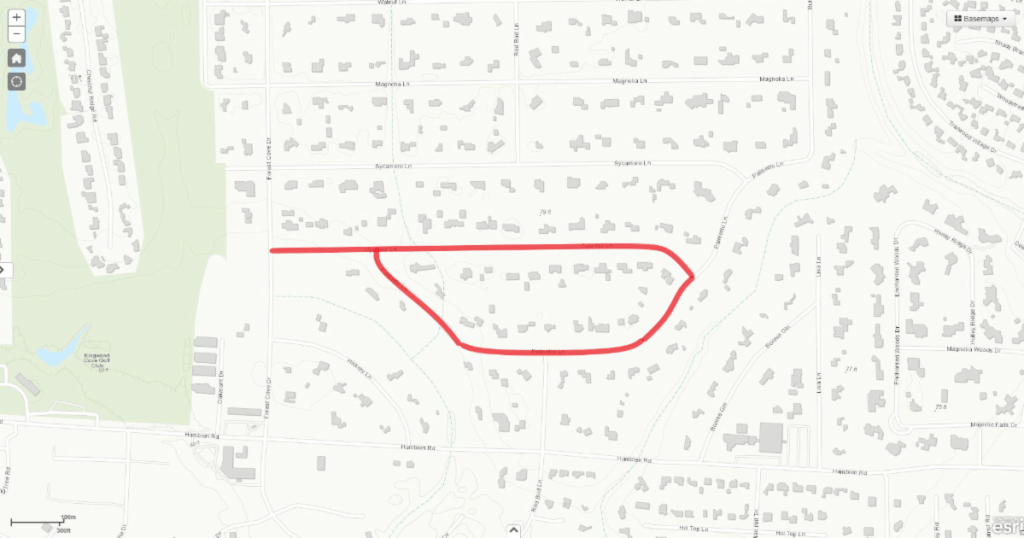
The City of Houston’s Stormwater Action Team began rehabilitating a roadside ditch in Forest Cove on Monday, July 27, 2020. The project area includes Cypress Lane and Palmetto Lane. The map below shows the project limits highlighted in red.
Location of work in Forest Cove
Crews will work Monday through Saturday, from 8:00 a.m. to 5:00 p.m. They should complete the work by November 24, weather permitting.
Scope of Work
The scope of work includes:
Regrading and re-establishing of the roadside ditches
Replacing of the culverts and resetting them to match the flow line of the ditch
Replacing the driveway where the culverts are replaced
Increasing the capacity of any culverts less than 24 inches in diameter
Removing any unpermitted culverts or other encroachments in the City Right of Way.
Impact on Traffic, Neighborhood
Construction will not impact any water or sewer services.
Expect temporary loss of driveway access, lane closures, construction noise and debris, and limited roadside parking during the project.
Flagmen and orange traffic cones will help with traffic flow through the construction zone as the project will require one lane closure. However, traffic will flow two ways at all times.
Businesses and residents will have access to driveways and sidewalks at all times, and may experience an increase in noise levels due to trucks and equipment in the area.
For More Information
For more information, please contact Mayor Pro Tem Dave Martin’s office at (832) 393-3008 or via email at districte@houstontx.gov.
Posted by Bob Rehak on 8/5/2020
1072 Days after Hurricane Harvey
https://i0.wp.com/reduceflooding.com/wp-content/uploads/2020/08/Cypress-Ln-SWAT-Project.png?fit=1200%2C630&ssl=16301200adminadmin2020-08-05 10:42:212020-08-05 10:42:33City of Houston’s Stormwater Action Team Begins Ditch Rehabilitation in Forest Cove