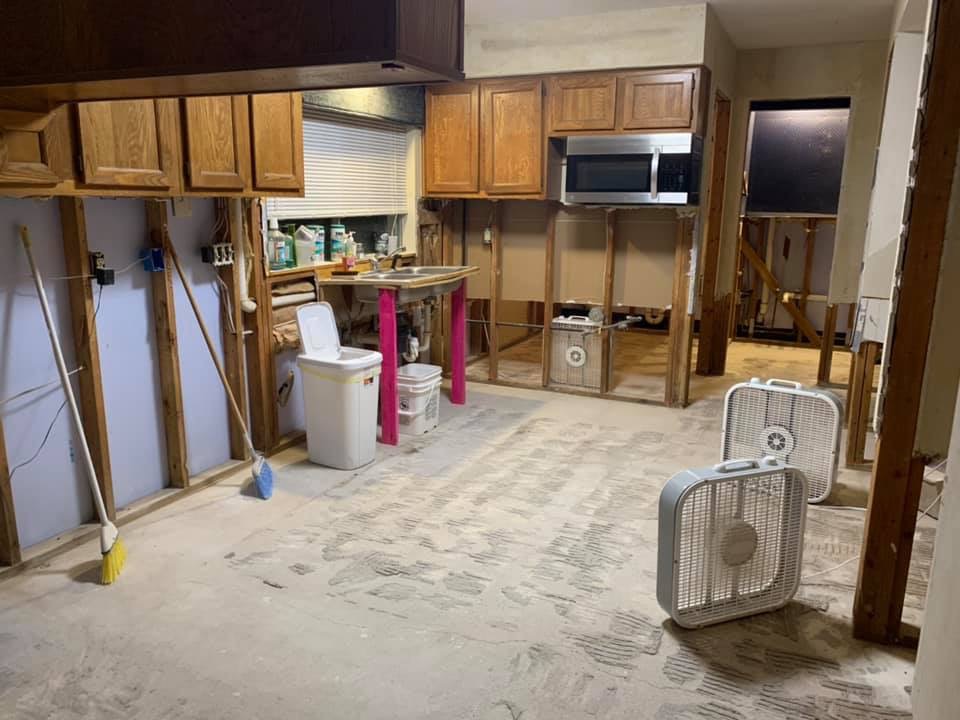
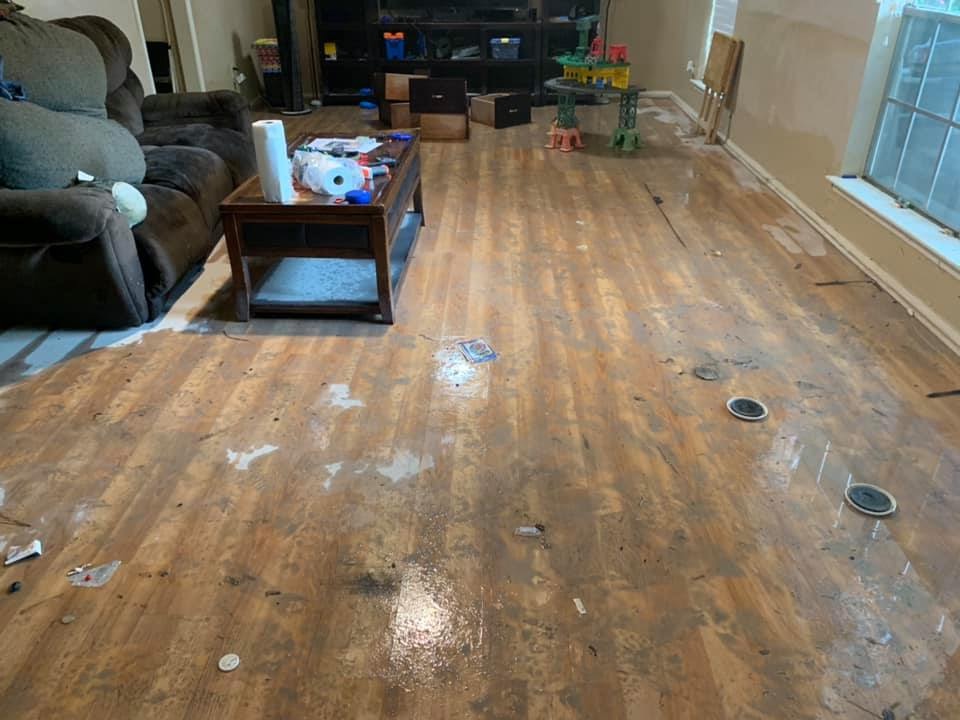
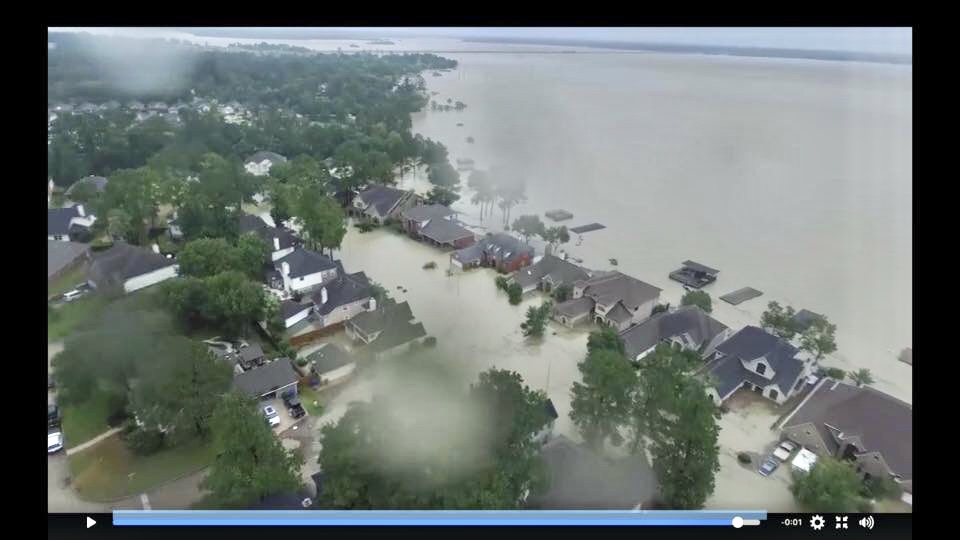
Rescue from Shady Maple immediately below Perry Homes’ development, Woodridge Village, during May 7th flood.Approximately 200 homes in Elm Grove and North Kingwood Forest flooded that day.An estimated two to three times as many flooded in September.
Readers’ Responses To First Post About Perry Letter
In regard to yesterday’s post, many flood-weary Elm Grove readers commented that Mr. Gray’s letter to the City wasn’t worth the paper it was printed on. Hmmmmm. Looks like the flood victims are not alone.
Posted by Bob Rehak on 10/20/2019 with help from Jeff Miller
782 Days after Hurricane Harvey and 31 after Imelda
Houston Mayor Sylvester Turner made Mr. Gray’s letter the showcase of last Thursday’s Kingwood Town Hall Meeting in advance of early voting. The thoughts expressed in this post represent my opinions on political matters, public policy, and public safety. They are protected by the First Amendment of the US Constitution and the Anti-SLAPP Statute of the Great State of Texas.BBB is a registered trademark of the Better Business Bureau.
https://i0.wp.com/reduceflooding.com/wp-content/uploads/2019/05/Escape-e1588895116724.jpg?fit=1200%2C900&ssl=19001200adminadmin2019-10-20 17:51:242019-10-20 18:03:42Perry Letter Part II: Perry Homes’ BBB Report
Thursday night at the Kingwood Town Hall Meeting, the City discussed a meeting between Perry Homes and city officials including the City Attorney. The subject: How to avoid flooding Elm Grove and North Kingwood Forest again. City officials said they demanded multiple concessions from “Perry Homes.” Two days later, and only hours before the Town Hall meeting, Perry Homes (according to City officials) sent the City a letter outlining what it could do. Mayor Sylvester Turner read portions of the letter to the overflow crowd. It met with mixed reaction. Some people were grateful; others skeptical; still others angry.
Much to his credit, Council Member Dave Martin posted the letter on his FaceBook page. I have reposted it here for your convenience, along with my reactions and those of several other residents.
Page 1 of Response.
Page 2 of response.
Rehak’s Opinions
I was not in the meeting between “Perry” and the City so I cannot comment on the tone of the meeting or how the City presented its “demands.” However, several things struck me about this letter right from the opening paragraph. First of all, it’s not from Perry. That’s why I put Perry in quotes above.
The developers expressed how saddened they were by Elm Grove flooding. Yet they are suing the victims. This raises a sincerity issue from the git-go.
They say, “Your idea of sharing our collective intellectual capital was a good one, and we appreciate having the City’s input.” Sounds pretty collaborative to me. That’s normally good, but it certainly does not fit with how the City characterized meeting.
The law firm representing Perry’s subsidiaries, PSWA and Figure Four Partners, sent the letters, not Perry.
Even though the engineering plans for the site call for DETENTION ponds, the lawyer now refers to them as RETENTION ponds. The difference between the two is storage capacity. The latter is like renting a storage shed that’s 80% full…and still paying full price. The City attorney needs to question this.
The letter only says that they discussed accelerating the schedule, not that they have accelerated it.
The letter lays out timing to construct each detention pond. But it doesn’t say whether they will perform work concurrently or sequentially. If concurrently, the work would take 9+ months. If sequentially, it could take 26 months. They talk about beginning “each project as quickly as the plans can be approved.” This suggests a one-at-a-time approach that could potentially add up to 780 days…assuming there are only “minimal delays” for bidding, approvals, weather, etc.
They promised to spend 45 days completing the two southern ponds. Those ponds are already substantially complete.
The letter promises to build a berm 2 feet above the 100-year flood elevation between Woodridge Village and Elm Grove. An even higher berm failed during Imelda. Floodwaters overtopped it. Perhaps that’s because Montgomery County bases flood maps on data from the 1980s.
They talk about delaying development of homes and streets (impervious cover) until they complete detention ponds. Delaying impervious cover seems like a genuine concession; developers like to build in sections so profit from one can help bankroll the next.
The lawyers claim their clients have not yet completed plans and specifications. However, LJA Engineering seemed to have a pretty comprehensive set.
The letter provides no guarantees and no penalties for non-compliance or missing target dates.
Because Perry has never revealed a construction timetable, we can’t tell whether this schedule beats their original one.
All in all, the timetable in this letter, seemed to take a lot of time for work that they could have completed by now.
Miller recently had an “aha” experience when driving by a 5-acre commercial construction site in Kingwood. It had more heavy equipment operating on it than Perry’s 268-acre site did at its peak last summer, he said.
Miller is a retired process engineer. Based on observation of that and other sites, Miller estimated excavation of three more detention ponds would take only about a month if Perry pulled out the stops. Other engineers and construction experts share this opinion.
Josh and Jon Alberson’s Opinions
Both of these brothers have engineering degrees from Georgia Tech. Josh is a chemical engineer and Jon a civil engineer. Jon works on giant construction projects for one of the largest companies in America. The Alberson brothers estimate only 10 days more than Miller. They shared their calculations. The calculations assume a two-step process. Excavate and stack the dirt. Then spread and grade it at a later time.
Basically, they calculated the volume of dirt that needs to be removed. Then they divided that volume by the per-load capacity of heavy equipment. Next, they estimated the time to move one load and return for the next. Using this technique, they could ultimately determine the total time it would take to excavate the three remaining ponds. They consulted with Caterpillar on the capacity of different types of equipment and their recommendations. Follow along to check their math.
Assume tractor cycle time for scraping, moving to pile, and returning to pond is 15 minutes. This would be a conservative transit time.
Then assume the tractor operates 20 hours per day.
Lunch – 1 hour per shift = 2 hours per day
Maintenance = 1 hour per day
Breaks = 2 x 15 minute breaks per shift = 1 hr per day
Loads per Day = 20 hours per day * 4 loads per hour = 80 loads per day
Number of Days with 1 Scraper Tractor
10,582 loads / 80 loads per day = 132 days
Number of Days with 4 Scraper Tractors
10,582 loads / (80 loads per day * 4) = 33 days
Assume 20% lost time due to non-productive time, weather, etc.
33 days * 1.2 = 40 days
Said Jon, “Most projects can move 8000 cubic yards per day.”
The two agreed on roughly the same time frame but argued over the optimum combinations of day and shift lengths, pieces of equipment, etc.
That’s just the time to dig the ponds. It assumes they stack the dirt somewhere nearby, then grade and compact it at a later date. Let’s assume that takes another month. But the ponds are excavated!
Now, we’re talking roughly TWO months instead of 9 to 26 months. And beating one or two hurricane seasons.
Note: The LJA Engineering report, upon which these calculations are based, shows at least three different storage capacities for the ponds on the northern section under “ultimate conditions”:
Exhibit 2 shows a total of 209.4 acre feet.
Table 3 shows a total of 154.2 acre feet.
Table 7 and the Conclusion show a total of 163 acre feet.
For the analysis above, the Albersons used the highest volume because it represented the most difficult case. Contractors could excavate the smaller totals, if accurate, in even less time. If 154.2 is accurate, excavation would take only 30 days.
Nancy and Abel Vera’s Opinions
Regardless of how Perry Homes staffs this job, it’s going to take some sweat. That’s the one thing that was not in evidence yesterday or today. Despite the assurances of J. Cary Gray, Attorney at Law, multiple residents reported seeing NO activity on the construction site.
As of Saturday afternoon, Nancy Vera still has seen no activity on the construction site. See the video below taken the day after the Town Hall.
Video taken by Nancy Vera on 10/18/2019, day after Town Hall Meeting
Vera’s husband Abel, manages giant construction projects around the world for one of the world’s largest engineering companies. He agrees that the construction could move much faster.
“If they had the proper equipment and man power, they could move fairly quickly. But they have never done that! They took more than six months to put in this one pond by our house [S2]. And they didn’t even really get going till after the May 7th storm.”
Abel Vera, Resident just south of S2 Detention Pond
A Faster Way?
This video shows the scraper equipment that Alberson and Caterpillar recommended to move large volumes of dirt quickly. The video runs 13 minutes but you will get the idea after a minute or two. These guys collect dirt while rolling.
The Ultimate Scraper Video
Contrast that with what I saw earlier this summer. I watched as a backhoe filled up one dump truck after another. It took several minutes to fill up each truck with multiple scoops. Then each truck took the dirt to its ultimate destination more than a half mile away rather than piling it up near the pond and returning for more dirt. It was a long, slow, dusty procedure with lots of dead time between loads.
Excavation of Woodridge Village S2 Detention Pond took months…one scoop at a time.Photo taken on May 24, 2019.
A Good Deal?
So, does the letter from Counsellor Gray represent a good deal for the residents of Elm Grove. I think not. If Perry Homes really cared about the safety and peace of mind of Elm Grove residents, they could move much faster. The letter commits them to nothing except delaying homes and streets until all detention is in. That’s something. But with most of the surface being hard-packed clay, the threat of rapid runoff remains until they finish all those detention ponds. And someone really needs to proofread that LJA report. It’s scary to think that this whole development could be based on erroneous calculations. I’m surprised Montgomery County approved it.
Posted by Bob Rehak on 10/19/2019 with help from Josh and Jon Alberson, Abel and Nancy Vera, and Jeff Miller
781 Days since Hurricane Harvey and 30 since Imelda
The thoughts in this post represent my opinions on matters of public policy and safety. They are protected by the First Amendment of the US Constitution and the Anti-SLAPP Statute of the Great State of Texas.
https://i0.wp.com/reduceflooding.com/wp-content/uploads/2019/10/Cat.jpg?fit=1500%2C700&ssl=17001500adminadmin2019-10-19 14:11:002019-10-19 17:17:16“Perry” Letter: A Good Deal?
Yesterday, shortly before the Kingwood Town Hall Meeting, I photographed the demobilization of the Great Lakes Dredge at the Army Corps Command Post. Great Lakes was dismantling the dredge. However, no one explicitly stated this at the meeting. The dredge had waited patiently at the mouth bar for 6 weeks since finishing its assignment from the Corps to dredge 500,000 cubic yards. Meanwhile, the City tried to organize a project to dredge more sediment. The City had been working toward that goal for a year, according to Stephen Costello, the City’s Chief Recovery Officer.
Great Lakes Dredge being dismantled at the Army Corps Command Site Thursday afternoon, 10.17.2019 at about 3PM., shortly before the Kingwood Town Hall Meeting to discuss flooding issues.
Only One Mention Made in Passing At Town Hall Meeting
Only Costello alluded to the demobilization. He did that obliquely in passing while talking about the permitting of a disposal site. He did not discuss the reasons for demobilization, the cost, or its significance within the context of additional dredging on the mouth bar. However, he did imply that the demobilization resulted from the Army Corps’ failure to permit a disposal site. The Corps permitted the disposal site at least six weeks ago.
Said Costello, “We had to get a disposal site. We didn’t have one.” After a brief discussion of permitting Berry Madden’s property, he finally said, “We were expecting that we weren’t going to be able to get this done before Great Lakes left the project. And it just so happens that that’s what’s happened.”
However, Madden’s property had been permitted before August 30th. Great Lakes had given the City a deadline of October 11 to make a decision about extending the mouth bar project. Great Lakes reportedly had a crew of 22 on standby for six weeks.
The City did not meet the October 11 deadline. The City did not even file its request for a new grant for additional dredging until Friday, October 11.
Photo taken east of West Lake Houston Parkway Bridge on 10/15/2019 at about 10:45 am.
Yesterday, before the Town Hall Meeting, I photographed the dredge at the dock being dismantled. That certainly wasn’t something that the City highlighted at the town hall meeting.
Great Lakes Dredge at dock being dismantled. Photo taken on 10/17/2019 at approximately 3pm., just hours before the Town Hall Meeting.
High Cost of Mobilization
Mobilization and demobilization costs for Phase One of the dredging program cost more than $17 million. The idea behind dredging the mouth bar while dredges were still in the river: save those costs for re-mobilization.
Now, if and when the City can secure a grant to cover additional mouth bar dredging, remobilization costs will have to come out of it, reducing the volume that can be dredged.
Options Looking Forward
The size of the Great Lakes dredge made it ideal for the mouth bar. It pumped large volumes of sediment quickly. It will soon leave like a cool Spring breeze. Question: Do you replace what Great Lakes had? Or find something smaller that’s more versatile? Residents around the lake have clamored to have sediment blocking drainage ditches removed?
A smaller dredge could maneuver in tight spaces better. However, many of those smaller canals are on private property. State and Federal money cannot be used on private property.
Another factor to consider: A smaller dredge might not overwhelm Madden’s property so quickly and cause runoff that returns sediment to the river.
Money from the County 2018 flood bond and the State Representative Dan Huberty’s amendment to last year’s Senate Bill 500 could make $50 million available for additional dredging.
But the City continues to look for ways to dredge without putting skin in the game. And now the City will have to rebid any future project that involves Federal dollars to meet Federal purchasing regulations. That will delay the start of any future dredging even further.
Whose Money Is It?
Several speakers at the meeting last night confused City spending on flood mitigation projects with Federal, State and County spending on those same joint projects. The effect? It inflated the City’s contribution. Some speakers even took credit for projects that the City had nothing to do with.
Unless citizens had immersed themselves in the details of each project, they likely left the meeting thinking the City’s contribution was greater than it actually was. For instance, entire excavation budgets for Ben’s Branch and Taylor Gully improvements have come from Harris County Flood Control.
Early voting starts next week.
Posted by Bob Rehak on 10/18/2019
780 Days after Hurricane Harvey and 29 after Imelda
https://i0.wp.com/reduceflooding.com/wp-content/uploads/2019/10/RJR_3733.jpg?fit=1500%2C1000&ssl=110001500adminadmin2019-10-18 20:16:572019-10-18 20:47:17Great Lakes Dredge Demobilizing After Waiting At Mouth Bar 6 Weeks
Today, Harris County Flood Control contractors demolished the townhomes on Aqua Vista Street in Forest Cove. Flooded during Harvey, then abandoned and vandalized, they burned the week before July 4th this year.
Townhomes flooded by Harvey, were burned during the week before the Fourth of July.Today, there’s nothing left. See below.
Only a tiny pile of rubble and some steel girders remain of that block of townhomes this afternoon. They should be gone by the end of the day.The demolition crew was scooping up the last of the structural beams when I photographed the site today.Into a giant truck they went.Tomorrow, there will be nothing left here but faded dreams of happier times.
Update on Remainder of Buyouts
HCFCD has purchased 80% of the townhomes on Aqua Vista St., Marina Drive and Timberline Court. There are 16 units remaining to purchase.
“We’ve demolished three buildings and four more will be demolished by the end of November,” said Matt Zeve, Deputy Director of Harris County Flood Control. “To date, we’ve spent approximately $4.1 million for all costs (appraisal, purchase price, closing cost, relocation, and demolition).”
“A FEMA Hazard Mitigation Grant Program (HMGP) resulting from Hurricane Harvey is partially funding this acquisition. 75% of the cost is from the federal HMGP grant and 25% (plus some relocation costs) is funded by HCFCD. The estimated costs of the townhome buyouts, once complete, will total approximately $5M.” said Zeve.
“HCFCD hopes to complete all acquisition and demolition by the end of 2020,” he said.
Bittersweet Memories
Despite persistent flooding problems, right up until Harvey, many families loved the river lifestyle that these townhomes offered. Since then, they have become an eyesore, a haven for squatters, and a dumping ground. While many former owners and renters will lament the loss of these townhomes, they will also understand the need to move on.
At tonight’s Town Hall meeting at the Kingwood Community Center, the Houston Parks Board will talk about plans for this area. They include a green belt trail to connect the Spring Creek greenway to the Kingwood trail network through Forest Cove.
The Town Hall meeting starts at 6:30 pm.
Posted by Bob Rehak on 10/17/2019 with help from Matt Zeve, Harris County Flood Control
779 Days since Hurricane Harvey and 28 since Imelda
https://i0.wp.com/reduceflooding.com/wp-content/uploads/2019/10/RJR_3749.jpg?fit=1500%2C1000&ssl=110001500adminadmin2019-10-17 17:22:252019-10-17 17:38:49HCFCD Demolishes Flooded, Burned, Vandalized Townhomes on Aqua Vista in Forest Cove Today
The San Jacinto East Fork watershed is immense. Many homes, vehicles, businesses and properties flooded along it during Imelda. Northeast Harris and East Montgomery counties, which contain the East Fork and its tributaries, received some of the heaviest rainfalls during that storm. So how much water came down them? And how did the peaks compare to Harvey?
East Fork Totals Computed by Harris County Flood Control
Jeff Lindner, Harris County Flood Control’s meteorologist computed the peak flows in cubic feet per second for ReduceFlooding.com.
He used the following gages. They are the closest to Kingwood and Huffman :
Peach Creek at FM2090
East Fork at FM1485
Caney Creek at FM2090
The peak flows in cubic feet per second past these gages during Imelda were:
East Fork = 34,600 cfs
Peach Creek = 32,800 cfs
Caney Creek = 9,230 cfs
Total = 76,630 cfs
Numbers Probably Understate True Peaks
The peaks probably exceeded those farther downstream. But we have no way of telling by how much because those are the closest gages to Lake Houston.
Many storm drains and smaller tributaries without gages enter into the flow downstream of those gages. For instance, White Oak Creak, Taylor Gully, Red Gully, Mills Branch, Luce Bayou and more all enter into the East Fork before it reaches Lake Houston. And all of those carry a lot of runoff from developed areas, i.e., areas with a lot of impervious cover, meaning high runoff rates.
Net: Look at the 76,630 cubic feet per second as a minimum.
Comparison of Harvey to Imelda
How did the peaks on these three tributaries compare to Harvey? Consulting the SJRA’s peak flow map from Harvey, we can see that Harvey dumped much more rain:
Caney Creek = 20,00 cfs
Peach Creek = 31,300 cfs
East Fork = 119,000 cfs
Total = 170,000
So Harvey generated peak flows rates twice as high as Imelda. Only Peach Creek had a higher peak during Imelda than Harvey.
Importance of Looking Upstream when Comparing Storms
Remember, when comparing storms, it’s not just how much rain fell on you. It’s how much fell upstream from you. Rainfall patterns can produce dramatically different flooding patterns. During Imelda, while 20 inches of rain were falling on Patton Village, Lake Conroe received only two inches.
Posted by Bob Rehak on 10/17/2019, with thanks to Jeff Lindner and Harris County Flood Control
779 Days since Hurricane Harvey and 28 since Imelda
https://i0.wp.com/reduceflooding.com/wp-content/uploads/2019/10/EF-Tributaries.jpg?fit=1500%2C985&ssl=19851500adminadmin2019-10-17 16:11:362019-10-17 16:11:47How Much Water Came from Where on the East Fork During Imelda ?
Houston City Council Member Dave Martin will host a town hall meeting tomorrow, Thursday, October 17 at 6:30 p.m. It will be at the Kingwood Community Center, 4102 Rustic Woods, Kingwood, TX 77345. Hear from city and community representatives about news related to the Kingwood and Lake Houston areas of District E.
Houston Mayor Sylvester Turner at Kingwood town hall meeting in October of 2018.Flooding was a hot topic then and even hotter now.
List of Speakers and Topics
Texas State Senator Brandon Creighton will kick off the town hall meeting, providing an update on Proposition 8 and sand-mining legislation.
Mayor Sylvester Turner will attend.
Stephen Costello, City of Houston Chief Recovery Officer, will update residents on the progress of projects such as additional Lake Houston Spillway Dam Improvement Project (Flood Gates) and dredging.
Houston Public Works and the Coastal Water Authority will address the Lake Houston Dam Maintenance Project. It’s why the lake will be one foot below normal through next November.
Stan Sarman, TIRZ 10 board chair, will discuss the Northpark Drive Mobility Improvement Project.
Chuck Gilman, San Jacinto River Authority Director of Flood Management, will address the regional watershed study.
Chip Place from the Houston Parks Board will update residents on the Bayou Greenways 2020 project along the San Jacinto River.
Texas Department of Transportation will update residents on the Loop 494 expansion project.
Information About Kingwood Docks and More
Those who arrive early can browse information stations starting at 6:00 p.m. hosted by:
Lovett Commercial (Kingwood Docks)
Houston Public Works
Houston Police Department Kingwood Division
Houston Permitting Center to assist residents with questions related to storm damage repairs and rebuilding.
Tables will remain open after the town hall meeting for those who arrive late.
For more information, please contact Council Member Martin’s office at (832) 393-3008 or via email at districte@houstontx.gov.
Posted by Bob Rehak on October 16, 2019
778 Days since Hurricane Harvey and 27 since Imelda
https://i0.wp.com/reduceflooding.com/wp-content/uploads/2019/03/Turner.jpg?fit=1500%2C1125&ssl=111251500adminadmin2019-10-16 10:47:482019-10-16 10:48:00Town Hall Meeting Thursday at 6:30 Will Cover Wide Variety of Topics
A tropical disturbance located over the extreme SW Gulf of Mexico now has a 50% chance of developing into a tropical cyclone over the next 5 days. At this time there is, still no threat to the Texas coast.
A trough of low pressure that was in Central America yesterday, moved across the Yucatan overnight as predicated. It now is just offshore of the coast of southern Mexico, in the Bay of Campeche and producing disorganized showers and thunderstorms.
Guidance from National Hurricane Center
The National Hurricane Center predicts possible gradual development. They say that a tropical or subtropical cyclone could form late this week over the western or central Gulf of Mexico while the system moves generally northeastward. An Air Force reconnaissance aircraft will investigate the system this afternoon, if necessary.
Formation chance through 48 hours…low…30 percent. Formation chance through 5 days…medium…50 percent.
24 hours ago, the comparable numbers were 0 and 10.
Disturbance in Bay of Campeche now has a 5-day 50% chance of tropical formation.
The Story Behind the Storm
Conditions appear favorable for slow development of this system because of upper level wind patterns and warm sea surface temperatures. An area of high pressure over the SE Gulf of Mexico will direct this feature toward the N and then NNE by late this week.
At the same time an approaching trough from the SW US will move toward west Texas by late in the weekend should force any tropical system to turn NE/ENE. Global model guidance supports a track of any tropical system toward the central or eastern Gulf of Mexico this weekend. Here’s a map that shows the expected location of the front two days from now. Note how the front pushes that orange line toward the NE.
Expected frontal location two days from now should push any tropical disturbance toward the NE.
Given the expected upper level shear across the northern Gulf of Mexico this weekend any system will likely have the majority of the weather near and far to the east of any actual surface circulation. That means people in Louisiana and east of there should get out their umbrellas. Houston will likely be on the dry side of the storm.
Keep your eyes on the Gulf any time a storm forms. Remember that Harvey originated in this same general area and forecasters predicted it to move inland over Mexico. It did…for a while.
Posted by Bob Rehak on 10/16/2019, with help from the National Hurricane Center and Harris County Flood Control
778 Days since Hurricane Harvey and 27 since Imelda
https://i0.wp.com/reduceflooding.com/wp-content/uploads/2019/10/two_atl_5d0-2.png?fit=900%2C665&ssl=1665900adminadmin2019-10-16 10:10:072019-10-16 10:12:32Tropical Formation Chances Increased Again Overnight, But Track Still Likely East of Houston
People who receive individual assistance from FEMA after a disaster such as Harvey are required to have flood insurance. But some people who cannot afford flood insurance become covered under a group flood insurance policy and may not even realize it.
Flooded During Harvey and Again in Imelda
In the last two weeks, I visited numerous people along the East Fork and Caney Creek in less fortunate neighborhoods. They flooded in Harvey and then again during Imelda. For these people, the devastation is especially crushing because they could not afford flood insurance…or so they told me.
Home below Triple PG Sand Mine in Walden Woods between Caney and White Oak Creekswas almost knocked off its foundationduring Imeldaand suffered extensive damage.
Almost all of the people I interviewed have tried to rebuild homes out of pocket as money becomes available. Some do the work themselves to make money stretch further. They are also trying to replace vehicles lost in floods. For these folks, recovering from the second flood in two years is like climbing a financial Mt. Everest.
Group Vs. Individual Flood Insurance Policies
However, Dianne Innes Cooper, who used to work for FEMA, made me aware of their Group Flood Insurance Policies. Then Kaaren Cambio, Congressman Dan Crenshaw’s assistant, made some calls to FEMA to explore who is eligible.
In short, if you flooded during Harvey, received FEMA Individual Assistance (IA), and flooded again, you are most likely covered under a group flood insurance policy. You may be entitled to benefits even if you didn’t know about the policy.
The 36-month Group Flood Insurance Policy (GFIP) begins 60 days after the Presidential Disaster Declaration.
The flood insurance is transferrable to people who may buy the property, but not subsequent renters.
Applicants do NOT receive a copy of the actual policy, just a certificate of coverage.
Applicants do NOT have the ability to decline the GFIP.
People who accept SBA loans are NOT eligible for a FEMA-purchased GFIP certificate.
After the Group policy expires, you need to purchase individual insurance to continue coverage.
Most people who flooded during Harvey and again during Imelda would still be covered under a GFIP issued after Harvey.
For More Information and to Verify Coverage
If it sounds like you might be covered under a group policy, but aren’t sure, you can verify coverage. FEMA lists a hotline for disaster assistance: (800) 621-FEMA (3362).
Congressman Dan Crenshaw’s office can also make inquiries for you. However, before the Congressman can help, you must download and fill out a FEMA Privacy Release Form.
Kaaren Cambio from Congressman Crenshaw’s office will be at the FEMA meeting at the Kingwood Community Center tonight starting at 6:30. You can also call or email her at the Congressman’s office during normal business hours.
Posted by Bob Rehak on 10/15/2019, with thanks to Dianne Cooper and Kaaren Cambio
777 Days after Hurricane Harvey and 26 after Imelda.
https://i0.wp.com/reduceflooding.com/wp-content/uploads/2019/10/RJR_3655.jpg?fit=1500%2C1000&ssl=110001500adminadmin2019-10-15 18:09:302019-10-15 21:23:49You May Have Group Flood Insurance and Not Even Realize It
Updated Tuesday @ 1:25 p.m.: At 1 p.m. Houston time this afternoon, the National Hurricane Center upgraded the chances of tropical formation for a disturbance that could move into the Gulf tomorrow.
As of 7 a.m. Houston time this morning, the National Hurricane Center issued this advice about a trough of low pressure that is producing showers and thunderstorms over the southern Yucatan peninsula, Belize, and northern Guatemala.
“By late Wednesday, the disturbance is forecast to emerge over the Bay of Campeche and gradually turn northward. Environmental conditions could become a little more conducive for some development towards the end of the week when the system is located over the western Gulf of Mexico.”
Formation chances through 48 hours are now rated…low…near 10 percent. Formation chance through 5 days…medium…40 percent.
Advice from Harris County Flood Control
Jeff Lindner, Harris County Flood Control’s meteorologist, had this to say about the disturbance.
Global forecast models have been suggesting that the large area of disturbed weather over central America will drift WNW into the southern Bay of Campeche by the middle of this week and then NW toward the SW Gulf of Mexico by late this week. Recent trends suggest upper level conditions may become favorable for the formation of a tropical system over the SW Gulf of Mexico late this week into this weekend.
Influence of Upper Level Currents
Lindner continued. “An amplifying upper level trough will be approaching TX by late this weekend into early next week and this feature should force any tropical system that forms toward the N and then toward the NE.”
“Latest guidance continues to indicate a tropical system moving across the west-central then north-central Gulf of Mexico this weekend.
It would be extremely rare for a tropical system to impact the state of TX this late in the hurricane season and the upcoming upper air pattern by this weekend favors a turn of any western Gulf of Mexico system toward the NE toward the central or eastern US Gulf coast.”
Local Forecast: Up to 3 Inches Possible
Lindner had this to say about the forecast for the Houston Area. “A cold front will move into the area tonight and this boundary along with pooled high moisture levels will support a good chance of rainfall over the area tonight into early Wednesday. Lines of showers and thunderstorms will be possible along the frontal boundary with rainfall amounts of 1-2 inches and isolated totals up to 3 inches possible. A cooler and drier air mass will move into the region on Wednesday and linger into the later part of the week before moisture begins to return on Friday into the weekend.”
“It is now somewhat uncertain as to how much moisture will move into the area this weekend with the increasing potential for a western Gulf of Mexico tropical system moving across the central Gulf. This feature may take much of the moisture to our east.”
This far in front of a storm, it’s hard to give exact predictions with much confidence. The best advice: raise your alert level and keep your eyes on the Gulf.
Posted by Bob Rehak on 10/15/2019
777 Days after Hurricane Harvey and 26 after Imelda
https://i0.wp.com/reduceflooding.com/wp-content/uploads/2019/10/two_atl_5d0.png?fit=900%2C665&ssl=1665900adminadmin2019-10-15 08:57:502019-10-15 13:32:19This Will Probably Miss Houston, But Keep Eyes on Gulf
Tim Garfield and RD Kissling, two of the world’s top geoscientists, happen to live in the Lake Houston Area. Both spent careers as highly placed executives for one of the world’s largest oil companies. Together, they have led the charge to raise awareness of the growing mouth bar on the West Fork of the San Jacinto where it meets Lake Houston. They have also lobbied long and hard with local leaders and the Army Corps to mobilize an effort to dredge the mouth bar.
On October 2, Garfield gave a presentation to the University of Houston Honors College. Debbie Z. Harwell, PhD, a history instructor at the college and editor of Houston History Magazine, organized the talk. Garfield summarized the history of Lake Houston, the West Fork Mouth Bar and attempts to mobilize a dredging program to remove the bar. The presentation is thoroughly researched and highly interesting. It focuses on the intersection of geologic and human history. Anyone interested in geology, flooding, history or politics should find it informative, fascinating and stimulating.
If you really want to learn what’s happening in the river and why, this is a must read.
The mouth bar is not just a giant sand bar at the mouth of the river. It’s part of an advancing delta system within the river and now the lake. Garfield and Kissling made careers out of studying deltas like this around the world. They point out that the delta’s growth is inevitable and the result of predictable geomorphic processes. All the more reason to take it seriously and plan for regular dredging to keep that channel open.
Yet attempts to remove the threat have largely been unsuccessful and largely for political reasons. The Corps did mount a nominal dredging program in July and August. But it was largely symbolic. They removed about 20-25% of what it would take to extend the upstream dredging channel through the mouth bar.
A post dredging survey shows that the Corps created an underwater box canyon that continues to slow down water and accelerate the deposition of sediment.
In fact, they left far more sediment behind than they dredged. Why? Was there some science to the decision to leave most of it in place? Have they made public a model for peer review that shows this was a good idea? In a word, NO!
Lack of Coherent Dredging Plan
Kissling and Garfield lament the lack of holistic understanding and a coherent dredging plan. I experienced this problem first hand. Before the Corps started dredging the mouth bar area, I requested their plans. The response I got shocked me. “Plans? What do you mean by plans?” That question came on the day of the deadline for processing my Freedom of Information Act request. I replied, “You know…plans…like the ones you shared for the first phase of dredging. Start points. Stop points. Channel widths. Depths. Objectives.” Twenty-three days later, they sent me a CD with 800 pages of uncatalogued information. Not one page dealt with plans. When I complained, they invited me to submit another FOIA request, saying that the first one had been closed out already. I declined their offer.
Clearly, they didn’t have a plan. Except to force the City to assume responsibility for dredging. The Corps and FEMA felt that if the City had done maintenance dredging years ago, the problem would not have become acute.
Since October of last year, the two sides (City and Corps/FEMA) have been playing a political ping pong match, each trying to get the other to dredge.
Post Script: Dredging Update
When contractors finished dredging 500,000 cubic yards from the mouth bar around Labor Day this year, they waited patiently for local authorities to come up with their own plan. Callan Marine got tired of waiting first. Their dredge was last seen weeks ago heading south on 59 in pieces on flatbed trucks.
Great Lakes Dredge and Dock had a dredge anchored at the mouth bar for six weeks. However, today, their dredge and booster pumps have been pulled back to the West Lake Houston Parkway Bridge.
A crane is dismantling the dredge enough to get it under the bridge and back to the command post. Great Lakes is demobilizing. That will leave no dredging equipment in the river.
As of Friday afternoon, according to Stephen Costello, the City filed another request with FEMA. The request was reportedly to allow the City to apply $9 million left over from its debris clean up budget from Harvey to additional debris removal. Unfortunately, going by past experience, remobilizing a dredging effort will cost far more than that.
It will be interesting to see what the City announces at its October Town Hall Meeting at the Kingwood Community Center this Thursday.
Be there. 6:30 PM. On the agenda:
Mayor Turner
Council Member Dave Martin
Stephen Costello, the City’s flood czar, to talk about dredging and dam improvements
SJRA’s Chuck Gilman to talk about status of the regional watershed study
Public Works and Coastal Water Authority to talk about dam repairs and lower lake levels for the next year
Houston Parks Board to talk about an extension of their Bayou Greenways Program south of Hamblen
And more
Posted by Bob Rehak on 10/14/2019, with thanks to Tim Garfield and RD Kissling
776 Days since Hurricane Harvey
https://i0.wp.com/reduceflooding.com/wp-content/uploads/2019/10/River-Gradient.jpg?fit=1500%2C953&ssl=19531500adminadmin2019-10-13 23:27:252019-10-14 11:50:49A Brief History of Lake Houston, the West Fork Mouth Bar and Attempts to Mobilize Dredging of It