Tag Archive for: SJRA

Exact Text of Lake Lowering Policy Adopted by SJRA

This morning, the San Jacinto River Authority put out a press release about the seasonal lowering of Lake Conroe. I reported the results of the board vote last Friday. The elements of the policy in this press release do not differ. Regardless, I’m printing this press release verbatim for two reasons: a) its the official version, and b) I want the historical record to be complete. I have four comments on the official wording below the release.

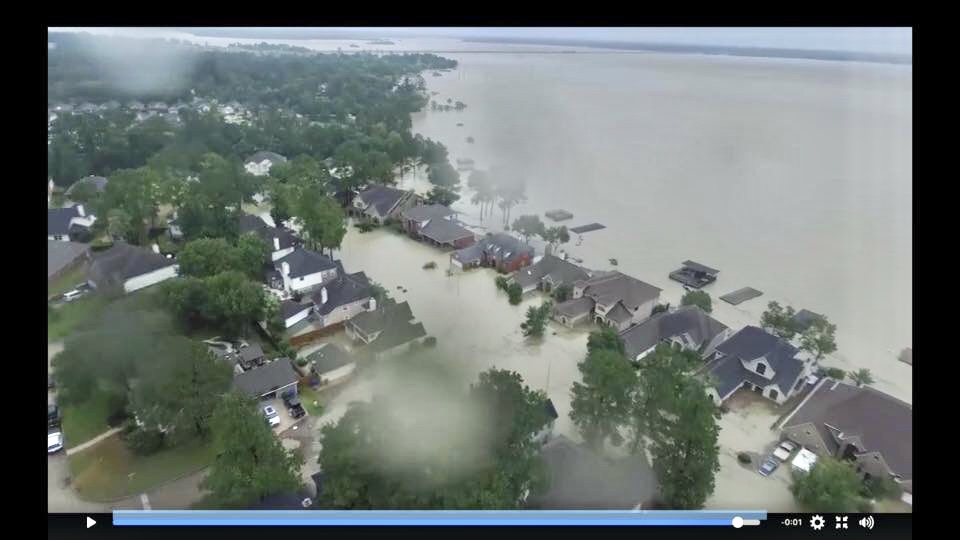
Kingwood Town Center Apartments after Lake Conroe release during Harvey. For reference, that’s the roof of an SUV in the foreground and the Town Center Apartments are more than a mile from the river.

SJRA Board of Directors Recommends Renewing Flood Mitigation Strategy

Conroe, Texas—San Jacinto River Authority (SJRA) Board of Directors last week approved a recommendation to the City of Houston (COH) to continue a temporary flood mitigation program at Lake Conroe. The board’s vote proposed extending the initiative through December 2022 and serves as a recommendation to the City of Houston who owns the majority of the water rights in Lake Conroe.

At the special board meeting, over 100 constituents voiced their opinions on the initiative to reduce water level in Lake Conroe on a seasonal basis to create extra capacity to catch rainfall and storm water runoff. During the meeting SJRA Director of Water Resources and Flood Management, Chuck Gilman, gave a presentation to the board that included 20 years of rainfall and lake level data for consideration. 

After approximately five hours of presentation, public comment, and board discussion, the SJRA Board of Directors approved the following recommendation to the COH regarding the operation of Lake Conroe:

  • Spring strategy: Beginning April 1, release only an amount of water from Lake Conroe to create a one foot capacity to catch rainfall and storm runoff (from 201’ mean sea level to 200’ msl). Recapture of lake level beginning June 1.
  • Fall strategy: Beginning August 1, release only an amount of water from Lake Conroe to create a one foot capacity to catch rainfall and storm runoff (from 201’ msl to 200’ msl). After September 1, increase capacity an additional six inches (from 200’ msl to 199.5’ msl). If a named storm is predicted to impact our region, the COH may initiate an additional release of six inches (to 199’ msl) by notifying SJRA in writing of their call for release. Recapture beginning October 1.
  • All releases come from the COH’s 2/3 share of permitted water supply in Lake Conroe at the city’s request. SJRA staff to coordinate with COH staff on the details and timing of any releases.
  • If the lake level of Lake Conroe has already dropped to the target elevation due to natural evaporation, no releases should be made. 

The strategy of temporarily creating capacity in Lake Conroe on a seasonal basis began in 2018 to provide flood mitigation benefits for regional downstream constituents in both Montgomery County and Harris County by catching rainfall and runoff in Lake Conroe. 

The COH supports the strategy. Mayor Sylvester Turner notified SJRA the day before the special board meeting that the city wished to extend the initiative until the completion of additional dredging and construction of flood gates on the Lake Houston Spillway.

Lake Conroe was built in the 1970s as a partnership between COH, SJRA, and the Texas Water Development Board as a water supply reservoir for the region. COH owns 2/3 of the water rights in Lake Conroe; SJRA owns 1/3. The City of Houston may call for the release of water from Lake Conroe for the city’s use at any time. Upon release, the city’s water flows down the west fork of the San Jacinto River eventually ending up in Lake Houston for use by Houston.

One of the major river authorities in Texas, SJRA’s mission is to develop, conserve, and protect the water resources of the San Jacinto River basin. Covering all or part of seven counties, the organization’s jurisdiction includes the entire San Jacinto River watershed, excluding Harris County. For additional information on SJRA visit our website at www.sjra.net, like SJRA on Facebook@SanJacintoRiverAuthority, follow us on Twitter @SJRA_1937, or find us on Instagram @sanjacintoriverauthoritysjra.


Observations about Curious Wording Within the Release

I found several things interesting about nuances of the language in this press release.

First, the headline talks about renewing the lake lowering policy, not modifying, tweaking, changing, or revising it.

Second, they characterize what they did as a recommendation to the City of Houston, as if it is not the policy that they officially adopted over the City of Houston’s recommendation.

Third, they omitted mention of the difference between the City’s recommendation and the SJRA’s.

Fourth, they omitted any mention of affected residents who live outside of the City, but inside the West Fork watershed. For instance, approximately a dozen residents testified from River Plantation on behalf of the hundreds who flooded there. Woodloch and other Montgomery County communities upstream from the Lake Houston area also experienced severe flooding. More than 1100 homes on the West Fork flooded during Harvey between Kingwood and Lake Conroe.

Fifth, in the last paragraph, the SJRA omitted flood prevention in the boilerplate about their mission! Their enabling legislation clearly included it. The governor recently reconfirmed it. And it was the reason for months of debate that consumed two communities. While the omission may seem trivial, it speaks of an entrenched attitude. I trust the State Sunset Commission will consider that during its review of the SJRA’s performance this year.

Posted By Bob Rehak on 2/26/2020

911 Days after Hurricane Harvey

SJRA Adopts Modified Lake Lowering Program

In a marathon meeting last night, the SJRA modified the seasonal lowering program for Lake Conroe. The adopted motion does not exactly follow the City of Houston’s last-minute compromise recommendation. It delays lowering the lake to 199.5 feet until after September 1 to accommodate boaters and businesses on Lake Conroe. The City had recommended lowering the lake to that level beginning August 1. The old policy called for lowering the lake all the way to 199 in both months.


Details of Plan

Minutes of the meeting have not yet been approved, but here is the preliminary summary:

Spring lowering:  

Lower to 200’ msl (mean feet above sea level) beginning April 1 through May 31.  Recapture begins June 1.

Fall lowering:
  • Beginning August 1, lower to 200’ msl.
  • Beginning September 1, lower to 199.5’ msl.
Tropical Storm Provision:

If a named storm enters the region, City of Houston may initiate an additional prerelease to 199’ msl by requesting the SJRA to do so in writing. SJRA staff will coordinate with COH staff on the details and timing of the lowering.

Duration of Program

The program will continue through December 2022, giving the City of Houston enough time to add additional gates to Lake Houston and complete West Fork dredging.


1400 Crowd Convention Hall for 5-Hour Meeting

More than 1400 people crammed into the meeting at the Lone Star Convention Center in Conroe. The meeting lasted more than five hours. Some people arrived hours earlier to make sure they got seats.

Estimated crowd of 1400. White shirts from Lake Houston, red from Lake Conroe.

Lake Conroe residents still outnumbered Lake Houston residents by 2 to 1, but it was far better than the 20 to 1 ratio in previous meetings on this topic.

Also present at last night’s meeting were people from between the two lakes in communities such as River Plantation. More than 1100 people between Lake Conroe and Lake Houston flooded during Harvey when the SJRA released 80,000 cubic feet per second.

Flooded Protester at February SJRA Board Meeting

Plea for Civility Starts Meeting

The meeting started with a plea by the chambers of commerce from the two areas for unity and civility. And the meeting was in fact far more civil than previous meetings on this topic. Gone was the bar room atmosphere of jeers, catcalls, name calling, interruptions, and physical threats.

Staff Presentation and Mayor’s Letter Change Debate

Before public comments began, two developments totally changed the debate. Most people expected the SJRA to decide between continuing or scrapping the existing plan. However, the evening before the meeting, Houston Mayor Sylvester Turner sent a letter to the SJRA suggesting a compromise proposal: 200 msl in the spring and 199.5 in the fall. Then Chuck Gilman, SJRA’s Director of Water Resources and Flood Management, kicked off the meeting with an alternate proposal: 200 msl in spring AND fall.

Gilman’s presentation to the board emphasized lowering the lake one foot could have prevented releases in all but three storms in the last twenty years. Gilman’s team correlated the average rise in lake level per inch of rainfall in dozens of events. See graph below.

SJRA data shows that 1-foot of extra lake level (yellow line) would handle all but three storms that occurred in last 20 years. Hurricane Harvey was excluded from graph because it was considered an anomaly.

“A review of historic rainfall data and corresponding lake rise suggests less than 2 feet of storage is adequate to catch most storm events at Lake Conroe that occur in the fall,” said Gilman.

“Only two rainfall events that occurred in the months of August and September since 1999 (excluding 2017) resulted in more than one-foot of rise in Lake Conroe. More than 90% of these events resulted in less than 3 inches of rise in Lake Conroe. Five named tropical storms in this same period resulted in less than 12 inches of rise,” he said.

Many residents in attendance questioned why the SJRA excluded 1994 and Harvey from examination in the chart above. The worst downstream damage occurred during those two events.

Both the City’s proposal and the SJRA’s came as surprises to many people. Instead of choosing between A and B, suddenly C and D became options, too.

Board Settles on Compromise to Mayor’s Compromise Proposal

In the end, the proposal adopted by the SJRA differed from the City’s in one key respect. The level of Lake Conroe remains a half foot higher in August to accommodate boaters during vacation season. SJRA Board President Lloyd Tisdale characterized August revenue as vital to the area’s economy. Tisdale said vacationing falls off significantly after Labor Day.

Board member Kaaren Cambio who represents the Lake Houston area preferred the Mayor’s proposal but acknowledged that the final plan “balances flood mitigation with water supply and recreation. The board heard businesses and delaying the fall release will extend the boating season.”

The approved plan still lets the City of Houston call for lowering to 199 msl if forecasters predict a named tropical storm will enter the region within five days.

The City owns two thirds of the water in the lake. City Council Member Dave Martin said in his remarks before the board voted that “The City could take the lake down to 180 msl if it wanted.”

In the end, it appeared that the Board punted any responsibility for painful reductions and put that onus on the City.

State Emphasizing Need for Cooperation within Watersheds

Much of the board’s debate focused whether to adopt the City’s proposal verbatim. Board President Tisdale’s opening remarks cited the importance of partnership with other entities in the region. Legislation adopted in 2019 places a premium on cooperation within a watershed. The Texas Water Development Board can financially penalize those that don’t cooperate. They now score grant requests based on how well all affected areas work together. “We have to look at this as a regional flooding issue,” said Tisdale.

Upstream/Downstream Split

Both Lake Houston area Board Members, Kaaren Cambio and Mark Micheletti, argued for adopting the City’s plan, but none of the other board members agreed. In the end, they voted to adopt a plan that delayed lowering the Lake to 199.5 until September 1.

Net Effect Vs. Historical Averages

After a debate going back to 2018, we now have a lake-lowering plan that closely mirrors Mother Nature’s. Unless we’re in a very wet or very dry year.

Compared to historical averages, the SJRA will lower Lake Conroe:

  • 4 to 5 inches in April and May
  • 0 inches in August
  • 3 inches in September
Historical monthly lake level averages since Lake Conroe was built. Variation due to evaporation and rainfall rates. Source: SJRA January 2020 Board Presentation by Chuck Gilman.

Of course, that assumes the City does NOT call for greater reductions. Also keep in mind that these are averages, not certainties. If the lake levels are higher or lower than the average in any given year, these reductions would vary.

The primary protection provided by the policy adopted by the SJRA would occur in a very wet year when the lake was full up to 201 msl. Then the reduction would be 12 inches in August and 18 in September.

State Representative Dan Huberty who gave a powerful speech before the board began deliberations, said, “I am proud of our community and how we came together, including the State (Especially Governor Abbott and Chief Nim Kidd), the City, the County, our Chamber and most importantly our citizens.”

Huberty continued, “Thank you for showing up and being respectful but forceful. We worked very hard, and in the end won a vote that achieves our goal of  lake lowering. Special thanks to Mark Micheletti and Kaaren Cambio for having the courage to stand up with and for the recommendation from Mayor Turner and Mayor Pro-Tem Martin.”

The City of Houston provided no comment.

Posted by Bob Rehak on 2/21/2020

906 Days after Hurricane Harvey

Lake Conroe at 199 Feet: Photos Show Little Impact on Boating, Fishing, Commerce

On January 25th Sharon Mize and her husband, B Ray, drove around Lake Conroe to see the impact of the lower lake levels on boating, fishing and commerce. Even though the water level was still at 199 feet, they saw dozens of boaters; full parking lots at the boat ramps and restaurants; and people getting boats in and out of the water.

On Jan. 25, 2020, SJRA recorded the lake level at slightly more than 199 feet. Screen capture by Sharon Mize.

An Outsider’s View on a Cold and Blustery Day

The Mizes quickly point out that they do not have enough history with Lake Conroe to determine whether what they saw was “normal.” However, they characterized the activity as “healthy,” despite a cold, blustery, overcast January day.

As you look at the photos below, look not only at the activity in the shot, look at the waterlines on piers and docks relative to the water level.

Photo taken from Wolfies restaurant at Lake Conroe Park
House and slip across from Wolfies. Note fisherman at right.
Bulkheading across from Wolfies shows normal and current water lines.
Slips by restaurants at Waterpoint Marina. Note normal water level on posts and smile on woman.
Activity at Waterpoint Marina
Boats tied up at restaurants at Waterpoint Marina. A restaurant owner told me that business was down seasonally, but that it was normal year over year. The owner estimated winter was down 20% compared to the peak in summer during vacation season.
Waterline at Waterpoint Marina
Boat Ramp still usable at La Torretta
Walden Yacht Club. Note normal waterline on pier in foreground.
Fishermen near Walden Yacht Club
Note difference between water level and normal waterline on docks at Walden Yacht Club. The heaviest orange color shows the most common level of the lake. B Ray Mize estimates the lake was down about 12 to 18 inches compared to that.
Boats entering and leaving harbor at Walden Yacht Club
Another waterline on docks at Walden Yacht Club
Shoreline across from Scott’s Ridge Boat Ramp. No excessive exposure of sediment at 199 feet.
Boats by Scott’s Ridge Boat Ramp
Scott’s Ridge Boat Ramp Parking Lot filled with empty boat trailers.
Boat about to land at Scott’s Ridge boat ramp
Paradise Point North Boat Launch

Exception Noted for People at North End of Lake

A Lake Conroe resident told me that the lower level impacted people at the far north end of the lake the most. This stands to reason. Water levels are lowest there. Grand Harbor felt the effect of lowering the most. However, she quickly added that the canals were poorly maintained, silted in, and not dredged deep enough to start with. A video by a Grand Harbor resident posted to YouTube before the SJRA started lowering the lake underscores these points.

201 Feet a Target Level, But Average is Lower

Note that the SJRA targets a level of 201 feet. When the water goes above 201, the SJRA starts releasing water so it rarely goes above that except briefly in major floods. However, the water level frequently drops below 201, due to evaporation combined with low rainfall.

In fact, during the months SJRA intentionally lowers the lake 1-2 feet, the lake level AVERAGES about 199.5. So, Lake Conroe residents would only lose about another half foot.

The 46-year January average for Lake Conroe’s level is 199.54, according to the SJRA. Note also that the average for any month has never exceeded 200.44 since the lake was built.

Source: SJRA presentation by Chuck Gilman before Jan 21 board meeting. See page 23. Lake is currently down less than one-half foot compared to 46-year January average. Note also that the average never reaches more than 200.44 in any month.

SJRA policy calls for not releasing any water when the lake level drops below 200 in the spring or 199 during hurricane season.

Make Your Voice Heard

The SJRA will hold its next board meeting on Feb. 20. Please attend and explain how the SJRA release affected you and why you value the lake lowering policy.

For more background on this controversy, see the Lake Lowering page on this web site.

Posted by Bob Rehak on 2/6/2020 based photos and input from Sharon and B Ray Mize

891 Days after Hurricane Harvey

Donna Dewhirst’s Harvey Experience

At its Feb. 20 board meeting, the San Jacinto River Authority will decide whether to continue lowering Lake Conroe temporarily until other flood mitigation measures can be put in place. Before then, Donna Dewhirst, a resident of Walden on Lake Houston, wanted to share some reminders of the damage that Harvey and the 80,000 CFS Lake Conroe release inflicted on the Lake Houston area.

A Horror Story in Pictures

Dewhirst’s outdoor kitchen took on knee-deep water. In the background, that’s the second story of her boat dock.
As water started to subside, Dewhirst found trees and other debris lodged in her dock. The flood destroyed her boat.
A 70-foot surprise became visible when floodwaters receded. The flood also destroyed Dewhirst’s boat.
The railroad bridge just down from her caught another boat swept away in the flood.

“The water reached my back porch at the foundation of my home, but amazingly my house and garage got no water in them,” said Dewhirst.

Dewhirst feels lucky.
Her neighbors less so.
As water receded, the extent of flooding became more apparent.

“It was horrific,” said Dewhirst. “But we were lucky compared to others. I planned returning to a flooded home, but God of Heaven spared me. My son in law had put Flex Seal on the back doors and taped it with duct tape a few feet up. I’m sure that helped. But honestly from the water line on the house, it truly was a sheer miracle we didn’t flood.”

Can It Be Averted In the Future?

Aerial view of Aquatic Drive on Walden on Lake Houston after the Conroe release. Dewhirst believes this photo came from Greg Toole. If not, please let me know. I will correct the credit or remove the image if the author wishes.

If lowering Lake Conroe temporarily until other flood mitigation measures can be put in place, such as additional flood gates on the Lake Houston dam, I’m all for it.

For more information about that program and how to make your voice heard, visit the Lake Lowering page on this web site.

Posted by Bob Rehak on 2/5/2020

890 Days after Hurricane Harvey and 15 days before the SJRA decision


Camille Pagel’s Hurricane Harvey Experience and Plea to Continue Lowering Lake Conroe

Harvey and the 80,000 CFS SJRA release during the storm destroyed virtually everything Camille Muñoz Pagel and her family had. The SJRA is now considering whether to continue lowering Lake Conroe seasonally and temporarily until other flood mitigation measures can be implemented. Pagel wants to share her experience in the hope that the SJRA will continue the policy which provides extra safety against flooding for people downstream.


How the Pagel Family Lost Most Everything They Had

This morning I reached a boiling point. AJ Corso from Montgomery has been on my poop list since last week’s meeting in front of the SJRA. His poster asking to “restore my dream” with his red boat in the foreground makes me want to scream. It’s not helpful, I know, but it seems so outrageous that we should even have to argue about this issue of safety at all.

That people are upset because they can’t put their bloody boats in the water for a little bit, while we downstream literally put ALL of our prized belongings on our yard is unfathomable.

One of the SJRA board members lives across the street and I hope he remembers what this was like and can reason peacefully with Conroe residents. It’s not a forever solution and it can save lives.

Deerwood Country Club on Sunday August 27, 2017. “The water level is chest deep here – about 5 feet,” said Pagel. The SJRA issued a press release at noon on that day saying they were releasing record amounts of water. By next morning, you couldn’t even see the golf course and the release rate would more than double.
Water in the Pagel home reached 4.5 feet after the release. “Almost every belonging we had was below 4.5 feet,” said Pagel.
“My kids didn’t get to jet ski. They got to gut their kitchen instead of being in school.” — Camille Pagel.

“I can’t imagine a world,” said Pagel, “where you see families lose everything and can only think of the time you lost jet skiing or boating.” 

“If these pictures can help Conroe folks see that this is about more than pleasure boating, please share them,” said Pagel.

— Camille Muñoz Pagel 

Well, Camille, I can’t imagine going through what you went through. So here they are world.


Last SJRA Board Meeting Before Big Vote

The next SJRA board meeting on February 20 will be your last chance to comment on their policy of lowering Lake Conroe seasonally until other flood mitigation measures can be put in place. For more details about the meeting and the policy, see the Lake Lowering page on this web site.

Please come. At the last board meeting, Kingwood people were outnumbered at least 20 to 1 by red-shirted residents from Lake Conroe.

January SJRA board meeting. Lake Houston area people are wearing white shirts in the foreground. Lake Conroe people are wearing red shirts.

Other Ways to Register Your Support

If you can’t make the meeting in person, please consider emailing the SJRA board about your Harvey experience. Please consider also signing this petition.

If you would like to share your pictures and story with Lake Conroe residents, please also consider sending them to me for publication via the Submissions page of this web site.

Posted by Bob Rehak on 1/30/2019 based on input from Camille Pagel

884 Days since Hurricane Harvey

Lake Lowering and Diffusion of Responsibility

Social psychologists call it “diffusion of responsibility.”  People tend to shun responsibility for action or inaction when others are present. Individuals assume that others will take action or have already done so. We saw an example that yesterday when exactly one person from Kingwood protested a resolution in MoCo Commissioners Court to stop lowering Lake Conroe seasonally. The motion then passed 3 to 2.

One Individual Rarely Swings Political Tides

Daryl Palmer made a valiant effort to sway the MoCo commissioners, but in a political context, one person rarely has enough clout.

To see Daryl’s testimony click on item 7 at this link. To see the “debate” over the resolution, click on item 8.

The lake lowering strategy helps mitigate flooding. It is temporary while other mitigation measures are implemented. Those include dredging the West Fork mouth bar and adding more floodgates to Lake Houston. Both will help evacuate water faster during floods.

MoCo commissioners don’t make the decision to continue the policy. Their resolution shows only symbolic support for Lake Conroe residents. The SJRA board will make the final decision. So Daryl Palmer’s valiant solo appearance won’t necessarily end this story. But if “diffusion of responsibility” similarly affects turnout at the next SJRA board meeting, I fear that will send a message to the SJRA board. That message: downstream residents no longer care.

Ten Two Letter Words That Make All the Difference in the World

Somebody told me once about ten two-letter words that make all the difference in the world.

“If it is to be, it is up to me.”

I’ve tried to live my life by those words since then. Unfortunately, yesterday, I had a meeting conflict and could not attend the MoCo commissioner’s meeting.

When people believe success requires their involvement, most get involved. If you care about your community and neighbors who flooded, I challenge each of you to come to the next SJRA board meeting. Tell why lowering Lake Conroe is important to you personally.

Photo courtesy of Laura Vowinkle. Shows Kingwood Town Center Apartments during Harvey. That’s the top of an SUV in the foreground. These apartments are more than a mile north of the West Fork.
US59 During Harvey after the Lake Conroe release. Looking south from Sorters-McClellan overpass toward the Deerbrook Mall and Humble commercial district. Photo courtesy of Melinda Ray.
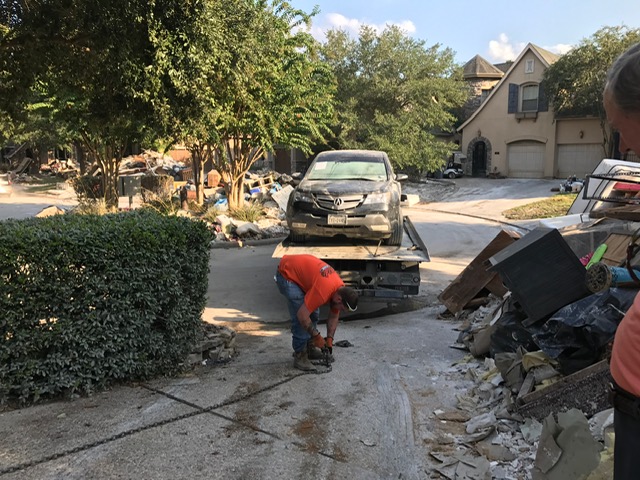
During the Lake Conroe release, Janet Wilson lost her home, two cars, 48 years worth of family heirlooms, pictures, books, keepsakes and furniture. She says the greatest damage though was the two years it took to restore family’s life; time that could have been spent with her aging and now deceased parents.
Another photo of Janet Wilson’s life on the curb.

Lowering Lake Conroe seasonally until other mitigation measures are complete is insurance. You don’t use insurance every year. But who would own a home or drive a car without it. The costs could be catastrophic.

  • Don’t think the SJRA board will automatically do the right thing.
  • Don’t rely on our political representatives to carry the day. They face opposition from representatives on the other side of this question.
  • Don’t assume that your voice won’t make a difference.
  • Don’t believe that because you didn’t flood, your home’s value was not affected.
  • Don’t pretend flooding could not happen again.

Four 100-year or greater storms hit this area in the last five years.

So act on those ten two-letter words. “If it is to be, it is up to me.”

Make Your Voice Heard

BOARD OF DIRECTORS SPECIAL MEETING DATES, TIME, AND LOCATION 

  • Tuesday, January 21, 2020
  • 6pm at Lone Star Convention and Expo Center
  • 9055 Airport Road, Conroe, Texas 77303.
  • Doors open at 5pm. 
  • Thursday, February 20, 2020
  • 6pm at Lone Star Convention and Expo Center
  • 9055 Airport Road, Conroe, Texas 77303
  • Doors open at 5pm.

Those wishing to address the board or register a comment at a special meeting may fill out a Comment Registration Form https://www.sjra.net/wp-content/uploads/2020/01/Comment-Registration-Form_01062020.pdf. Comment Registration Forms may be submitted at the special meeting. The form may not be mailed, emailed, or dropped off prior to the meeting date.

The SJRA Board of Directors also welcomes input regarding the seasonal lake lowering strategy via mail or email. To contact the Board please visit: https://www.sjra.net/about/board/. Scroll down to the bottom of the page to see the email form. Or email floodmanagementdivision@sjra.net.

The Lake Houston Area Chamber of Commerce has automated email that makes the process easy. But original emails that tell your particular story likely will carry far more weight.

Tomorrow, I will add a special page to this web site. It will contain all the information you need to compose your own letter or prepare spoken comments. Please continue to send in your photos of Harvey via the Submissions page on this web site so that we can dramatize the difference between real and perceived damages. In the meantime…

Don’t let diffusion of responsibility victimize you a second time.

Posted by Bob Rehak on 1/15/2020

869 Days since Hurricane Harvey

Legal Aspect of Lake Lowering That Lake Conroe Association Won’t Tell Officials About

To avert another seasonal lowering of Lake Conroe, the Lake Conroe Association is appealing to State Representatives, State Senators, the Governor, the Conroe City Council, and Montgomery County Commissioners. They focus on the temporary loss of recreation in some parts of the lake. They also say that “damages” home values and businesses.

Finally, they’re telling officials there’s no proof that lowering the lake helps prevent downstream flooding and that it wastes $10 million of water.

They are NOT telling officials, however, that ending the program before other mitigation measures are in place could potentially open up the SJRA and State of Texas to billions of dollars in law suits.

Fifth Amendment “Takings Clause”

The issue has to do with the Fifth Amendment of the U.S. Constitution. It says that private property shall not be taken for public use, without just compensation. This so-called takings clause forms the basis for many of the lawsuits against the SJRA stemming from Harvey flooding. Those have not yet gone to trial. But lawsuits in a parallel case have.

In December, a federal judge ruled in favor of plaintiffs flooded behind the Addicks and Barker reservoirs. He found the Army Corps liable for damages.

He said the flooding of homes was a foreseeable result of government actions.

Rulings in Addicks/Barker Cases

“U.S. Judge Charles F. Lettow detailed how government officials knowingly and intentionally used private property to store rising floodwaters,” said a Houston Chronicle article about the decision. The key point in the case, according to the judge: The government knew for decades that the reservoirs could NOT contain the floodwaters in a deluge and did NOTHING over decades to prevent it. “Plaintiffs have sufficiently demonstrated that the inundation of floodwaters onto their private property was the ‘direct, natural, or probable result’ of the government’s activity,” he wrote.

How Addicks Case Applies to SJRA Lake Lowering Policy

Hold that thought. Now apply those principles to the SJRA today. It faces a decision between the temporary seasonal lowering of Lake Conroe or NOT lowering the lake. Not lowering the lake would placate recreational boaters and lakefront property owners like LCA president Mike Bleier (who did not flood during Harvey).

The lowering provides a buffer against flooding for BOTH Lake Conroe and downstream communities on the West Fork of the San Jacinto. They include Woodloch, Porter, Humble, Atascocita and Kingwood. During Harvey, approximately 300 structures flooded on Lake Conroe, 1100 between Lake Conroe and US59, 3652 in Kingwood along the West Fork, 366 in Atascocita, and 466 in Humble.

That’s almost 6000 structures on the West Fork. One structure might include a whole apartment complex housing hundreds of families, a shopping center employing hundreds, a high school with 4000 students, a hotel providing housing to flood victims or a hospital treating them.

None of these numbers includes damages to East Fork property, which Lake Conroe releases do not affect

Now let’s assume that the SJRA eliminates the seasonal lowering policy which it has publicly stated prevented flooding twice so far.

Let’s also assume that a big storm comes along that dumps 10-12 inches of rain on Lake Conroe and that because that buffer no longer exists, people flood again.

Parallels

Lake Conroe and downstream residents now have a ready-made, almost watertight case against the SJRA and its financial backer, the State of Texas. All the essential elements from the Barker/Addicks decision are there.

  • Government knew that downstream flooding was likely.
  • SJRA had a proven strategy at its disposal to reduce flooding.
  • SJRA chose not to use the strategy, which the governor endorsed.
  • Governor had made flood mitigation a top priority for SJRA.
  • SJRA chose instead to increase recreational possibilities on public property (Lake Conroe).
  • Private property then flooded as a foreseeable result.

It seems like a pretty close parallel to me. Perhaps it’s even more of a textbook case. Especially considering recent directives by the governor for the SJRA to focus on flood mitigation and his public endorsement of the lake lowering strategy.

Mandates in SJRA Enabling Legislation

The state created the SJRA to “conserve, control, and utilize to beneficial service the storm and flood waters of the rivers and streams of the State.” Section 2 of the enabling legislation mentions floodwaters three times. It doesn’t mention recreational boating or lakefront home values once.

In addition, the enabling legislation also says that the purpose of the SJRA is to:

  • Prevent the devastation of land from recurrent overflows.
  • Protect life and property.
  • Regulate the waters of the San Jacinto River and its tributaries.
  • Conserve “soils against destructive erosion … thereby preventing the increased flood menace incident thereto.”

If the SJRA floods people again when it might have been avoided, this sounds more and more like a slam-dunk case for plaintiffs.

Officials Should Get the Facts

Before Montgomery County Commissioners, the Conroe City Council, Representative Will Metcalf and Senator Robert Nichols fire off more letters telling the SJRA what to do based on Mike Bleier’s misinformation, one hopes they would at least ask for a briefing from the SJRA to get the whole picture.

That includes understanding how the seasonal lowering strategy helps. It is designed more for “less than 100-year” rain events, than it is for another Harvey. Another Harvey would fill up that 1-2 foot buffer quickly and repeatedly. The value of the strategy lies in offsetting storms that we experience far more frequently, but which could still flood people, such as those last May.

For Those Who Have Never Personally Flooded

Before closing, I’d like to publish several images that West Fork residents Rhonda Haney and Alexis Faust sent me. The images show their Harvey experiences. Thank God, most Lake Conroe residents didn’t have to suffer through what Rhonda and Alexis did. Most Lake Conroe residents may not know the financial and emotional devastation of flooding. I wouldn’t wish that on anyone.

Harvey Photo courtesy of Alexis Faust
Harvey Photo courtesy of Rhonda Haney
Harvey Photo courtesy of Alexis Faust

Posted By Bob Rehak on 1/13/2019 with thanks to Alexis Faust and Rhonda Haney for sharing their photos

867 Days since Hurricane Harvey

The thoughts expressed in this post represent opinions on matters of public concern and safety. They are protected by the First Amendment of the US Constitution and the Anti-SLAPP Statute of the Great State of Texas.

Lake Conroe Association Misleads Area’s Own State Representative and Senator

The problem with incendiary lies: once you start them, they’re hard to stop. In its initial meetings with area residents, the Lake Conroe Association (LCA) told people that West Fork dredging was done. Therefore, said the LCA, the SJRA should stop the temporary seasonal lowering of Lake Conroe.

Lie Takes on Life of Its Own

People believed the lie. They started putting up web sites and YouTube videos to spread the word. Soon, the lie took on a life of its own. And it became impossible for the LCA to stamp it out – even if they were so inclined, which they aren’t.

Residents started writing their state reps. And soon Will Metcalf who represents the Lake Conroe Area took up the cry. See the letter below dated Jan. 6.

A week before Representative Metcalf sent this letter to the SJRA Board, the City of Houston pulled the trigger on the next phase of West Fork dredging. It will start this week, says the City. Now, Metcalf doesn’t just have egg on his face; he has a whole omelette. Made from stale eggs and rancid ham.

State Senator Robert Nichols wound up with the same omelette on his face.

Whole Series of Lies, Half-Lies and Logical Fallacies Spread by LCA

The LCA fueled this whole sad, sorry food fight that embarrassed their own representatives with an entire a SERIES of lies, half-lies and logical fallacies that it fed to unknowing people.

For instance, in addition to “the dredging is done”, I see and hear these comments constantly:

  • Because the East Fork flooded during Imelda and Lake Conroe didn’t release water, that proves we don’t need to keep lowering Lake Conroe.
  • The Lake Conroe release during Harvey comprised only 5% of the water going through Lake Houston.
  • All of Kingwood was built in a flood plain. Kingwood people should just move to higher ground.
  • Kingwood’s flooding problems come from upstream developers.
  • No scientific study supports the lowering policy.
  • Lake Houston wants to make the lowering of Lake Conroe permanent.
  • They should lower Lake Houston.

For the Record…

To set the record straight:

  • West Fork dredging is NOT done. Just the portion FEMA paid for.
  • The East Fork and West Fork are in different watersheds. Imelda affected the East Fork, but not the West. Plum Grove got 33 inches of rain while Lake Conroe got two.
  • The Lake Conroe release during Harvey comprised ONE THIRD of the water coming down the West Fork where approximately 80-90% of all the damage occurred in the Humble/Kingwood area.
  • All of Kingwood was not built in a flood plain. For instance, 110 out of 250 of my neighbors in Kings Forest were not in a flood plain yet still flooded. We live more than TWO MILES from the river.
  • Some of Kingwood’s flooding problems come from upstream developers. But that’s a separate issue; they have nothing to do with West Fork flooding due to Lake Conroe releases.
  • The SJRA did commission an engineering study that supported lowering Lake Conroe.
  • Lake Houston IS and HAS BEEN lowered…longer than Lake Conroe.
  • No responsible/knowledgeable person that I know in the Lake Houston area is talking about making the lowering of Lake Conroe permanent.

To correct some of these misperceptions, I met the president of the LCA last year for a whole day. More recently, I spent an hour on the phone with him. I thought I had corrected these misperceptions. But they keep recurring. This is NO accident; this is intentional.

Posted by Bob Rehak on 1/8/2020

862 Days after Hurricane Harvey and 111 since Imelda

The thoughts expressed in this post represent opinions on matters of public concern and safety. They are protected by the First Amendment of the US Constitution and the Anti-SLAPP Statute of the Great State of Texas.

SJRA Board Meeting Packed by “Stop the Drop” Protesters

More than 150 red-shirted “Stop the Drop” protesters packed the SJRA board meeting at the Lake Conroe Dam this morning. Lake Conroe lakefront homeowners came to protest the seasonal lowering of Lake Conroe. According to SJRA Board Member Mark Micheletti, two and a half busloads of additional angry protesters had to be turned away because they exceeded the building’s capacity.

Five Lake Houston area residents came to speak. However, they were outnumbered by more than 30 to 1. The Lake Houston Area residents made good presentations, but on the basis of numbers alone, the well organized sea of protesters overwhelmed them. The disparity in numbers between the two sides sent a not-so-subtle message to SJRA board members.

People protesting the Lake Conroe seasonal lowering policy packed the SJRA board meeting on 12/12/2019. Photo taken before meeting shows only half the room.

Goal of Policy

The SJRA designed the temporary lowering program to provide downstream residents with an extra cushion against flooding until flood mitigation measures in the Lake Houston Area are completed. The measures include dredging and the installation of additional gates on the Lake Houston Dam. This year, the SJRA lowered the Lake Conroe one foot during the rainiest part of Spring and two feet during the peak of Hurricane Season.

Since the policy started in the second half of 2018, no downstream or Lake Conroe residents have flooded because of releases from Lake Conroe.

Misperceptions Abound

Organizers had fed protesters false information. For instance, many protesters claimed:

  • Dredging in the West Fork is done. It isn’t. State Representative Dan Huberty is organizing a follow-on program to supplement the Army Corps program which finished around Labor Day.
  • Because some Kingwood East Fork residents flooded during Imelda, it proves that Lake Conroe has nothing to do with Kingwood flooding. The East and West Forks (which includes Lake Conroe) are in different watersheds. During Imelda, the East Fork received 20 inches of rain while Lake Conroe received only 2.
  • Lake Conroe releases during Harvey comprised just 15% of the water flowing into Lake Houston and that was not a large enough percentage to affect flooding. The statistic may be literally true. But it’s misleading. It has nothing to do with the flooding on the West Fork. And that’s where the vast majority of all damage occurred. Lake Conroe releases comprised ONE THIRD of the water coming down the West Fork. Furthermore, they came at the peak of the flood.

Two More Board Meetings Before Vote

The SJRA board meets again in January and February before voting on whether to extend the seasonal lowering of Lake Conroe another year. The next meeting will be at the The Lonestar Convention & Expo Center so more people can attend.

The board was afraid that if it chose a Lake Houston venue for the meeting, it would look as if they were trying to stifle dissent.

Watch for more details in January about the next board meeting.

Another meeting like this could mean the end of Lake Houston’s only flood protection measure at the moment.

Posted by Bob Rehak on 12/12/2019

835 Days after Hurricane Harvey and 82 since Imelda

SJRA Peak Flow Map from Imelda Shows 1500X Difference Between East/West Sides of Watershed

Here’s a science lesson for the entire family. The SJRA’s peak streamflow and rainfall map for Imelda demonstrated how rain can fall heavily over one part of a watershed and barely touch another. There are huge implications for flooding.

For a high resolution PDF suitable for printing, click here.

Peak Streamflows West to East Vary by 1500X

Note how the gage at Spring Creek in Tomball recorded a peak flow of 22.7 cubic feet per second. The East Fork gage in New Caney registered 34,600 cubic feet per second. That’s a difference of more than 1500X in the peak flow rates!

Rainfall Totals Range from 0 to 30 Inches in 24 miles

The blue figures represent precipitation. That same gage in Tomball recorded none. But a little further east, they picked up more than 5 inches; almost 10 at I-45; more than 15 at I-69, and almost 30 in New Caney.

This is why you need to look at gages upstream on YOUR tributary when flooding is possible! Someday, textbooks will use this map to dramatize that lesson.

Posted by Bob Rehak on 11/5/2019

798 days since Hurricane Harvey and 47 since Imelda